ADVERTISEMENT
Did you know buildings use nearly 40% of global energy and cause about one-third of greenhouse gas emissions? This shows we really need sustainable design ideas for buildings. These ideas help the environment and make communities healthier. Eco-friendly building concepts are now key for sustainability and fighting climate change.
By using new green building ideas, we can make a better future. We can do this one building at a time.
Key Takeaways
- Sustainable structures significantly reduce energy consumption and greenhouse gas emissions.
- Innovative eco-friendly materials improve the overall impact of construction.
- Green building innovations enhance community health and environmental quality.
- Adopting modular construction methods accelerates project timelines and reduces waste.
- Sustainable landscape design contributes to urban biodiversity and aesthetic appeal.
Understanding Sustainable Structures
Sustainable structures are changing the way we build. They focus on reducing harm to the environment and improving community life. By using green building methods, builders make structures that are good for the planet and meet people’s needs.
ADVERTISEMENT
What Makes a Structure Sustainable?
A sustainable structure uses materials wisely, saves energy, and lasts long. It has several key parts:
- Material Sourcing: Using local or recycled materials cuts down on carbon emissions.
- Energy Efficiency: It’s important to use less energy.
- Durability: Buildings that last longer need fewer repairs.
- Low Maintenance: Easy-to-maintain structures save resources over time.
Benefits of Sustainable Design
Sustainable design offers many benefits, not just for the planet. Some key advantages are:
| Benefit | Description |
|---|---|
| Cost Savings | Efficient designs lower energy and water bills. |
| Improved Air Quality | Non-toxic materials make indoor air better. |
| Increased Property Value | Sustainable homes often increase in value over time. |
| Community Enhancement | They create spaces that benefit both residents and the community. |
Eco-Friendly Materials
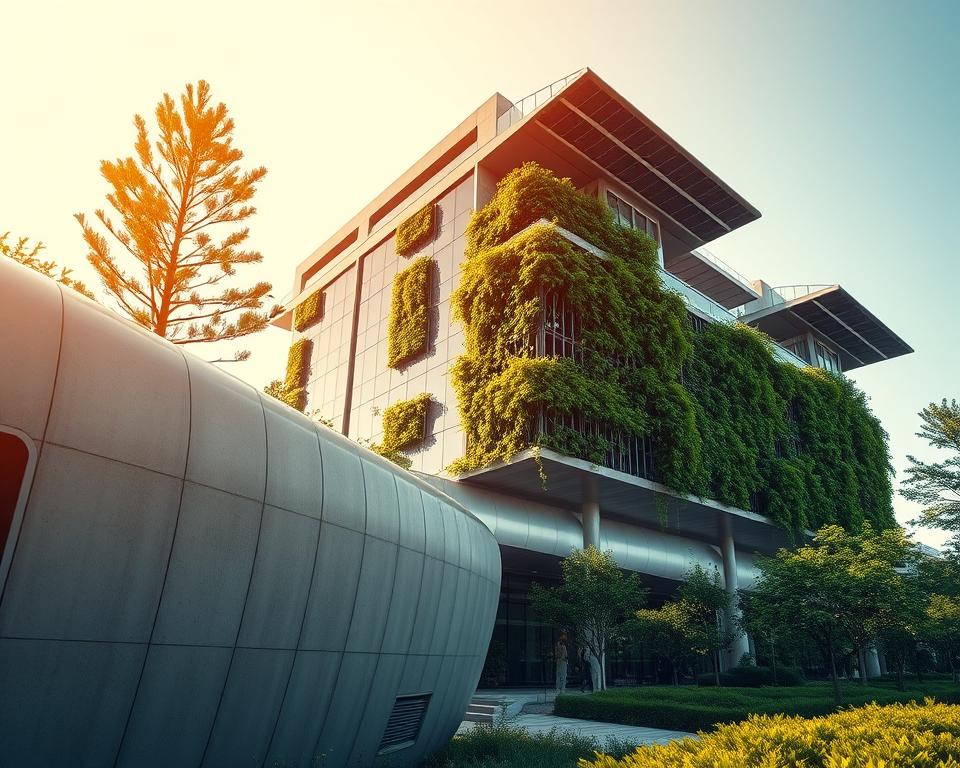
In the world of construction, eco-friendly materials are leading the way. They make buildings last longer and look better. Bamboo and recycled steel are two top choices, each with its own benefits.
Bamboo: The Renewable Building Block
Bamboo is becoming more popular as a green building option. It grows fast and can be used in many ways. It’s strong and light, perfect for beams and floors.
Using bamboo helps reduce the need for regular wood. It also cuts down on carbon emissions from building materials.
Recycled Steel and Its Advantages
Recycled steel is a big win for the environment. Making new steel uses a lot of energy, but recycled steel needs much less. It’s also strong and doesn’t rust easily.
By using recycled steel, buildings can last longer and be more eco-friendly. This makes construction more sustainable overall.
Energy Efficiency in Design
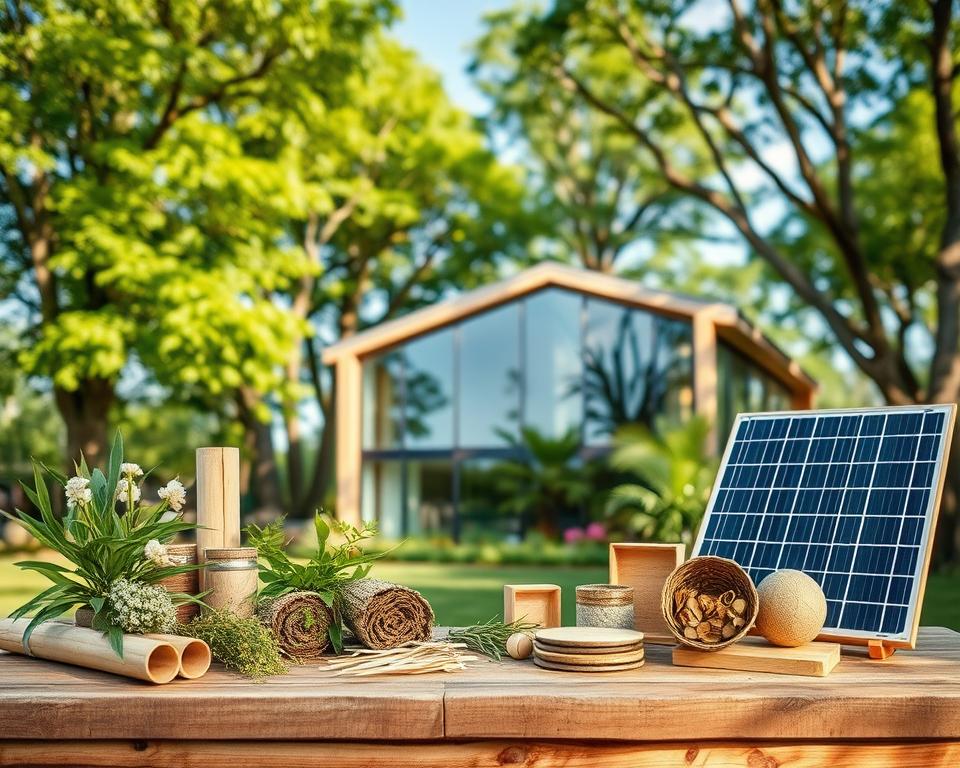
Building eco-friendly structures means focusing on energy efficiency. Using passive solar design and natural ventilation is key. These methods cut down on energy use and make buildings more comfortable.
Passive Solar Design Strategies
Passive solar design uses sunlight to warm buildings and cut down on artificial lighting. It involves smart placement of windows and thermal mass. This way, buildings stay warm in winter and cool in summer.
Such designs are a big part of sustainable architecture. They show how sunlight can be a natural heating source. This improves energy efficiency and lowers energy costs.
Utilizing Natural Ventilation
Natural ventilation is also important for energy-efficient buildings. It uses windows and vents to let in air. This reduces the need for air conditioning and mechanical systems.
It not only saves energy but also makes indoor air healthier. By using breezes for ventilation, buildings stay comfortable. This supports green building innovations and makes natural ventilation essential in sustainable structures.
| Strategy | Description | Benefits |
|---|---|---|
| Passive Solar Design | Harnessing sunlight to heat and illuminate spaces | Reduces energy costs, enhances comfort, and utilizes renewable energy |
| Natural Ventilation | Utilizing windows and vents for airflow | Decreases reliance on air conditioning, improves indoor air quality |
Green Roofs and Living Walls
Green roofs and living walls are new ideas in eco-friendly building. They help make cities greener and healthier. These designs add nature to buildings, boosting biodiversity and cooling cities down. Let’s explore their benefits and how to design them well.
Benefits of Green Roof Systems
Green roof systems have many benefits for sustainable buildings. Some key advantages are:
- Insulation: Green roofs keep temperatures steady, cutting down on heating and cooling costs.
- Stormwater Management: They soak up rainwater, reducing flooding and runoff.
- Air Quality Improvement: Plants in green roofs clean the air, making cities healthier.
- Urban Agriculture: Some green roofs grow food, supporting local farming.
Designing Effective Living Walls
Living walls, or vertical gardens, add beauty and health to cities. To design them well, consider:
- Plant Selection: Pick plants that fit the local climate and need little care.
- Irrigation Systems: Use water-saving irrigation to keep plants healthy.
- Structural Support: Make sure the wall can hold plants, lights, and other needs.
- Integration with Energy Systems: Some living walls have solar panels for extra green power.
Water Conservation Techniques
Water conservation is key in sustainable design. It uses new systems to save water. Methods like rainwater harvesting and greywater recycling are big in eco-friendly building.
Rainwater Harvesting Systems
Rainwater harvesting catches rain from rooftops. It stores the water for irrigation or other uses. This cuts down on the need for city water and helps the environment.
Using rainwater saves money and helps the planet. It’s a win-win for everyone.
Greywater Recycling Solutions
Greywater recycling takes wastewater from sinks and showers. It treats the water for reuse. This cuts down water use a lot.
It’s good for the planet and saves money. It shows how we can use water wisely.
| Water Conservation Method | Benefits | Typical Applications |
|---|---|---|
| Rainwater Harvesting | Reduces dependency on municipal water systems | Irrigation, toilet flushing |
| Greywater Recycling | Conserves water resources, lowers bills | Irrigation, irrigation of landscaping |
Using these methods makes us more sustainable. It shows we care about water. More projects are using these systems, showing we’re committed to a green future.
Sustainable Landscaping
Sustainable landscaping means creating spaces that are good for the environment. It uses native plants and trees that fit well with nature. This approach boosts biodiversity and supports green urban planning. It also cuts down on the need for a lot of maintenance and resources.
Native Plant Landscaping
Using native plants in landscaping is great for the local ecosystem. It uses less water and no chemical fertilizers. These plants do well in the local climate, making the landscape self-sustaining. Some key benefits include:
- Lower maintenance costs
- Improved soil health
- Enhanced pollinator habitats
The Role of Trees in Urban Areas
Trees are very important in cities. They provide shade, improve air quality, and help wildlife. Adding trees to designs makes cities healthier. It also fits with sustainable design ideas. Here’s a closer look at the benefits of urban trees:
| Benefit | Description |
|---|---|
| Shade Provision | Reduces energy costs by cooling buildings. |
| Air Quality | Absorbs CO2 and pollutants; enhances oxygen production. |
| Biodiversity | Provides habitats for various species, supporting local ecosystems. |
Adding native plants and trees to landscaping is good for the environment. It shows the principles of sustainable design. This way of landscaping is key to making cities better and more welcoming.
Indoor Air Quality Considerations
Indoor air quality is key to a healthy building. The materials and finishes used can greatly impact the air inside. Choosing non-toxic materials helps keep harmful substances out.
Non-Toxic Materials and Finishes
Using low-VOC paints and finishes is a smart choice. These products release fewer harmful chemicals. When picking flooring and cabinetry, go for materials that are good for the environment.
These choices not only make the air cleaner but also support sustainable design.
Importance of Ventilation Systems
Ventilation systems are essential for clean air. They help cut down on pollutants and allergens. Good ventilation makes spaces more comfortable and healthy.
Investing in advanced ventilation can greatly improve air quality. It works well with eco-friendly materials.
Modular Construction Methods
Modular construction is a new way to build that’s good for the planet. It happens in a controlled space, which has many benefits. This method makes projects faster, cuts down on waste, and is better for the environment than old ways of building.
One big plus of prefab building is how flexible it is. The parts can be changed to fit any site perfectly. This makes it easy to build in a way that’s good for the planet. More builders are using this method to meet today’s needs and protect the environment.
Advantages of Prefab Building Components
- Reduced construction time, leading to quicker project completion.
- Lower waste production through efficient material use.
- Improved quality control due to off-site fabrication.
- Design adaptability to meet various site conditions.
- Potential for reduced costs without compromising quality.
Cases Where Modular Shines
Many projects show how well modular construction works. For instance, schools in cities use it to quickly add space. Hospitals also use it to grow when needed. These examples prove that modular buildings can be both useful and beautiful, helping the environment while meeting urgent needs.
| Project Type | Location | Completion Time | Key Features |
|---|---|---|---|
| School Expansion | Los Angeles, CA | 4 months | Flexible classrooms, energy-efficient systems |
| Healthcare Facility | Phoenix, AZ | 6 months | Modular operating rooms, ADA compliance |
| Residential Housing | Seattle, WA | 3 months | Eco-friendly materials, community gardens |
Using Smart Technology in Buildings
Smart building technology makes buildings more energy efficient and sustainable. It uses new systems for controlling temperature and lighting. This helps reduce environmental harm and makes buildings more comfortable for people.
Smart Thermostats and Energy Monitoring
Smart thermostats are key for managing energy well. They let users see how much energy they use and adjust settings for better efficiency. For example, the Nest Learning Thermostat learns how you live and only uses heating and cooling when needed.
This not only saves money on bills but also cuts down on energy waste. It makes homes and buildings more eco-friendly.
Automated Lighting Systems
Automated lighting systems also help save energy. They use motion sensors and timers to turn lights on only when needed. This technology makes places more convenient and supports green energy use.
So, making homes and buildings more eco-friendly becomes easier and more practical.
Community-Oriented Design
Community-oriented design is key to boosting social interaction and inclusivity in cities. It makes sure everyone, including those with disabilities, can easily use public areas. This way, communities feel more connected and life improves for everyone.
Designing for Accessibility and Inclusivity
Accessible design is vital for a sustainable community. It makes sure everyone can use public transport, buildings, and parks. Features like ramps and clear signs make spaces welcoming for all.
Creating Shared Green Spaces
Green spaces are great for community bonding and the environment. Parks and gardens help people meet and offer ecological benefits. They are designed with sustainability in mind, using native plants and efficient water use.
Case Studies of Successful Eco Builds
Looking at eco builds across the U.S. shows many sustainable architecture examples. These examples highlight how to make buildings green. They show how to mix function, beauty, and care for the planet.
Learning from these projects is key. It helps us understand how to make eco-friendly buildings better.
Notable Sustainable Projects Across the U.S.
There are many green projects in the U.S. Here are a few:
- The Bullitt Center in Seattle, Washington – It’s a net-zero energy building that uses old materials.
- The Edge in New York City – It’s a green building with a roof that helps animals and plants.
- The Solar Barn in Cape Cod, Massachusetts – It’s a house that uses the sun’s energy well.
Learning from Sustainable Architecture
These projects teach us important lessons. They show how to use green materials and save energy. They also show how to design buildings that are good for the community.
By studying these eco-friendly project case studies, architects can create better buildings. Buildings that are healthier and more creative.
Future Trends in Sustainable Design
The world of sustainable architecture is changing fast. It’s all about new building trends that protect the environment and use resources wisely. Architects and builders are exploring new designs and technologies to tackle these challenges.
Bioclimatic design and building-integrated photovoltaics are becoming key parts of sustainable architecture. They help buildings work better with their surroundings and use the sun’s energy.
Using recyclable materials in building is also a big deal. These materials make buildings last longer and work better. This trend is leading to buildings that are both useful and blend in with nature.
The circular economy is at the core of these changes. It’s all about reducing waste by reusing and recycling. This approach makes buildings not just good for the planet but also good for people and the economy.