ADVERTISEMENT
Did you know over 70% of homeowners think about making a gallery wall in their homes? A well-put-together gallery wall can change a simple wall into a display of your taste and character. We’ll share how to make a gallery wall layout that’s balanced and eye-catching. You’ll learn how to pick art and arrange frames to make a gallery wall that fits perfectly in your space.
Key Takeaways
- Understanding the concept of a gallery wall helps in creating a cohesive layout.
- Planning is crucial when it comes to measuring your space and selecting a focal point.
- Different frame styles and materials can enhance the overall aesthetic.
- Visual balance can be achieved through careful arrangement of art pieces.
- Regular maintenance keeps your gallery wall looking fresh and vibrant.
- Learning from professional designers can inspire your layout choices.
Understanding the Basics of Gallery Walls
A gallery wall makes any room stand out by showing your unique taste. It usually includes a mix of art, photos, and other pretty items. These are put together nicely on a wall. Knowing about gallery walls helps you see their role in making spaces beautiful and useful.
What is a Gallery Wall?
A gallery wall is a special display of different artworks, photos, or decorative pieces. It mixes various items to catch the eye. The display can show your style, share a story, or make you feel something. Every item adds to a larger story, intriguing everyone who sees it.
ADVERTISEMENT
Benefits of a Gallery Wall
Gallery walls do more than just look good. They make a room feel welcoming. These walls can start fun talks about the art or memories in photos. A gallery wall turns your space into a place full of stories.
Common Styles to Consider
Gallery wall styles vary to match anyone’s taste. Some layouts are neat and even, showing off a classic look. Others are uneven for a relaxed, fun feel. Knowing these styles helps you pick one that fits your decor and personality best.
Planning Your Gallery Wall Layout
Creating the perfect gallery wall takes planning and an eye for design. Measure your space, pick a focal point, and arrange your frames well. These gallery wall layout tips will help you make a stylish and personal statement at home.
Measuring Your Space
First, measure your wall’s height and width. This helps figure out how many pieces you can include. Think about the best height for viewing. Eye level is usually the best.
Choosing a Focal Point
Every gallery wall needs a main piece to draw attention. This could be a big artwork or something unique. Pick smaller pieces that go well with your main piece.
Arranging Your Frames
Begin with larger frames in the center or at the edges for balance. Lay out your arrangement on the floor before you hang them. Aim for about three inches of space between frames. This gives your gallery wall a neat, organized look.
Frame Styles and Materials
Choosing the right frames is the first step in creating a beautiful gallery wall. Each frame adds to the mood and look of your display. Wood, metal, and acrylic frames bring different vibes to your collection. It’s important to know about these materials to pick the best ones for your wall.
Popular Frame Materials
Different materials make your gallery wall feel unique. For example:
- Wood Frames: They are classic and give a warm, natural feel. They look good in many places.
- Metal Frames: They are sleek and add a modern touch. They’re perfect for simple, clean designs.
- Acrylic Frames: These are light and flexible. They give a clean, modern look.
Mixing Frame Styles
Mixing different frame styles makes your gallery wall interesting. You can combine modern and vintage frames to add depth. This mix brings out your personality and shows off different types of art. It encourages you to be creative and makes your display look special.
Choosing the Right Color Palette
Picking the right colors is key for a cohesive gallery wall. Choose colors that go well together for a unified look. You can pick bold or soft colors. The right palette makes your art pop and adds elegance to your space.
| Frame Material | Style | Vibe |
|---|---|---|
| Wood | Rustic to Modern | Warm and Inviting |
| Metal | Industrial to Contemporary | Sleek and Minimalistic |
| Acrylic | Modern | Light and Versatile |
Visual Balance in Gallery Walls
Making a gallery wall that looks good needs an eye for visual balance. This balance grabs attention and creates a strong effect. There are two main styles to pick from: symmetrical and asymmetrical gallery walls. Each style brings a different feel to the space.
Symmetrical vs. Asymmetrical Arrangements
A symmetrical gallery wall brings a sense of peace. It uses frames that are the same size and evenly spaced. This setup feels classic and suits many places, making the area look neat. On the other hand, an asymmetrical gallery wall is lively and fun. It combines various frame sizes and styles for a unique look. This mix keeps things interesting and adds charm.
Using Negative Space Effectively
It’s important to use negative space well in a gallery wall. This empty space lets the display breathe and stops it from being too busy. The right amount of negative space guides the viewer’s eye. It lets people enjoy every piece without feeling overwhelmed.
Creating Visual Weight
Visual weight is key for a balanced gallery wall. Mix up the artwork sizes and shapes on purpose. Big pieces can hold the display steady, and little ones add life. This balance makes the gallery wall flow better. It ensures every piece fits and adds to a beautiful setup.
| Aspect | Symmetrical Gallery Wall | Asymmetrical Gallery Wall |
|---|---|---|
| Visual Balance | Classic and orderly | Dynamic and playful |
| Frame Arrangement | Evenly spaced | Varied spacing and sizes |
| Negative Space | Minimal | Strategically placed |
| Visual Weight | Consistent sizes | Diverse sizes and shapes |
Choosing Artwork for Your Gallery Wall
Choosing the right art for your gallery wall can make your space feel special. Think about mixing photos that mean a lot to you with creative artwork. Personal photos add warmth, and artwork adds style.
Selecting Photos vs. Artwork
Decide what means more to you: photos or artwork. Photos bring back memories, and artwork adds beauty. A mix of both reflects your personality and tells your story.
The Importance of Themes
Having a theme helps choose art for your gallery wall. Stick to certain colors, subjects, or styles to bring your pieces together. This makes your wall look put together and eye-catching.
Sizing Your Pieces
Choosing the right sizes for your art is key. Having different sizes attracts interest, but they need to be placed right. This makes your gallery wall look balanced and inviting.
Preparing Your Wall: Tips and Tools
Getting ready for a gallery wall means you need to think about two things. Your wall’s condition and the tools you’ll use are important. Proper prep makes a big difference.
Start with a clean, damage-free wall. This creates a strong base. Also, think about the tools you need to bring your vision to life.
Wall Preparation Steps
First, clear the space around your wall. This gives you room to work and plan. Then, clean the wall with a damp cloth. This removes any dust.
Check for cracks or holes next. Fill these with spackle and sand them smooth. This makes your wall look perfect. Consider painting it for a fresh, inviting backdrop.
Tools You’ll Need
- Measuring tape
- Level
- Hammer
- Nails or wall anchors
- Drill (if securing heavier items)
The right tools make the job easier. Use a measuring tape for even spaces between frames. A level keeps everything straight.
Safety First: Wall Weight Considerations
Think about safety when you’re planning your gallery wall. Heavy frames need strong hardware. Always check the weight limits of your wall anchors and screws. This way, you can hang your art safely, without worry.

Creating a Template for Your Layout
Setting up a gallery wall is simpler with a well-thought-out template. There are many methods that help you see your layout clearly and get a professional look. You can choose from old-school paper templates to advanced digital tools, each with its own benefits.
Using Paper Templates
Using paper for your gallery wall template lets you try out ideas without making holes. Just cut out pieces of paper to match your frames’ sizes. Then, put these on your wall to see the best setup. This method is great for understanding how the spaces between items affect the overall look.
The Use of Painter’s Tape
Painter’s tape is a flexible option for planning where your frames will go. It lets you mark your wall without leaving any lasting marks. You can keep tweaking your layout until it’s just right. This is a simple, yet effective, way to plan your wall.
Digital Layout Tools
If you’re comfortable with technology, there are many digital tools to help. These apps let you put in the sizes of your frames and play around with layouts virtually. Using a digital template makes it easy to try different ideas quickly. You won’t have to keep moving frames around on the wall.
| Method | Description | Advantages |
|---|---|---|
| Paper Templates | Physical cutouts represent frame sizes. | Easy to manipulate, no damage to walls. |
| Painter’s Tape | Marks the outline of frames directly on the wall. | Visually accurate representation, repositionable. |
| Digital Layout Tools | Software for visualizing frame arrangements. | Quick adjustments, multiple designs explored. |
Hanging Your Gallery Wall
To make a gallery wall look good, pay attention to detail and use the right steps. Begin with your larger pieces to create a solid base. It matters that these first items are level because they set the look for everything else. To get that professional look, follow tips that focus on being precise and balanced.
Best Practices for Hanging Frames
Here are some key points for hanging frames:
- Start with the largest or most prominent pieces.
- Use a level to ensure frames are perfectly straight.
- Ask a friend to assist with holding frames while you adjust their placement.
- Measure distances between frames to maintain consistent spacing.
Tips for Leveling Frames
Getting frames level is key for a wall that looks right. Keep these suggestions in mind:
- Use a laser level for larger setups or uneven walls.
- Always check your levels as you hang pieces.
- Remember to step back often to see the full picture.
How to Avoid Damage
Avoiding wall damage is crucial when hanging your frames. Remember these tips:
- Use the right hardware for your type of wall.
- Ensure frames are securely mounted to prevent them from falling.
- Fill any holes with spackling compound for future adjustments.
Maintaining Your Gallery Wall
Keeping your gallery wall fresh and vibrant is key. You should regularly update it to match your changing tastes. We’ll discuss efficient management, cleaning best practices, and seasonal decor.
Regular Updates and Rotations
Swap out artworks periodically for a fresh perspective. Change pieces to reflect the seasons or special events. A updated gallery wall brings new conversations and rejuvenates your space.
Clean and Care for Your Pieces
Cleaning is about more than looks; it protects your art and frames. Use gentle cleaners and microfiber cloths to avoid damage. Regular care extends the life and beauty of your pieces.
Incorporating Seasonal Decor
Adding seasonal decor makes your gallery wall exciting. Decorate with holiday themes or seasonal colors and textures. Use things like wreaths or themed prints to seamlessly shift with the seasons.
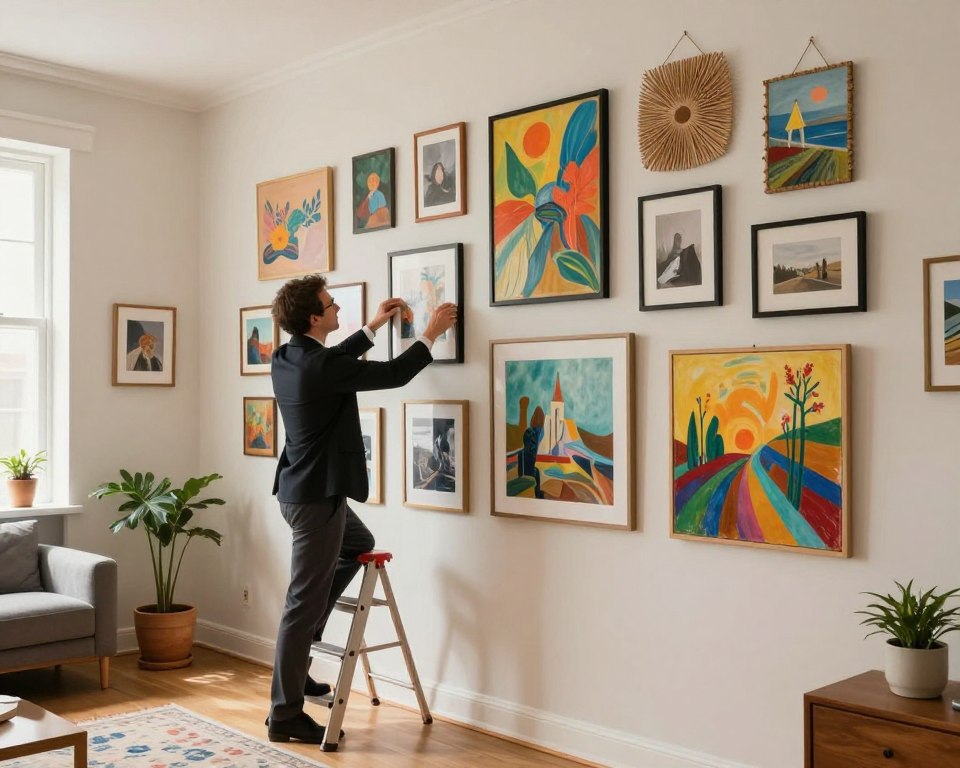
Inspiration for Your Gallery Wall
Finding perfect inspiration can turn a blank wall into a personal showcase. Look for ideas everywhere. From pro designers to social media trends, each source has unique insights. They show you how to make eye-catching setups that reflect your style.
Examples from Professional Designers
Pro designers share innovative gallery wall ideas. Websites with design tips often have collections that show off themes and colors. They suggest using different art styles, like vintage or modern. This mix adds excitement to your wall.
User-Submitted Gallery Walls
Instagram and Pinterest are full of ideas from people’s homes. They show how different pieces can tell a personal story. This big online community offers tips on selecting and hanging art. It connects you to real-life gallery wall examples.
Social Media and Online Resources
Social media always has new gallery wall ideas. Blogs and influencers spotlight the latest trends and setups. Online chats about new styles keep you in the loop. This lets you blend worldwide ideas into your space, making it uniquely yours.
Mistakes to Avoid in Your Gallery Wall
Creating a beautiful gallery wall takes a lot of thinking and planning. You can easily make mistakes that spoil the look. Knowing these common errors can help you create a balanced and attractive space. This balance will help you avoid a look that’s too busy or too sparse.
Common Pitfalls
It’s easy to miss the need for a unified look in your gallery wall. If your frames or styles clash, it can look messy. Choosing a theme or sticking to certain colors can solve this. Also, making the space personal is key for it to feel special.
Overcrowding vs. Underwhelming
Finding the perfect balance for your gallery wall is tricky. Too many items can make it look crowded and overwhelming. But, too few pieces might leave your wall looking bare. The goal is to let each piece stand out without making the wall look boring.
Ignoring Lighting
Lighting plays a huge role in how your gallery wall looks. Natural light brings out colors and textures, while artificial light can highlight pieces. Think about how light affects the look of your artwork. The right lighting will make your art pop and grab attention.
| Error Type | Description | Impact |
|---|---|---|
| Overcrowding | Too many pieces creating visual chaos | Distracts from individual artwork |
| Underwhelming | Too few elements leaving empty spaces | Lacks interest and depth |
| Poor Lighting | Neglecting how light interacts with the wall | Artwork may look dull or indistinct |
| Lack of Cohesion | Inconsistent styles or themes | Creates a disjointed visual experience |
Final Thoughts on Gallery Wall Layouts
Creating a gallery wall is about showing off your unique style. Choose art and photos that show who you are. Think about including memories or favorite quotes that touch the heart.
Your gallery wall should feel carefully put together, not just random. Mix themes, colors, and frames that match your decor. This way, you make a space that’s totally yours, turning bare walls into a story of your life.
The main goal is to make your space beautiful and full of meaning. A well-designed gallery brings life to your home, adding warmth and personality. So, carefully pick out what goes on your wall and watch it grow over time. Remember, this space is yours to enjoy and should bring happiness, creativity, and comfort every day.