ADVERTISEMENT
Did you know that about 40% of global greenhouse gas emissions come from building construction and operation? This is a huge problem that shows we need better, more sustainable building methods. Steel frame structures are becoming more popular because they are strong and can handle tough conditions. We’ll look into the key parts of planning steel frame structures. We’ll see how good steel building design can make buildings last longer and be better for the environment.
Key Takeaways
- Steel frame construction is renowned for its durability and resilience.
- Understanding material selection is key in steel frame structure planning.
- Following building codes is important for the safety of steel buildings.
- New design methods make steel buildings more effective.
- Thinking about the environment is critical in building today.
- Learning from past projects helps improve future steel frame work.
Understanding Steel Frame Structures
Steel frame structures are a big step forward in building methods. They use steel columns, beams, and trusses. This creates a strong framework that can handle different loads and allows for flexible designs.
What is a Steel Frame Structure?
A steel frame structure mainly uses steel for support. This is different from old methods that used wood or concrete. Steel’s strength lets for bigger spaces and designs, making it great for modern buildings.
ADVERTISEMENT
Key Benefits of Steel Frame Construction
Steel frames have many benefits that make them popular for building. They are very durable and can stand up to weather damage, pests, and rust. They also need little upkeep, saving money over time. Plus, steel frames can be easily changed or expanded, meeting the needs of businesses or industries.
Common Applications
Steel framing is used in many ways. It’s often found in:
- Commercial buildings, like offices and shops
- Industrial places, such as warehouses and factories
- High-rise homes where weight is a big issue
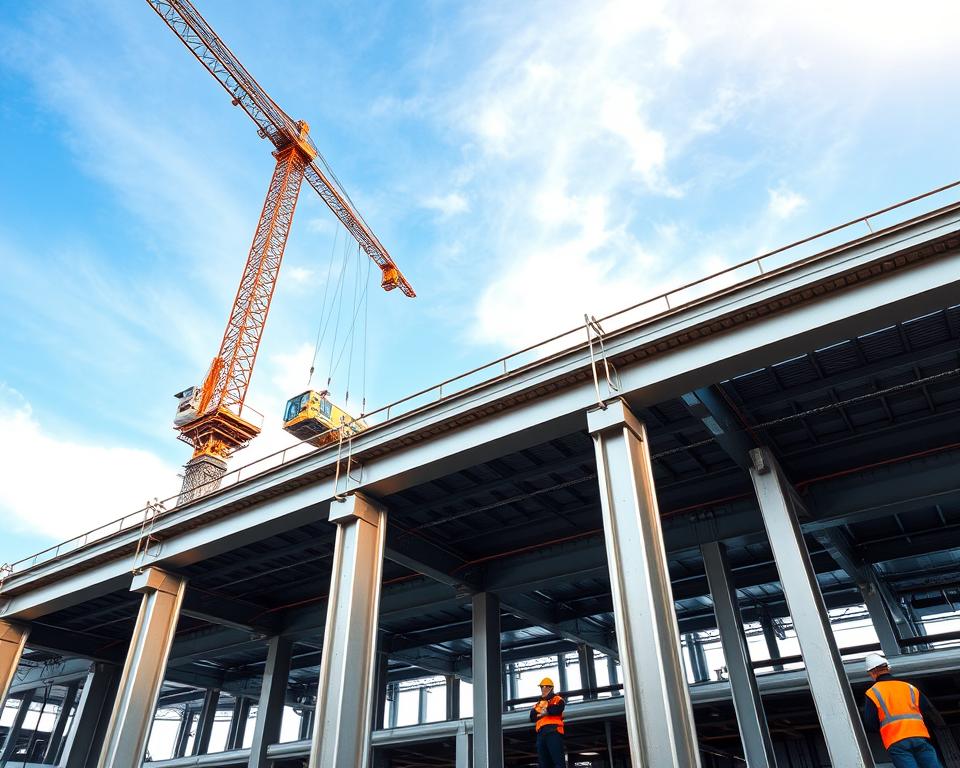
Planning Your Steel Frame Structure
Starting to plan steel frames requires a solid foundation. It’s important to have a clear vision from the beginning. This vision guides the design and ensures it’s functional.
Every project is different, with its own purpose and size. These differences affect both the look and the structure of the building. Thinking about these early on can make the process smoother.
Initial Concept and Design Considerations
The first step is to set a clear vision for your project. Designers need to think about the design considerations for steel buildings. They should consider the building’s use, height, and layout.
These factors help decide on the structure and materials. The goal is to find a balance between strength and beauty.
Analyzing Site Requirements
Doing a detailed site analysis is key. It makes sure the building can handle the environment. Important parts of this include:
- Geographic location: Helps understand local weather and geography.
- Soil type: Affects the foundation and construction challenges.
- Climate: Influences design choices like insulation and ventilation.
Each of these elements is vital for the building’s strength. Addressing them early saves time and money later.
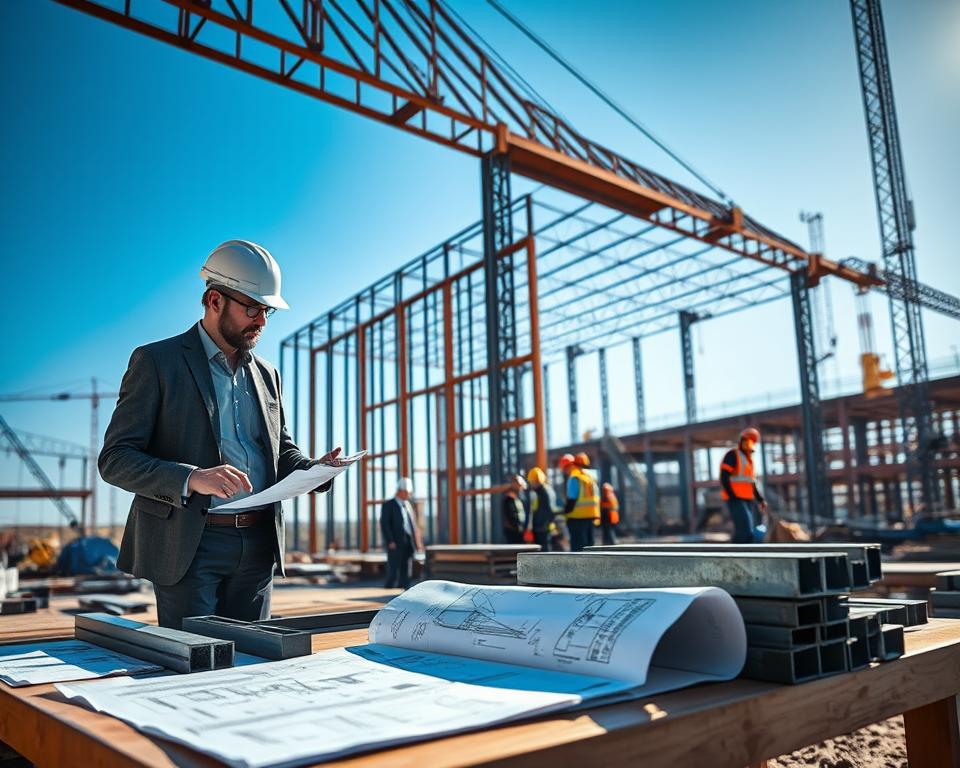
Material Selection for Steel Frames
Choosing the right materials for steel frames is key to their durability and long life. There are many types of steel for construction, each with its own strengths. Knowing which to use for what job helps keep structures strong and saves resources.
Types of Steel Used in Construction
Several types of steel are used in building frames. Here are a few:
- Cold-formed steel: It’s versatile and light, great for many uses.
- Galvanized steel: It resists corrosion well, making it perfect for wet areas.
- High-strength low-alloy steel: It’s strong and flexible, perfect for heavy loads.
Importance of Quality Assurance
Quality control in steel making is vital. Following strict standards ensures products are safe and perform well. Good quality control makes structures reliable and strong. Meeting these standards is essential for any project’s success.
| Type of Steel | Features | Common Applications |
|---|---|---|
| Cold-formed steel | Lightweight, flexible | Residential and commercial framing |
| Galvanized steel | Corrosion resistant, durable | Building facades, outdoor structures |
| High-strength low-alloy steel | Strong, ductile | Bridges, industrial buildings |
Choosing the right materials and focusing on quality are the cornerstones of successful steel frame projects.
Structural Integrity and Safety
In the world of steel frame construction, safety is key. Understanding building code compliance is vital. These rules guide builders to ensure structures are safe and functional.
By following local codes, builders can lower the risk of structural failures. This makes buildings safer for everyone.
Ensuring Compliance with Building Codes
Building codes set the minimum safety standards for construction. They ensure steel frames can handle different stresses. Regular inspections help builders stick to these codes.
This keeps the project safe and on schedule. It ensures the building is ready for its future users.
Importance of Load-Bearing Calculations
Load-bearing calculations are critical for steel framing’s safety. They show how much weight a structure can handle. Builders must accurately predict the loads on the framework.
Doing this early in design reduces the risk of overloading. It makes the building safer for everyone.
Cost Estimates for Steel Frame Projects
Getting the cost right for steel structures is key to a project’s success. Many factors affect the budget. These include the materials, labor, and the project’s complexity.
Factors Influencing Project Costs
Several elements impact the cost of steel frame construction. Key factors include:
- Material prices, which can change with market demand.
- Labor costs, influenced by skill level and local wages.
- Design and engineering needs, which add to the project’s complexity.
- Site conditions, which might require special equipment or access.
- Permitting and compliance fees from local regulations.
Budgeting for Unexpected Expenses
Managing steel construction projects well means planning for the unexpected. Initial estimates are a good start, but surprises can happen. To stay on budget, consider:
- Contingency funds of 10-15% of the total budget.
- An allowance for possible material price hikes during construction.
- Flexibility in labor costs, for overtime or unexpected hiring.
| Cost Factor | Estimated Percentage of Budget |
|---|---|
| Material Costs | 40-60% |
| Labor Costs | 30-50% |
| Design/Engineering | 5-15% |
| Permitting/Compliance | 2-5% |
| Contingency Funds | 10-15% |
Environmental Considerations
The construction world is changing, with sustainable steel construction leading the way. Builders are now using eco-friendly methods in steel framing. This helps them meet today’s needs and prepare for tomorrow’s challenges.
By cutting down on waste and reducing carbon emissions, the industry is listening to the public’s growing demand for sustainability.
Sustainability in Steel Frame Construction
Sustainability is no longer just a trend; it’s essential in steel frame building. Using recycled steel saves natural resources and reduces energy use. New techniques in environmental considerations steel framing make buildings efficient and green.
Choosing local materials and products also helps. It cuts down on emissions from transportation.
Reducing Waste and Carbon Footprint
Reducing waste is key to a greener construction future. This includes recycling steel, using materials wisely, and planning layouts to avoid waste. These steps help lower carbon emissions, making the environment healthier.
Some companies are even using new tech to track and manage waste. This ensures every material is used to its fullest extent in building projects.
Project Management for Steel Frame Structures
Effective project management in steel construction is key to on-time and budget-friendly projects. A structured approach to scheduling steel frame projects improves operations flow. By creating a timeline, teams can plan resource use, streamline workflows, and track progress.
Planning ahead lowers the risk of delays and fosters a unified work environment.
Scheduling and Timeline Development
Starting a detailed schedule for steel frame construction involves understanding the project needs and setting achievable milestones. This helps teams divide the construction into smaller, easier-to-manage phases. Project managers use Gantt charts or other tools to plan timelines and resource use.
Keeping the schedule up-to-date offers a clear view of progress. It also helps spot any issues early.
Coordination with Contractors
Contractor coordination is vital for successful steel frame projects. Good communication with contractors ensures everyone is working together. Regular meetings and updates prevent misunderstandings and encourage teamwork.
When contractors and project managers work well together, projects are more likely to finish on time. This leads to better efficiency and outcomes.
Innovations in Steel Frame Engineering
The world of steel frame construction is changing fast. New technologies and materials are making buildings stronger, more efficient, and cheaper. These changes are making planning and building steel frames better.
Advances in Technology and Design
Recently, technology has changed how engineers design steel frames. Tools like Building Information Modeling (BIM) help teams work together better. It makes planning more accurate and cuts down on mistakes.
Simulation software also helps. It lets engineers see how designs work in different situations. This makes buildings safer and more reliable.
Smart Materials and Their Impact
Smart materials are bringing new ideas to engineering. They can adapt and even heal themselves. This means buildings can last longer and be more sustainable.
For example, some materials can change temperature. This saves energy and makes buildings more comfortable. The steel framing industry is moving towards a future where buildings are both strong and green.
| Technology | Benefits | Impact on Construction |
|---|---|---|
| Building Information Modeling (BIM) | Enhanced collaboration and accuracy | Reduced errors and rework |
| Smart Materials | Energy efficiency and adaptability | Increased building longevity |
| Simulation Software | Improved design assessment | Greater safety and reliability |
Case Studies of Successful Steel Frame Projects
Looking into case studies in steel construction helps professionals learn from top projects. Each one faces unique challenges and finds creative solutions. These stories teach us how to make future projects better, focusing on efficiency and resource use.
Noteworthy Examples Across Various Industries
Some steel frame projects really stand out. For example, the Apple Park in Cupertino, California, is known for its design and green materials. It shows how advanced engineering can keep structures strong while being kind to the planet.
The Willis Tower in Chicago is another great example. Built in 1973, it got a big update to save energy. This shows how learning from past projects can lead to better ways of using resources in building today.
Lessons Learned from Each Project
Every case study in steel construction teaches us something new. One big lesson is the value of working together early on. This can cut down on delays and save money. It’s key to have good communication among all involved.
Also, quality checks are super important. Testing and inspections make sure materials are safe and the structure lasts long. These lessons stress the importance of following building codes and best practices in engineering.
Future Trends in Steel Frame Structure Planning
The world of steel frame construction is changing fast. New design practices focus on being flexible and green. Architects now use steel frames for their strength and to fit many styles.
This move towards modern steel framing brings unique and flexible buildings. These buildings stand out in today’s cities.
Evolving Design Practices and Techniques
Smart technologies are becoming part of steel structures. These changes make buildings more energy-efficient and useful. They also meet the need for green buildings.
Architects are adding beauty to steel frames. They show the artistic side of steel while keeping it strong.
The Role of Steel Frames in Modern Architecture
Steel frames are key in modern building designs. They make buildings look good and work well. Sustainability is important, so using recyclable materials and new designs is key.
The future of steel frame planning looks bright. Architects and builders keep finding ways to be creative and practical. Steel frames will be a big part of future projects.