ADVERTISEMENT
About 1 million stair-related injuries happen in the United States every year. This shows how vital the design of staircases is. In today’s stair design, safety, use, and beauty are key. This means creating stairs that are safe and look good is a must for homeowners, builders, and architects.
Key Takeaways
- Staircase structural design is vital for safety and usability.
- Modern stair design combines functionality and aesthetics.
- Proper stairway construction can prevent numerous injuries.
- Understanding key components is essential in effective design.
- Compliance with building codes is critical for safety.
Understanding Staircase Structural Design
Staircase structural design focuses on making stairways that are safe, useful, and follow building codes. The choices in design affect both how the stairway looks and its stability. Ensuring the stairway is comfy and easy to use is key.
What is Staircase Structural Design?
This design involves principles to create stairs that hold up well and are easy to use. It includes choosing the right sizes for treads and risers, and picking materials that last. Good stair design makes a space work better.
ADVERTISEMENT
Importance of Proper Structural Design
A solid staircase design makes stairs safer by cutting down on slip or fall risks. It meets building codes for slope, width, and other size needs. Meeting these codes means the stairs not only are safe but also easy to walk on, moving smoothly between floors.
Common Types of Staircases
Knowing about the different types of staircases is crucial. Popular kinds include:
- Straight flight stairs
- Half-turn stairs
- Quarter-turn (L-shape) stairs
- Open-well stairs
- Helical stairs
- Spiral stairs
Every type has its own benefits and fits certain building styles. Whether you want something simple or fancy, these staircases can spark great design ideas for any place.
Key Components of Staircases
When creating a staircase, it’s key to know its main parts. This knowledge is crucial for its look and how it works. We’ll take a close look at each vital component next.
Treads and Risers
Treads are the parts you step on when going up or down. Risers are the vertical parts between treads, adding height to the stairs. It’s important to size these right for safety and comfort. Rules often set the size to make sure steps are easy to use. You can choose different materials for treads and risers to match your style.
Stringers and Landings
Stringers hold up the steps and are made of wood or metal. They make the stairs stable. Landings are resting spots at the start and end of stairs. They’re key in busy spots to help people move easily and safely.
Handrails and Guardrails
Handrails help keep you safe by making it easier to walk up or down. You can pick from many styles, like classic wood or modern metal. Guardrails stop people from falling off the sides. These parts are crucial for safety and must follow specific rules on where to place them.
| Component | Function | Common Materials |
|---|---|---|
| Treads | Support for foot placement | Wood, Metal, Concrete |
| Risers | Vertical space between treads | Wood, Metal, Glass |
| Stringers | Structural support | Wood, Metal |
| Landings | Flat areas for rest and transition | Wood, Tile, Concrete |
| Handrails | Support during use | Wood, Metal, Composite |
| Guardrails | Prevent falls | Wood, Metal, Glass |
Materials Used in Staircase Design
Choosing the right materials is key to making a staircase that’s not just useful but also looks great. The type of material can change the look and strength of the stairs. We’ll look at three main options: wood, metal, and concrete. Each one has its own advantages and style. They help make the staircase last longer and look better.
Wood
Wood is a top choice for its warm look and natural beauty. It can be finished in different ways, so it fits well with any decor. Wood that’s sourced responsibly can also be good for the environment. It gives off a timeless beauty.
There are many kinds of wood like oak, cherry, and maple. Each kind brings something special to the design of modern stairs.
Metal
Metal staircases are known for being strong and giving a modern look. The industrial style of metal can make any space look more up-to-date. It feels sleek and fresh. Steel and aluminum are popular because they are strong but not heavy.
These materials can be reused, which is good for the planet. Metal can be used in different parts of the staircase, boosting its life span.
Concrete
Concrete is a tough material that can handle a lot of weight. It can be shaped into different forms to meet any design requirement. It’s also eco-friendly. It can include recycled materials or special additives.
Concrete also offers design flexibility and requires less upkeep. This makes it a smart choice for places with lots of people coming and going.
Design Considerations for Safety
Safety is key in designing staircases. Combining design with local building codes ensures they’re not just functional but safe. Codes set the rules for tread and riser sizes and how much weight stairs should bear. This helps prevent accidents.
Building Codes and Regulations
It’s important to know building codes for safe and legal staircase design. These rules detail:
- How big treads and risers need to be
- The right height and gap for handrails
- How much weight stairs should support
Following these rules keeps everyone safe and reduces the risk for those who build or own homes.
Load-Bearing Requirements
Considering how much weight a staircase can support is crucial. A good design must handle:
- Static loads, like the weight of the staircase itself
- Dynamic loads, or the weight of people walking on the stairs
This ensures stairs stay safe and sturdy during daily use.
Slip-Resistant Surfaces
Using slip-resistant surfaces is crucial for safety. Staircase designs should include materials that provide better grip. This is especially important in busy places or homes with kids and the elderly. Here are some options:
| Surface Type | Benefits | Examples |
|---|---|---|
| Textured Materials | Increased traction to prevent slips | Textured tiles, rubber treads |
| Anti-Slip Coatings | Improves existing surfaces | Specialized paints and treatments |
| Carpets | Soft surface with excellent grip | Indoor stair runners, wall-to-wall carpeting |
Aesthetic Aspects of Staircase Design
The design of a staircase greatly impacts a home’s atmosphere. Choosing the right styles and finishes can make a basic staircase stand out. Homeowners can pick from modern to classic styles. These fit different tastes and house designs.
Choosing Styles and Finishes
Staircase design trends offer plenty of style choices. You can go for sleek metal railings or elegant wooden steps. Both add beauty to your home. Choosing between matte or shiny finishes makes the stairs fit perfectly with your home’s style.
Color and Material Combinations
The colors and materials of a staircase define its look. Soft colors give a calm feel, while bright colors stand out. Using different materials together, like wood with metal or glass, adds texture. This fits both modern and classic homes.
Integrating with Home Décor
A staircase should match your home’s decor for a unified look. Think about the colors and design around it. Whether you’re updating or starting new, picking the right staircase design adds to your home’s character.
Calculating Stair Dimensions
Knowing how to figure out stair dimensions is key for safe and comfy stairs. This matters for both regular designs and unique stair projects. We’ll look into the basic stair sizes, personal touches, and the must-have tools for getting the measurements right.
Standard Stair Dimensions
Standard stair sizes make stairs comfy and safe to use. The best height for each step is between 4 to 7 inches. And, the part you step on should be 10 to 12 inches deep. These rules make sure the stairs are easy to use and meet safety codes.
Custom Stair Design
When making custom stairs, you still need to think about the standard sizes. But, you also consider what the user needs, the space, and how you want it to look. Planning well means making stairs that not only look good but work well too.
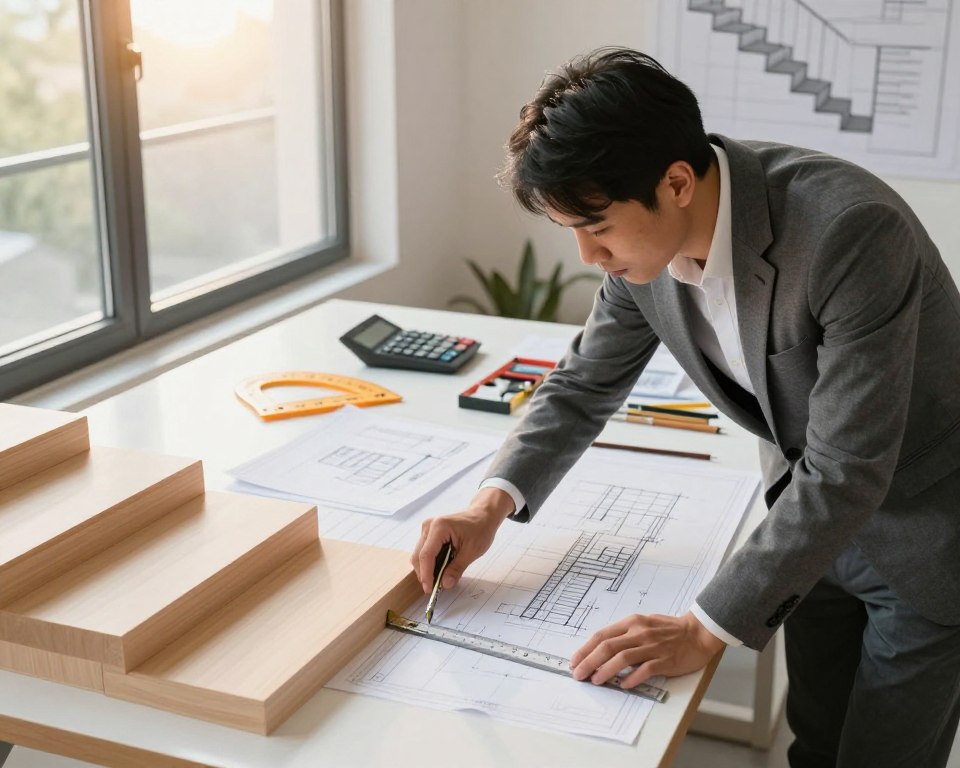
Tools for Measurement
The right tools are crucial for accurate stair measurements. Laser tools give exact numbers quickly and make planning easier. Tape measures are also great for simple measurements. Picking the best tools means your stairs will meet your safety and design goals.
| Measurement Tool | Function | Advantages |
|---|---|---|
| Laser Distance Measurer | Measures distance quickly and accurately | High precision, easy to use |
| Tape Measure | Standard measuring tool for various dimensions | Cost-effective and widely available |
| Level | Ensures surfaces are even | Crucial for correct installation |
| Protractor | Measures angles | Helpful for custom design angles |
Structural Support for Staircases
Staircase engineering starts with understanding structural support. A good staircase needs to spread out weight right to stay safe and last long. Each part of the staircase works together. They make a strong structure that looks great and can handle lots of force.
Load Distribution
Load distribution is how a staircase’s weight is evenly spread. This stops too much stress on any part and lowers failure risk. Designers must figure out how much weight stairs will carry. Then, they make sure treads, risers, and stringers share the load. This makes the stairs safer for everyone.
Foundation Considerations
The staircase’s foundation matters a lot for its stability. The foundation needed varies with the materials and design. Wooden staircases need a strong base to avoid sagging. Concrete or metal stairs need strong foundations to support more weight safely. Better planning of these parts during design boosts performance.
Reinforcements and Bracing
To make staircases stronger, especially where many people walk, we use reinforcements and bracing. Adding diagonal braces or support beams helps a lot. These steps are key to manage different weights and for stairs to last longer. Knowing how to add these supports means safer stair designs.
Incorporating Lighting into Stair Design
Lighting is key in making staircases both safe and good-looking. Picking the right stair lights can change your space dramatically, making it look better and brighter. It’s important to know about the latest lighting designs to get the best results.
Types of Stair Lighting
Many stair lighting options can boost a staircase’s look and safety. You can choose from:
- Recessed lighting
- Wall-mounted sconces
- Step lights
- LED strips
Each choice helps make your staircase welcoming and safe, especially when it’s dark.
Placement for Maximum Effect
Putting lights in the right spots is key. Aim to light up:
- Step edges for better visibility
- Landings for safety
- Handrails to guide the way
This smart setup not only looks great but helps prevent accidents too.
Enhancing Safety with Lighting
Good lighting on stairs makes them a lot safer. Well-lit steps mean fewer falls and injuries. Look at lighting trends to pick the best color and brightness. Bright white lights help you see better and stay alert, so it’s easier and safer for everyone to use the stairs.
Sustainable Staircase Design
Sustainable staircase design focuses on eco-friendly practices. It uses green materials and efficient lighting. This way, homeowners lower their environmental impact and benefit their surroundings.
Eco-Friendly Materials
For stairs that stick to sustainable design, choosing the right materials is key. Here are some options:
- Reclaimed wood: It’s great for reducing waste and adding unique charm.
- Recycled metal: It’s strong, modern, and cuts down on using more resources.
- Sustainably sourced concrete: It lasts a long time, especially from mindful producers.
Energy-Efficient Lighting Solutions
Adding energy-efficient lighting keeps stairs safe while saving power. Some popular choices are:
- LED fixtures: They last a long time and use way less energy than old-style bulbs.
- Solar-powered lights: Perfect for outdoor stairs in sunny places.
- Smart lighting systems: They turn off automatically, so you use less power.
Designing for Longevity
Stairs made to last support sustainable building. Keep these ideas in mind:
- Robust materials: Pick strong parts that don’t wear out quickly.
- Modular designs: These make repairs and updates simpler, without needing a whole new staircase.
- Low-maintenance finishes: They keep stairs looking good longer, without much work.

DIY vs. Professional Staircase Design
When deciding between DIY staircase work and hiring professionals, it’s key to assess both paths. DIY attracts many for its personal touch and cost savings. Yet, it requires specific skills and a lot of time. Hiring professionals, though more expensive, ensures work meets building codes and is of top quality.
Pros and Cons of DIY Staircase Projects
Working on a staircase by yourself can be fulfilling and save money. Let’s look at the ups and downs:
- Pros:
- Costs less than getting a professional.
- Allows for creativity and unique outcomes.
- Gives a sense of achievement from manual work.
- Cons:
- Demands time and effort, which could lead to delays.
- Necessitates knowledge of building codes and safety norms.
- Mistakes can result in extra expenses for fixes.
When to Hire a Professional
Knowing when to call in an expert is important. If your project is complex or you lack experience, getting a professional is smart. They ensure top-quality work that meets safety rules. If you’re short on time or unsure about design, a pro can make a big difference.
Cost Considerations
Cost plays a big part in deciding which route to take. Here’s how the costs compare:
| Factor | DIY Cost | Professional Cost |
|---|---|---|
| Materials | Generally lower | Higher due to quality and sourcing |
| Labor | No labor costs | Includes professional fees |
| Time Investment | High, depending on complexity | Lower, completed faster |
| Final Quality | Variable, dependent on skill | Consistently high quality |
Innovations in Staircase Design
Staircase design is changing with modern tech. It’s blending function and style in new ways. These changes make stairs not only look better but work better too.
Using smart software helps designers plan better. It allows for precise and efficient work. This move towards modern looks is changing how we see stairs.
Modern Technology in Design
Technology is key in today’s staircase design. It lets designers see their ideas in 3D. This means clients get a real feel for the project early on.
This detailed approach helps cut down on mistakes. It makes the whole building process smoother and cheaper.
Trends in Staircase Design
Nowadays, stairs can look like they’re floating. This brings a cool, modern vibe to spaces. Using glass and metal makes stairs seem lighter and more open.
This lean towards minimalism doesn’t forget about practicality. It’s all about making stairways more useful and stylish.
Smart Staircases
Smart staircases use tech to make climbing safer and easier. Things like lights that turn on when you step on them help prevent falls. This mix of tech and design is catching on in smart homes everywhere.
Maintenance and Repair of Staircases
Keeping your staircase in good shape is important for its long life and safety. It’s smart to check your stairs regularly for problems. Look out for loose steps, damaged handrails, and small cracks. Fixing these issues early avoids big repairs later.
Often, you’ll find squeaky steps and loose parts. These problems are usually easy to fix. Quick repairs keep your stairs working well and safe for everyone. Regular upkeep also keeps them looking good and safe.
Knowing when to fix or replace parts of your staircase can be hard. For minor damage, a repair might be enough. But big problems might mean you need a new part. Understanding when to repair or replace is key. It ensures your stairs stay safe and useful for a long time.