ADVERTISEMENT
Did you know nearly 70% of U.S. homes have shaded spots? This fact shows the big chance for shade gardens. They can turn dull, unused areas into lively spots. By picking the right plants and knowing about different shades, you can make a charming place. Let’s check out some shade garden layout ideas to help your shady areas bloom.
Key Takeaways
- Explore the potential of your shaded outdoor spaces.
- Identify the best plants that thrive in low-light environments.
- Learn how to effectively design your shade garden layout.
- Understand the importance of different types of shade for plant selection.
- Incorporate garden design elements to enhance visual appeal.
- Utilize these tips to make your shade garden truly enchanting.
Understanding Shade Gardens
Starting a garden in spots without much sunlight might seem hard. But it actually offers cool chances to be creative. Knowing about shade gardens is the beginning of loving this garden type. Shade gardens grow well in dark spots, like under trees or behind buildings. They look great and let you grow lots of different plants.
What is a Shade Garden?
A shade garden fits best with plants that don’t need much light. These gardens vary by how much light they get, like partial shade (2-6 hours of light a day), full shade (more than 6 hours), and dappled shade. Dappled shade means light comes through leaves here and there. Knowing about shade gardens helps you use overlooked spaces. You can turn them into awesome spots to enjoy.
ADVERTISEMENT
Benefits of Having a Shade Garden
Shade gardens have lots of perks. They usually need less work. That’s because plants there often don’t need as much water or attention. These gardens also help save water. So, they’re good for the planet. Plus, they make a calm place to relax surrounded by plants, right in your backyard.
Choosing the Right Plants
When you’re making a shade garden, picking the right plants is key. You’ll want to know which plants love shade and will grow well where you live. Hostas, ferns, and astilbes are great for places with little light. They don’t just survive—they really stand out, making your shade garden look amazing.
Top Shade-Tolerant Plants
There are lots of plants that do well in the shade. Here are some top picks:
- Hostas: They have beautiful leaves and come in many colors and sizes.
- Ferns: These are perfect if you want something soft and airy.
- Astilbes: They bloom with bright flowers in the summer.
- Heuchera: These have leaves that keep your garden colorful all year.
- Japanese Anemone: They flower in late summer and fall, keeping your garden lively.
Foliage vs. Flowers: What to Consider
It’s important to think about leaves versus flowers in your garden. Leaves add texture and fullness, which is great when not many flowers are blooming. Flowers bring color but plants with leaves often fill up a shade garden, providing a rich background. Thinking about what you want your garden to look like will help you choose the right mix.
Seasonal Considerations
The time of year matters a lot when choosing plants. Some are perfect for spring, while others bloom in summer or fall. Picking a variety of plants for your shade garden means something interesting is always happening. Learning from local gardening workshops or reliable plant lists is a good way to find plants that will match your garden’s vibe perfectly.
Designing Your Layout
When you plan your shade garden, think hard about specific key principles. A good design balances variety and unity. Use these ideas to create a peaceful spot that fits well with nature.
Key Principles of Shade Garden Design
To make a shade garden, balance is key. Use a mix of plants that have different leaves, textures, and heights. This mix keeps the garden interesting all year. Each part of the garden should work well with the others.
Using Layers for Depth
Adding layers makes your garden look deeper, like a natural woodland. Put tall plants in the back or middle and short ones in front. This setup lets all plants get enough light and grow well.
Creating Focal Points
Adding things like unique trees, sculptures, or water features makes your garden draw attention. These parts tie the garden together and make it fun to explore. Drawing your garden plan helps place these features just right.
Incorporating Pathways and Borders
Pathways and borders are key to making your shade garden useful and beautiful. Choosing the right material options for pathways makes your garden easy to walk through. Plus, it looks good. Picking materials that match the natural setting adds both beauty and lasts long.
Material Options for Pathways
There are many materials you can use for pathways in your shade garden. Here are some favorites:
- Gravel: It’s affordable and drains well. It also brings a cozy, rustic feel.
- Stone: Stones or flagstones add elegance. They look great against the greenery.
- Mulch: For a natural vibe, mulch is perfect. It stops weeds and feeds the soil too.
Edging Choices for Definition
Using edging to outline your garden beds boosts structure and tidiness. Here are some edging materials to consider:
- Bricks: They offer a neat, traditional look. Great for surrounding pathways and beds.
- Pavers: With many colors and shapes, pavers let you get creative. They’re also stable.
- Natural Stones: Stones that match your paths make the whole garden look united.
Adding Structural Elements
Adding structural elements enhances both the function and look of your shade garden. Items like garden furniture and well-planned water features make it welcoming. You can relax and feel closer to nature.
Introducing Garden Furniture
Choosing the right garden furniture turns your area into a cozy spot. Chairs, benches, or picnic tables are great for relaxing or hanging out. Go for durable, weather-proof materials that match your garden’s beauty.
Shade gardens do well with metal or treated wood furniture. They’re easy to care for, comfy, and stylish.
Water Features for Serenity
Water features, like fountains or small ponds, add soothing sounds to your garden. Their gentle flow makes the space more peaceful and enjoyable. Think about water features that look natural in your garden.
Pick low-maintenance options that won’t bust your budget. They should complement your plants and outdoor furniture nicely.
Lighting in Shade Gardens
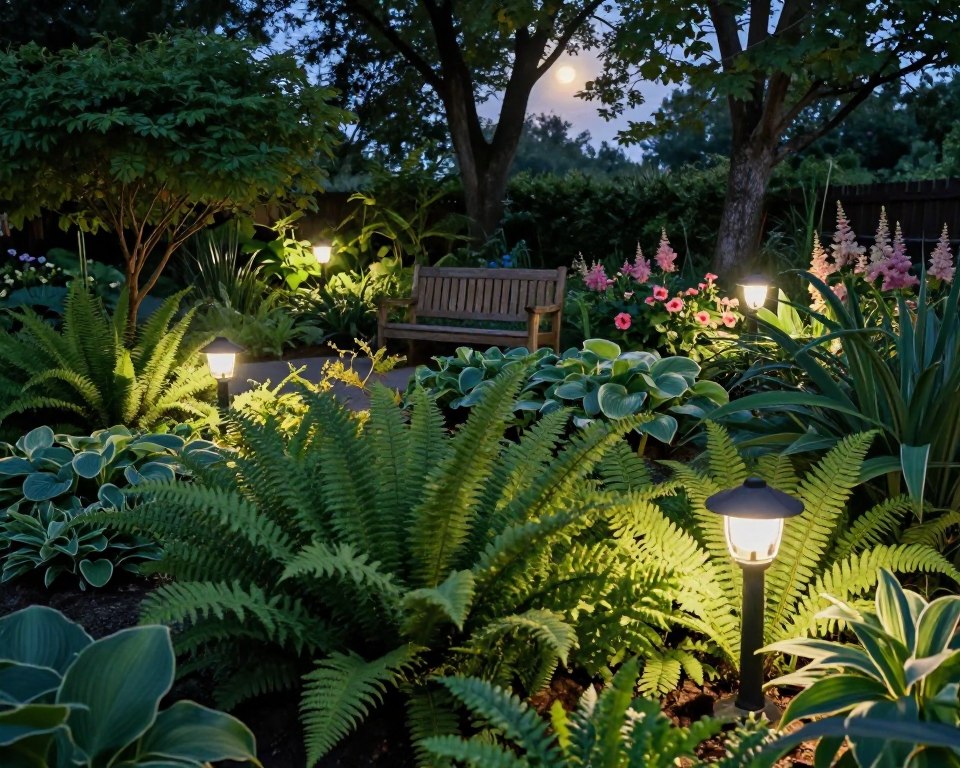
Adding outdoor lighting to shade gardens greatly improves their look and feel. Good lighting makes paths safe to walk on at night. It also highlights the beauty of your plants and garden features, creating a peaceful night scene. You can choose from many types of lights to match your garden’s style and needs, making your shade garden layout complete.
Types of Outdoor Lighting
- Pathway Lights: These fixtures light the way through your garden, making it safer and more stylish.
- Spotlights: Great for showing off specific plants or decorations, they grab attention and create highlights.
- String Lights: They add a magical touch, perfect for wrapping around trees or along fences for a warm atmosphere.
- Bench Lights: Light up seating areas to make them welcoming places to hang out in the evening.
- Wall Sconces: Mounted on walls, they give a gentle light that improves the look of your garden’s design.
Creative Uses of Light Fixtures
Crafting a lovely shade garden layout means trying out various lighting ideas. Mixing different types of lights adds depth and interest. Think about using colored lights for a magical touch or setting up lights to emphasize your garden’s shape. Express your style, whether it’s modern or rustic, to make your garden truly your own.
Seasonal Maintenance Tips
Keeping a shade garden healthy requires year-round effort. By following key tips, you can boost your garden’s plants’ health and vitality. Tasks include watering, weeding, fertilizing, and guarding against pests and diseases.
Best Practices for Plant Care
To keep your shade garden vibrant, here are vital practices:
- Watering: Make sure your plants get enough water without making the soil too wet.
- Weeding: Get rid of weeds that steal nutrients and water from your plants.
- Fertilizing: Feed your plants with a balanced fertilizer during grow time for strong growth.
- Pest Control: Check for pests often and handle any problems fast to keep them away.
Preparing for Winter
Getting your shade garden ready for winter is key to protecting your plants. Here are top tips:
- Mulching: Put a good layer of mulch around your plants to keep roots warm and moist.
- Cutting Back Perennials: Cut back dead or dying parts to help plants grow back in spring.
- Drainage: Make sure water flows away from your plants to stop root rot.
Overcoming Common Shade Challenges
Shade gardens have their own challenges, including issues with soil and pests. Often, these gardens get less sunlight. This can cause water to stand because it evaporates slowly. Improving the soil helps with drainage and keeps your plants healthy. It’s also key to know which pests and diseases might attack your shade garden.
Dealing with Soil Drainage
For better soil drainage in shade gardens, use organic matter like compost. This helps the soil let water through more easily. Watch for spots where water stays and think about solutions like:
- French drains for redirecting excess water
- Raised beds to elevate plant roots above potential waterlogged areas
- Amending soil with sand to enhance drainage capabilities
Managing Pests and Diseases
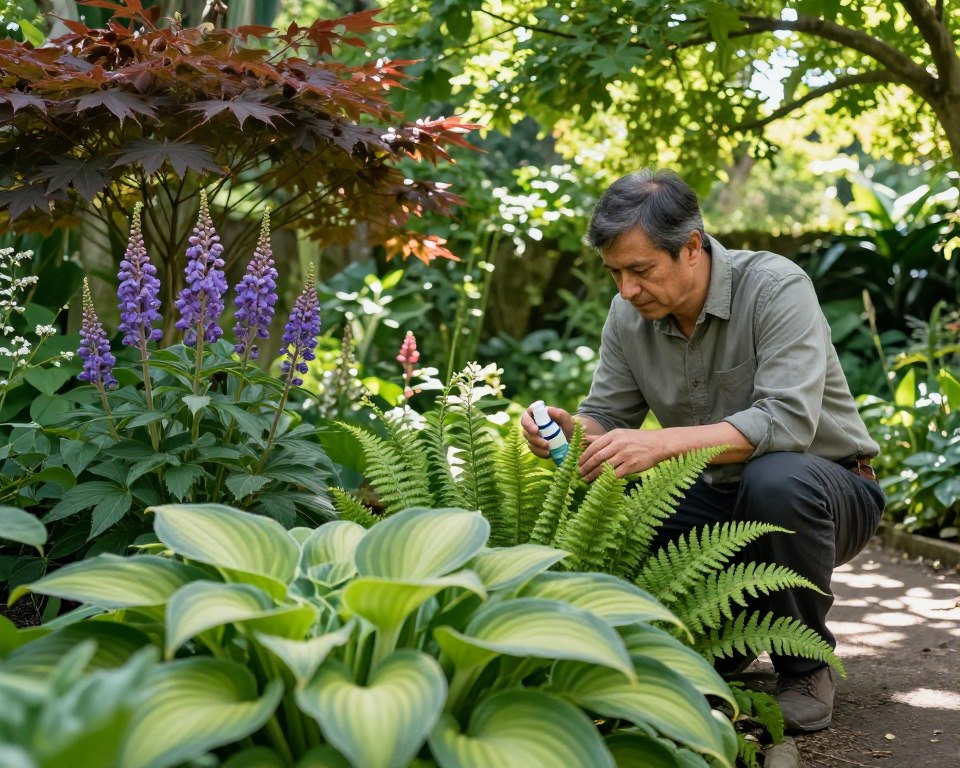
Pests can still find your shade garden. Knowing what issues are common helps you stop them. Here are some steps:
- Regular inspections of plants to catch problems early
- Using insecticidal soaps or neem oil for gentle pest management
- Encouraging beneficial insects, like ladybugs, to naturally control pest populations
Shade garden layout tips help make a stronger home for various plants. Knowing how to control pests makes your garden shine and stay lively.
| Common Pests | Symptoms | Management Techniques |
|---|---|---|
| Aphids | Sticky residue on leaves, curled foliage | Insecticidal soap, natural predators |
| Slugs | Irregular holes in leaves | Handpicking, copper barriers |
| Mites | Pale speckling on leaves | Sprays with water, horticultural oil |
Inspiring Shade Garden Case Studies
Looking into different shade gardens can give lots of ideas for those wanting to improve their gardens. Whether it’s a city garden or a large country one, these gardens show beauty can thrive in shade. They prove that with good design, shaded areas can be just as stunning.
Urban Shade Gardens
In cities, shade gardens make the most of small spaces. They use vertical planting and containers to bring greenery to tight spots. Plants like ferns, hostas, and perennials add life to these gardens. Gardeners also use things like trellises and decorative stones to turn grey spaces green.
Rural Shade Retreats
In the countryside, shade gardens can use a wider variety of plants. These gardens blend into the surrounding land, making nature and garden flow together. Pathways with flowers and wooden benches add to this natural feel. Big trees offer shade, and beds of native plants draw the eye. These gardens are peaceful spots for people to enjoy the outdoors.
Final Thoughts on Shade Garden Layouts
Exploring shade garden layouts lets you use your creativity and personal taste. If you’re starting or tweaking a garden, feel free to try new things. Mix different plants, colors, and structures to show your style.
Encouragement to Get Started
Join local gardening groups for support and ideas as you start this journey. They offer helpful advice for creating a lush garden. Starting your shade garden could open up a peaceful haven for you and your plants.
Embrace Your Creativity
The calm and variety make a shade garden special. Mix plant sizes and textures to make your garden interesting. With careful planning and creativity, your garden will turn into a peaceful retreat.