ADVERTISEMENT
Did you know almost 85% of people living in cities are now trying out container gardening? This growing trend helps bring life and nature into tight, urban spaces. In our Container Garden Layout Guide, you’ll learn all about starting your own beautiful container garden.
Whether you’re just getting interested in the best designs for container gardening or you’ve been gardening in the city for a while, this guide has something for you. We’ll show you how to pick the right containers and select plants that make your space shine. Let us guide you in creating your ideal garden oasis.
Key Takeaways
- Container gardening is ideal for urban dwellers with limited space.
- Selecting the right container is crucial to plant health and aesthetics.
- Understanding drainage techniques can prevent overwatering.
- Grouping containers can enhance sunlight exposure.
- Choosing the right plants is key to a vibrant container garden.
- Planning layout maximizes productivity and beauty in small areas.
Understanding Container Gardening Basics
Container gardening lets you grow plants easily and flexibly. It’s perfect for those with small spaces, like apartment balconies or tiny yards. You can grow flowers, herbs, or vegetables right where you live. This method makes your space beautiful and gives you fresh produce.
ADVERTISEMENT
What is Container Gardening?
Container gardening means growing plants in pots or other containers instead of in the ground. This way, gardeners can fully control the environment. It enables growing many kinds of plants, no matter the soil quality. You can use pots, hanging baskets, or even upcycled items like wooden crates.
Benefits of Container Gardening
Container gardening offers many advantages, especially for city residents:
- Versatility: You can grow plants almost anywhere if there’s enough sunlight.
- Mobility: You can move containers to get the best sunlight and protect them from bad weather.
- Improved soil management: Gardeners can mix their soil to meet plant needs perfectly.
- Aesthetic appeal: Containers let you be creative with design and arrangement.
Types of Containers Available
There are many container options for gardeners starting out. Some popular choices include:
- Terracotta pots
- Plastic containers
- Wooden boxes
- Metal planters
- Hanging baskets
Choosing the Right Containers
Picking out containers for your garden means thinking about the material, size, and how water drains. Making the right choices can help your plants thrive.
Materials to Consider
Choosing container materials involves looking at weight, how well they keep plants warm, and looks. You have a few options:
- Plastic: Light and usually not too pricey, plastic pots are easy to carry and available in many colors.
- Ceramic: These pots look nicer and keep soil moist but are heavy and may crack.
- Wood: Wood pots keep roots warm but need treatment to avoid rot.
- Metal: Metal is tough and looks good but gets hot, which might not suit all plants.
Size Matters
The size of your containers should match the plants you’re growing. Bigger plants need more room for their roots, so choosing the right pot size is important. Remember, smaller pots dry out faster and need watering more often.
Drainage Techniques
Good drainage is key for container gardening. Your pots need to let water flow out to prevent root damage. To improve drainage, try adding rocks at the bottom or mix light soil with compost. This helps water move well and keeps plants healthy.
Planning Your Container Garden Layout
Starting a container garden? Begin with a clear plan. Look at the space you have and think about the best use of it. Helpful tips can make your garden both pretty and practical. Focus on getting lots of sunlight and arranging your containers for the best growth.
Assessing Your Space
Measure your garden space first. This tells you how many containers you can have without making it too crowded. Knowing the size helps in setting up your containers so you can easily reach them. Make sure there’s enough room around each one for proper air flow.
Ideal Placement for Sunlight
Think about how much sun your plants need. Most veggies love six hours of sunlight or more. Place your containers so the tall plants don’t shade the small ones. Tilt the big pots towards the sun to help all your plants get sunlight equally.
Grouping Containers
Put your containers in groups by type or color for a nice look. It also makes it easier to care for plants that need similar things. Mix different heights and textures for an interesting garden. A smart layout makes your garden beautiful and alive.
| Container Height | Sunlight Needs | Recommended Plants |
|---|---|---|
| High (24+ inches) | Full Sun | Tomatoes, Peppers |
| Medium (12-24 inches) | Partial Sun | Herbs, Lettuce |
| Low (6-12 inches) | Shade/Tolerance | Spinach, Creeping Thyme |
Selecting Plants for Your Containers
Choosing the right plants for your containers is key to a beautiful garden. Think about what kinds of plants you like, how the seasons change, and the look you want. Picking the right plants lets you have a mix of colors, textures, and tastes right where you can enjoy them.
Herbs and Vegetables
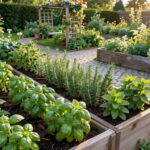
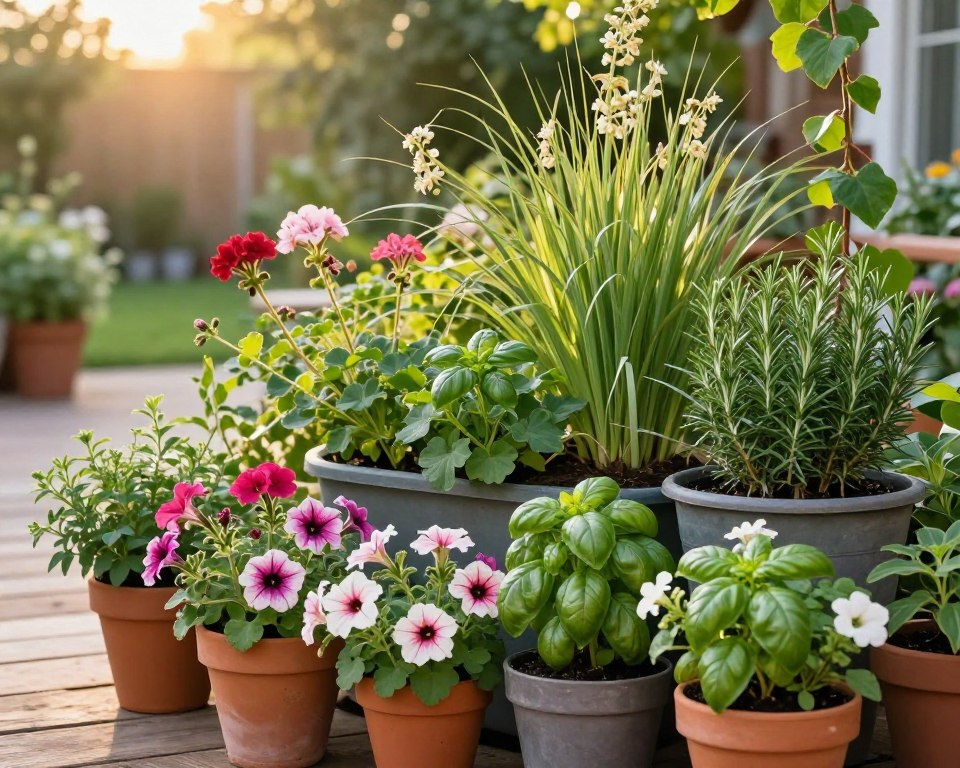
Herbs are great for container gardening. They don’t need much room and add fresh flavors to your cooking. Try growing basil, cilantro, and rosemary. For vegetables, cherry tomatoes, peppers, and small eggplants are good choices. They grow well in pots and give you plenty to harvest.
Annuals vs. Perennials
Knowing the difference between annuals and perennials helps keep your container garden interesting. Annuals, like petunias and marigolds, bloom brightly for one season. Perennials, such as daisies and ornamental grasses, come back every year. Using both can give you a garden that changes with the seasons and stays exciting all year.
Color and Texture Considerations
Pay attention to color and texture to make your container garden stand out. Mix leafy greens with bright flowers for contrast. Try putting smooth leaves next to feathery ones. This mix is not just nice to look at but also makes your outdoor space more inviting.
Designing Your Container Garden
To create a beautiful container garden, think about design. You’ll need to layer heights and textures, make a focal point, and mix plants well. These steps help your garden look good and stay healthy and easy to take care of.
Layering Heights and Textures
Start your container garden design by layering. Put tall plants in the back and shorter ones in front. This way, every plant gets noticed. Adding different textures makes your garden more interesting and lively.
Creating a Focal Point
Every container garden needs a focal point. This could be a special flower, plant, or unique container. It catches the eye and is the center of your garden design. Make sure it fits well with the other plants.
Mixing Plants Effectively
Be thoughtful when mixing plants. Choose plants that grow well together to avoid crowding. Think about colors and textures to make everything look good together. A balanced, symmetrical design makes your container garden attractive.
Seasonal Considerations in Container Gardening
Container gardening thrives when adjusted for each season. Every season brings its own pros and cons. This means changing how you garden to get the best results.
Spring Planting Tips
Spring brings new growth. It’s great for planting herbs and crops that like cool weather. Pick varieties that do well in mild temps. Keep the soil well-drained and water regularly.
You also need to check when the last frost happens in your area. This helps you plant at the right time.
Summer Care Strategies
Summer’s heat means plants need extra attention. Keep the soil moist, especially when it’s dry, to keep plants healthy. Watch out for bugs more, as they love the warm weather.
Sticking to seasonal gardening rules helps keep your plants looking good.
Fall and Winter Preparations
Getting ready for winter takes a few steps. First, keep perennials warm by covering them with mulch or moving them somewhere safe. Pick containers that can handle the cold.
Doing this helps your plants make it through winter and grow back in spring. Remember these tips for gardening success all year round.
Watering and Maintenance Tips
To keep your container garden healthy, understand your plants’ needs. They need the right amount of water, food, and care. This involves managing pests, watering correctly, and using the right fertilizers.
Best Practices for Watering
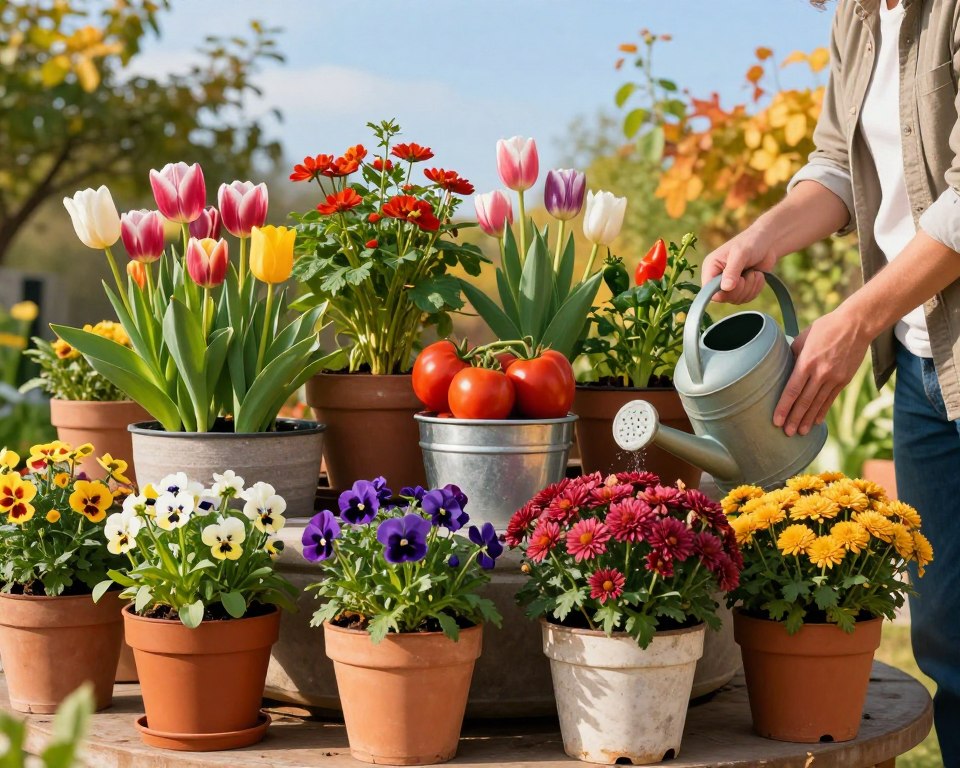
Plants in containers lose water quickly. To keep them healthy, follow these watering tips for container plants:
- Feel the soil about an inch down. If it feels dry, it’s time to water.
- Water in the morning or late afternoon to save water from evaporating.
- Use mulch to keep the soil moist longer.
Fertilization Needs
Container plants grow fast and need lots of nutrients. A balanced fertilizer helps them grow strong and bloom. The growth rate of your plants should guide how often you fertilize. For example:
| Type of Plant | Fertilization Frequency |
|---|---|
| Herbs | Every 4-6 weeks |
| Vegetables | Every 2-3 weeks |
| Annual Flowers | Every 4 weeks |
Common Pests and Solutions
Watching for bugs is key in looking after container gardens. Pests like aphids and whiteflies can harm plants. Using smart pest control methods helps keep them safe. Try these tips:
- Manage small bug problems with insecticidal soap.
- Ladybugs can help. They eat aphids.
- Check your plants often and remove bad leaves.
Using Soil and Fertilizer Effectively
Starting with good soil and the right feed is key to container gardening success. The soil and fertilizers you choose matter a lot for your plants’ growth. A good mix and proper feeding help plants in pots grow well.
Choosing the Right Potting Mix
Look for potting mix that drains well but keeps moisture. It usually has soil, peat moss, and perlite in equal parts. Brands like Miracle-Gro or FoxFarm are good choices. They help roots grow strong and prevent soil from washing away.
Organic vs. Synthetic Fertilizers
Choosing between organic and synthetic fertilizers is crucial for success. Organic fertilizers improve soil and plant health over time. They boost beneficial soil activity. Espoma and BioBizz make gentle organic fertilizers. Synthetic fertilizers, like Miracle-Gro, work fast but must be used carefully. They can harm plants if too much is used. Both types help plants grow, depending on your garden’s needs.
Vertical Container Gardening
Vertical container gardening lets you use small spaces well and makes your garden look great. It uses different vertical gardening methods to make your garden look better and work better. Vertical gardening improves airflow and sunlight for plants, making them healthier.
Benefits of Going Vertical
Going vertical has many benefits. It lets you grow more in less space, perfect for cities. Vertical gardening reduces the need for ground space and cuts down on plant competition. Plus, it can make your garden a beautiful focal point.
How to Create Vertical Spaces
Making vertical spaces is easy and fun. You can use trellises, wall planters, or stack containers to save space and grow more. Think about your space’s light and what plants you want to grow.
Ideal Plants for Vertical Gardens
Choosing the right plants is key for vertical gardens. Vine plants like tomatoes, cucumbers, and beans do well. You can also pick cascading flowers or compact herbs for beauty and variety. Mix different plants for a productive, stunning vertical garden.
Creative Container Ideas
Get creative with your gardening by using containers. It lets you show your unique style. Take everyday items and turn them into cool planters. You can spice up any home or garden spot with these ideas.
Upcycling Household Items
Using what you have for planters is great for creativity. Think differently—use old teacups, pallets, or tin cans. They help cut down on waste and add fun to your garden. You can group small items or use a big one to catch the eye.
Themed Container Gardens
Themed gardens focus on certain plants or looks. You might have a herb garden with basil and mint or flowers that match your decor. These gardens make great scenes for your outdoor spaces. They’re perfect for when you have people over.
Unique Arrangement Ideas
Try different plant shapes and sizes for an interesting garden. Combine tall and short plants or use colors that stand out. Adding flowers to green plants makes your arrangements pop. These ideas show off your creativity and make your space lively.
Troubleshooting Common Issues
Gardening in containers is joyful yet comes with challenges. Knowing how to solve common gardening issues is crucial for keeping plants healthy. Key problems include overwatering, underwatering, pests, and saving dying plants. Having strategies for these issues can save your green friends.
Overwatering vs. Underwatering
Finding the right watering balance is key for container plants. Too much water can lead to yellow leaves or wilting. To fix this, improve drainage or tweak your watering schedule. On the other hand, not enough water makes plants droop and soil dry out. Checking soil moisture regularly can prevent these problems.
Dealing with Pests
Pests often come from cramped containers or poor care. Checking your plants’ leaves and soil helps catch pests early. Use natural treatments like insecticidal soap or neem oil. Staying alert helps you deal with pests and keep your plants healthy.
Reviving Dying Plants
Finding a plant in trouble is sad, but you can often save it. Check how you care for it, like soil, water, and light. Adjusting these can make a big difference. Also, using fertilizers and creating the right environment helps. With patience and the right moves, you can revive many plants.