ADVERTISEMENT
Did you know vertical gardening can boost your planting area by up to 50% in tight spots? This smart method not only uses every inch of space but also turns plain walls into lively green walls. As cities expand and homes get smaller, more folks are using vertical garden layouts to brighten their areas and use space wisely. We’ll dive into various creative vertical garden designs perfect for small spaces, sharing DIY tips, material picks, and plant choices to make any wall bloom.
Key Takeaways
- Vertical gardening maximizes planting space, making it ideal for small areas.
- Innovative designs can transform walls into green spaces.
- Small space vertical gardening enhances accessibility for harvesting.
- A variety of materials and plants can be used for creative vertical garden designs.
- Understanding your wall environment helps in choosing the right layout.
- DIY projects can add a personal touch to your vertical garden.
Getting Started with Vertical Gardens
Vertical gardening is a new way to grow plants in tight spots. It uses walls, fences, or other structures to hold plants up. This method is great for city dwellers, making small spaces lush and green.
Understanding Vertical Gardening
Learning about vertical gardening is fun and rewarding. It lets you grow plants up, saving space for other things. You can grow herbs, flowers, and veggies, perfect for small areas.
ADVERTISEMENT
Looking for vertical garden ideas? You’ll find many designs that mix function with beauty. These green walls are stunning.
Benefits of Vertical Gardens
Vertical gardens have many perks. They’re easy to reach for upkeep and picking produce. This makes caring for plants simple and quick.
They also promote healthy plant growth. Good air flow and sunlight help plants thrive. Plus, they’re less likely to get sick from soil diseases.
Choosing the Right Wall Space
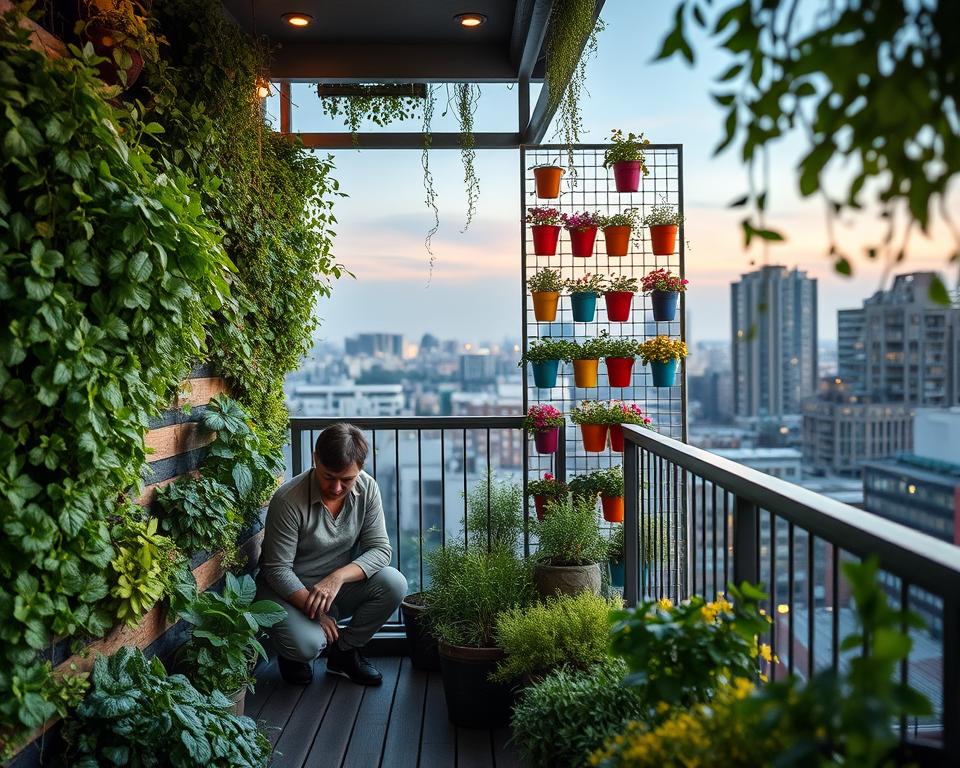
Finding the right wall space is key for vertical gardens to thrive. This choice affects plant health, whether indoors or outdoors. Each setting has its own benefits and challenges for plant growth and protection.
Indoor vs. Outdoor Walls
Choosing between indoor and outdoor walls is important. Outdoor walls get lots of sunlight, perfect for plants that love the sun. Indoor gardens, on the other hand, rely on window light. The location of your indoor garden affects plant variety and growth.
Make sure to check how much light each wall gets. This will help you pick the right plants and arrange them well.
Considerations for Sunlight and Wind
Think about sunlight when picking a wall. Plants need enough light to grow but too much can harm them. Also, outdoor gardens face wind issues, which can affect tall plants.
Choose a spot that protects your garden from strong winds. This will help your plants grow strong and healthy.
Materials for Vertical Gardens
Choosing the right materials for a vertical garden is key. It affects both how it looks and how well it works. Knowing about different materials helps make a beautiful and functional green space.
Wood vs. Metal Structures
Deciding between wood and metal for your vertical garden is important. Wood gives a natural, rustic feel that goes well with plants. It’s also easy to shape for unique designs.
Metal, on the other hand, is durable and modern. It stands up to weather and doesn’t get damaged easily. Here’s a quick look at both:
| Feature | Wood | Metal |
|---|---|---|
| Aesthetic | Natural, rustic look | Modern, sleek appearance |
| Durability | May rot or warp over time | Highly resistant to weather and pests |
| Maintenance | Requires regular sealing | Low maintenance, easy to clean |
| Cost | Usually more affordable | Potentially higher initial cost |
Using Recycled Materials
Using recycled materials for vertical gardens is smart and green. Old pallets, gutters, or bottles can be turned into planters. This not only cuts down on waste but also sparks creativity.
Recycled materials make vertical gardening affordable and eco-friendly. Here are some great options:
- Old wooden pallets – easy to find and versatile in design
- Metal cans and buckets – great for a rustic vibe
- Plastic bottles – lightweight, ideal for vertical installations
- Reclaimed wood – adds character and charm
Popular Vertical Garden Layouts
Exploring different vertical garden layouts can spark creativity and boost efficiency. Each style has unique features that help plants grow better and look great. Let’s dive into some popular options for your vertical garden.
Living Walls
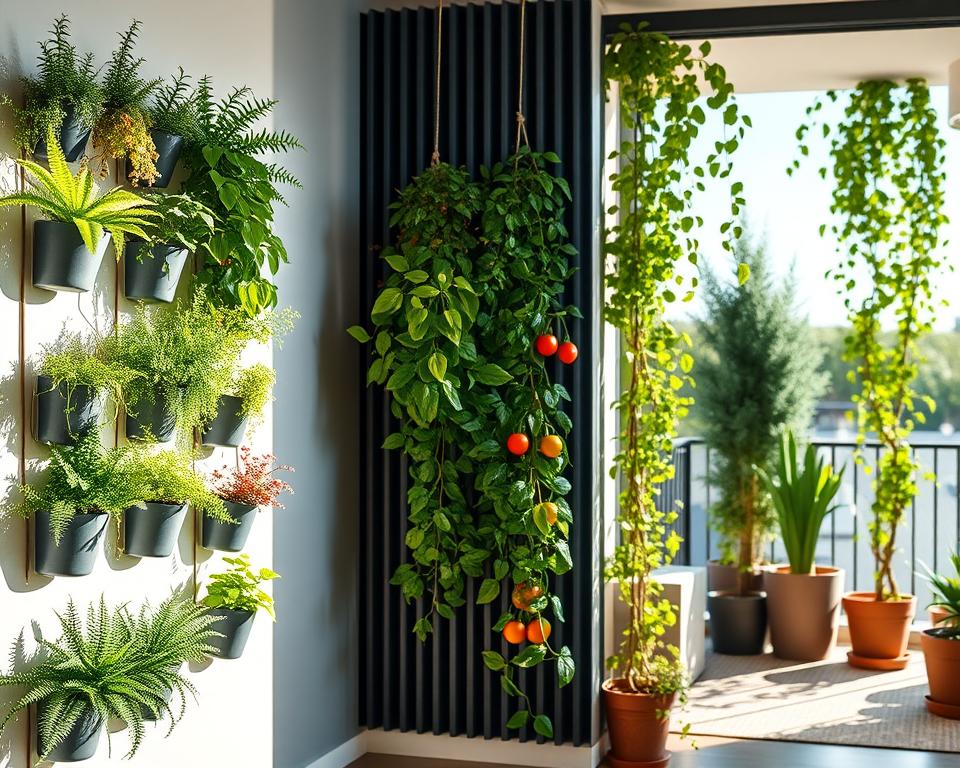
Living walls are a stunning way to bring greenery indoors or outdoors. They use panels or structures to hold plants on vertical surfaces. These walls not only beautify spaces but also improve air quality.
They can be a standout feature in any room. You can choose from a wide range of plants, from ferns to succulents, based on your environment.
Pocket Planters
Pocket planters are a creative take on vertical gardening. They use fabric or plastic pouches on walls for growing herbs, small flowers, and more. These planters are great for saving space and are easy to care for.
They’re perfect for city living. Plus, their design lets you adjust them to fit any wall size, making your garden more flexible.
Modular Systems
Modular systems are pre-made vertical garden units that are easy to set up. They can be arranged in many ways to fit your space. This makes them a favorite for gardeners who want a personalized look.
They’re easy to install and can be customized. This lets you plant a variety of species while keeping your garden looking stylish.
Plant Selection for Vertical Gardens
Choosing the right plants is key for a thriving vertical garden. Knowing your garden’s light and microclimates helps a lot. You can pick plants for shaded spots and those that love the sun.
Best Plants for Shaded Areas
In shaded areas, pick plants that love the low light. Here are some good choices:
- Ferns: These lush plants bring a tropical feel and do well in low light.
- Hostas: Varieties of hostas add beautiful foliage and come in various colors.
- Shade-Tolerant Herbs: Consider planting mint or parsley for fragrant foliage.
- Caladium: Known for its striking leaves, caladium thrives in shade.
Sun-Loving Plants for Vertical Gardens
In sunny spots, you have more options. Here are some top picks for sunny vertical gardens:
- Tomatoes: A popular choice for edible gardens, tomatoes flourish with plenty of sunlight.
- Peppers: Both sweet and hot varieties grow well when exposed to direct light.
- Succulents: These hardy plants can handle dry conditions and want bright light.
- Petunias: Bright, colorful blooms add vibrancy and love the sun.
A good vertical garden mixes these plants. This way, it uses both shade and sun to create a colorful and productive space.
Designing Your Layout
The beauty of vertical garden design comes from the layout choices. A good layout can transform any wall into a beautiful green space. You can choose symmetrical designs for a neat look or go for asymmetrical layouts for a more natural feel.
Symmetrical vs. Asymmetrical Designs
Symmetrical designs bring balance, making them great for traditional settings. They use the same plants on both sides of a central point. This creates a pleasing look.
On the other hand, asymmetrical layouts are all about creativity. They mix different plants and arrangements for a lively look. By using various shapes and colors, you can create a unique and engaging vertical garden.
Creating Depth and Texture
To add depth and texture, layer plants of different heights. Place taller plants at the back and shorter ones at the front. This makes the garden more interesting.
Try mixing textures like glossy and matte leaves for a richer experience. A well-planned layout not only makes the space look good but also uses the vertical space well.
Watering Solutions for Vertical Gardens
Watering vertical gardens needs a mix of systems made for their special shape. Using smart methods helps plants get the right amount of water without wasting it. Techniques like drip irrigation for vertical gardens keep plants moist consistently, saving water. We’ll look at these systems and also manual ways that work well.
Drip Irrigation Basics
Drip irrigation is popular for vertical gardens. It sends water straight to each plant’s soil through a network of tubes and emitters. This cuts down on evaporation and runoff, making it eco-friendly. Gardeners can adjust drip irrigation to fit their plants’ needs, keeping them healthy without too much water.
Manual Watering Techniques
Manual watering is great for those who like to get their hands dirty. Using special watering cans or soaker hoses for vertical gardens helps control water flow. These tools let you water exactly where you want, ensuring your plants get what they need. Remember, good drainage is key to avoid water problems.
| Watering Method | Advantages | Considerations |
|---|---|---|
| Drip Irrigation | Water efficiency, customizable, consistent moisture | Initial installation cost, requires maintenance |
| Manual Watering | Direct control, lower initial investment | Time-consuming, uneven watering possible |
| Soaker Hoses | Easy to install, covers large areas | May clog, less control over specific plants |
Maintenance Tips for Vertical Gardens
Keeping your vertical garden healthy is key to its success. Regular care helps your plants grow well and look great. Learning how to prune and control pests is vital for upkeep.
Regular Pruning and Grooming
Pruning is important for vertical gardens. It helps control growth and encourages new shoots. Cut back overgrown parts to keep shapes right.
Remove dead or yellow leaves to keep plants looking good. Regular grooming improves airflow and fights disease.
Pest Control Strategies
Controlling pests is critical for your plants’ health. Check your garden often for signs of pests. Use natural solutions like insecticidal soap or diatomaceous earth to fight pests.
Keeping your plants healthy helps prevent pest problems. This way, you can enjoy a pest-free garden.
Small Space Vertical Garden Kits
Starting a vertical garden can be easy with the right kit. You can choose from pre-made kits or DIY options. Each has its own benefits, fitting different gardening styles.
Pre-Made Kits You Can Buy
Pre-made kits are great for those short on time or new to gardening. They come with everything you need, like pots and soil. Brands like GreenWall and Vertical Garden Pro make it simple to set up a garden fast.
DIY Kits for Crafty Gardeners
DIY kits are perfect for those who love to get creative. They let you use your own materials to make a garden that’s truly yours. You can pick the colors and plants that match your style.
| Kit Type | Key Features | Best For |
|---|---|---|
| Pre-Made Kits | Complete assembly with instructions, all necessary components included | Busy gardeners, beginners |
| DIY Vertical Garden Kits | Framework provides flexibility, encourages creativity | Crafty individuals, those wanting customization |
Maximizing Vertical Garden Space
Optimizing vertical gardens requires smart planning and creativity. Using space wisely can make your garden look better and ensure plants get enough light and air. It’s all about layering plants well.
Layering Plants Effectively
Layering plants in vertical gardens makes them look lush and lively. Choose plants based on their height, growth, and light needs. Put taller plants at the top for smaller ones to grow below.
This method uses space well and lets all plants get enough light.
Mixing Edible and Ornamental Plants
Adding both edible and ornamental plants makes your garden more interesting and useful. You can grow herbs, tomatoes, and strawberries with flowers and greenery. This mix adds beauty and gives you fresh food.
Pairing plants can help them grow better together. This makes your garden vibrant and shows off your gardening talent.
Accessibility in Vertical Garden Design
Creating vertical gardens that are accessible for everyone is key. The height of plants is very important. It makes sure all plants are easy to reach, making gardening simpler.
Adding features that are easy to use makes gardening fun for everyone. It’s not just about maintenance. It’s about enjoying the gardening process.
Height Considerations for Easy Maintenance
When designing a vertical garden, think about the height of plants and structures. It’s important for gardeners of all ages and abilities to reach plants easily. Heights from waist level to just above head height are best.
This makes upkeep comfortable. It also makes watering and harvesting plants easy.
Inclusive Features for Everyone
Adding features that everyone can use makes gardening better. For example, wide pathways help wheelchair users move around easily. Raised beds or wall-mounted planters are also great.
They add beauty and make gardening easier for those with mobility issues. These features create a welcoming space for all to enjoy vertical gardening.
Inspiration from Real Life Vertical Gardens
Vertical gardening is a big trend for making the most of small spaces, like in cities. Real examples show how vertical gardens turn walls into green spaces. They work in tiny balconies and small backyards, showing the endless possibilities of vertical gardening.
Case Studies of Small Space Gardens
In Brooklyn, a small apartment has a vertical garden on tiered shelves. It’s full of colorful herbs and flowers, improving the air. In San Francisco, a living wall with succulents and edibles is a stunning sight. These examples teach us about choosing plants and arranging them, proving small spaces can be green and thriving.
Photos to Spark Your Creativity
Looking at photos of vertical gardens can spark your creativity. They show different ways to arrange plants, unique containers, and creative wall designs. Whether you like simple or bold designs, these photos will inspire you to add your own style to your garden.