

ADVERTISEMENT
Did you know Americans throw away about 292.4 million tons of trash every year? That’s almost 5 pounds per person daily! It’s time to find new ways to deal with waste. Upcycling DIY home projects are creative and help the planet. They turn old items into useful and beautiful things.
This article shares over 40 creative upcycling ideas. It’s perfect for anyone wanting to make something new from old. Whether you’re starting a DIY project or just want to make your home look better, this guide will inspire you. It also helps you live more sustainably.
Key Takeaways
- Upcycling is a creative way to repurpose waste materials into functional items.
- DIY home projects can significantly reduce your carbon footprint.
- Engaging in recycled crafts enhances your living space while saving money.
- There are countless resources and ideas available for beginners and seasoned upcyclers alike.
- Upcycling promotes resourcefulness and encourages innovative thinking.
What is Upcycling and Why It Matters
Understanding upcycling is key to living sustainably. Upcycling means turning old materials into new, useful items. It gives a second chance to things we might throw away. This is more than recycling. It makes materials more valuable and reduces the need for new ones.
ADVERTISEMENT
By creatively reusing items, we help the planet. This practice is a big part of living sustainably.
Understanding Upcycling
Upcycling makes us see materials in a new light. Things we think are trash can become special items. For example, old furniture can become stylish decor, or containers can be turned into cool storage.
Embracing upcycling brings creativity into our lives. It lets us be green while showing off our skills.
The Environmental Impact of Upcycling
Upcycling greatly reduces waste’s environmental harm. It cuts down on materials going to landfills. This helps natural resources last longer and lowers carbon emissions.
Choosing upcycling supports a green lifestyle and a circular economy. The more we upcycle, the less strain on our planet. This benefits our environment and communities.
Creative Home Decor Ideas
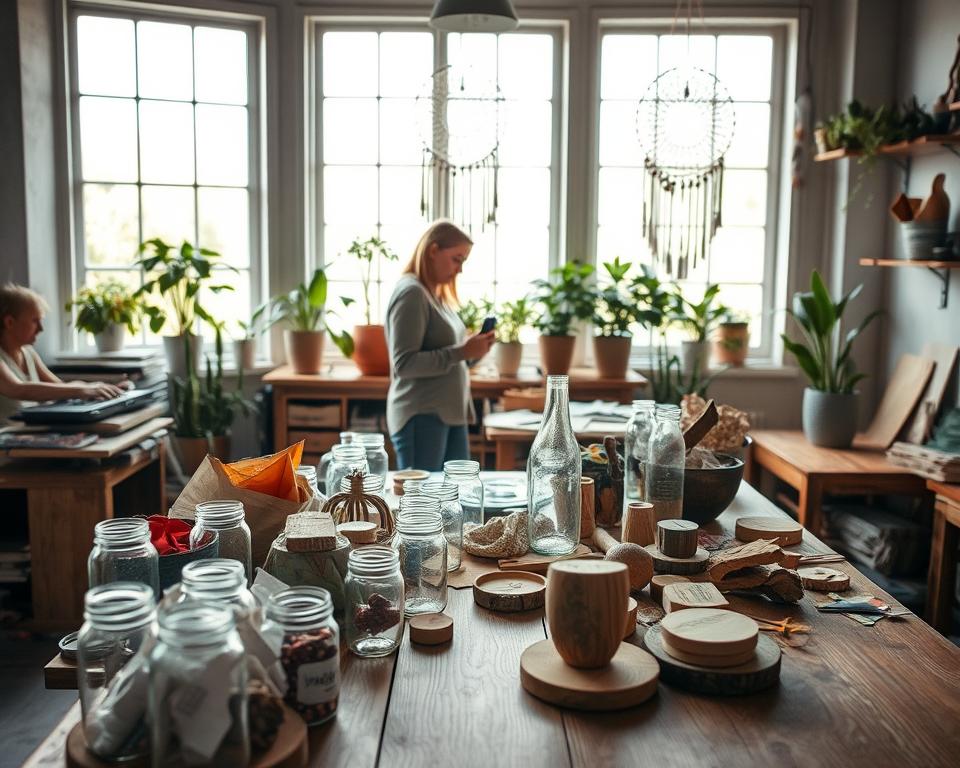
Adding personal touches to your living space is easy with creative upcycling. You can turn everyday items into stunning, unique decor that shows off your style. This approach also helps the planet. Let’s dive into some fun ways to make your home beautiful.
Transforming Old Furniture into New Treasures
Old furniture can be the star of any room with a little creativity. Try repainting or reupholstering an old chair for a new look. Or, add new knobs or handles to a vintage dresser for a stylish update. These ideas are easy and make the process fun.
Upcycling Glass Jars for Stylish Storage
Glass jars are great for stylish storage. By giving them a new life, you can keep things tidy and add to your decor. Paint them, add labels, or fill them with stones or fairy lights for a stylish touch. These projects are not only eco-friendly but also add charm to your space.
DIY Wall Art from Repurposed Materials
Making DIY wall art is a great way to show off your creativity. Use scraps of fabric, paper, or old wood to create unique pieces. Hang them together for a gallery look or a single piece to highlight a spot. This decor not only beautifies your home but also shows your eco-friendly choices.
Practical Upcycling Projects for the Kitchen
Upcycling turns everyday items into useful kitchen pieces. It gives new life to materials that might be thrown away. This section shows you how to make your kitchen more stylish and functional.
Turning Wine Bottles into Decorative Vases
Wine bottles can become beautiful vases. Clean and decorate them with paint or twine. Then, fill them with flowers to brighten your kitchen.
Repurposing Pallets for Kitchen Furniture
Pallets can be turned into amazing kitchen furniture. Build a rustic island or table from them. Sand and seal the wood for a polished look. It’s a cost-effective way to add unique style to your kitchen.
Upcycled Kitchen Utensils: Function & Style
Upcycled utensils mix usefulness with creativity. Use old spoons or wooden crates to make useful items. Turn a fork into a hook or a crate into a spice rack. These items add both function and style to your kitchen.
Upcycling for a Greener Garden
Turning your outdoor space into a sanctuary is rewarding and eco-friendly. Garden upcycling projects use sustainable practices. They make your garden greener and show off your creativity. Here are some fun ideas to start with.
Creating Planters from Recycled Containers
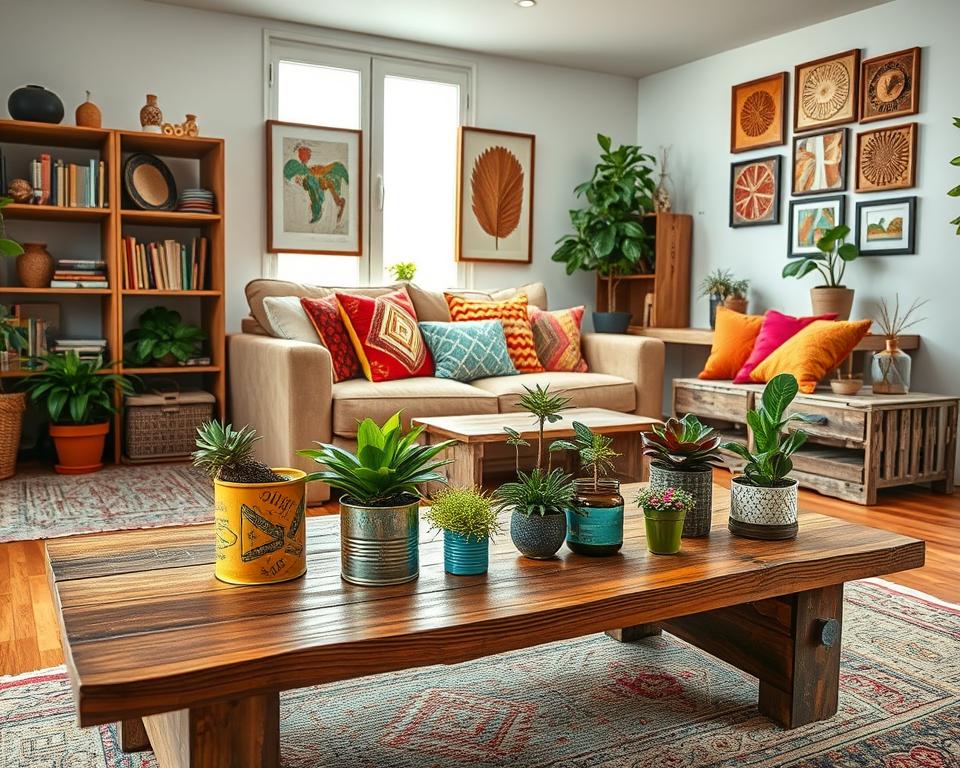
One easy way to beautify your garden is by making planters from recycled items. Use plastic bottles, old tin cans, or wooden crates. They become beautiful homes for your plants.
This method reduces waste and adds a personal touch. Try painting the containers to match your garden’s style. It brings color and enhances your outdoor decor.
Turning Old Tires into Garden Features
Old tires can become stunning garden features. Clean and paint them to use as planters or swings for kids. Stacking tires creates interesting elevations in your garden.
This project boosts creativity and supports a sustainable environment. It’s a great way to make your garden unique.
Making Birdhouses from Reclaimed Wood
Birdhouses from reclaimed wood attract local wildlife and use discarded materials. They add to your garden’s biodiversity by providing bird shelters. Personalize them with designs or colors to make your garden more welcoming.
| Project Type | Materials Needed | Benefits |
|---|---|---|
| Planters | Recycled containers (bottles, cans) | Reduces waste, adds color |
| Garden Features | Old tires | Unique aesthetics, sustainable |
| Birdhouses | Reclaimed wood | Promotes wildlife, eco-friendly |
Sustainable Fashion through Upcycling
The fashion world is changing, with more designers choosing sustainable options. Upcycling is key, letting creativity shine without harming the planet. It turns old fabrics into trendy clothes, cutting down waste and making fashion unique.
Designing Clothes from Old Fabrics
Upcycling gives old textiles a new life, saving raw materials. It creates everything from everyday clothes to luxury items. Designers are now making one-of-a-kind pieces from what was once trash, letting clothes tell stories.
Accessorizing with Upcycled Jewelry
Eco-friendly accessories are becoming more popular. Upcycled jewelry stands out while supporting green practices. Made from recycled materials, these pieces add personality to any look, promoting individuality over mass production.
The Rise of Upcycled Fashion Brands
Brands focusing on upcycled fashion are making a big splash. They appeal to those who care about the planet. By using eco-friendly materials, they build a community that values both creativity and the environment. This trend shows the power of sustainable fashion and encourages others to think about their choices.
Upcycling Projects for Kids
Upcycling projects are fun and teach kids important lessons. They spark creativity and teach about sustainability. Kids learn to make new things from waste, improving their play and sense of responsibility.
Fun Craft Ideas Using Household Waste
Household waste crafts are great for kids to get creative. Items like cardboard boxes and plastic bottles can be turned into cool projects. It’s fun to see what kids come up with when they think outside the box.
- Create puppets using empty toilet paper rolls and fabric scraps.
- Make jewelry from old magazines or bottle caps.
- Construct model cities from recycled containers.
DIY Toys from Recycled Materials
Turning waste into toys is a great way to encourage kids to play and learn. They can make their own toys and learn about recycling. Here are some fun ideas:
- Build cars from plastic containers and LEGO pieces.
- Craft frisbees from old CDs.
- Design algorithmic robots with cardboard and foil.
Upcycled Storage Solutions for Kids’ Rooms
Upcycled storage can make organizing fun. Kids can make unique storage that shows off their creativity. Here are some ideas:
| Storage Idea | Materials Needed | Instructions |
|---|---|---|
| Jar Organizers | Glass jars, paint | Decorate jars and use them to store small toys or art supplies. |
| Bookshelf from Crates | Old wooden crates, sandpaper | Stack and secure crates for a rustic bookshelf. |
| Pencil Holder | Empty toilet paper rolls, washi tape | Wrap rolls with colorful tape and group them in a tray. |
Building Community through Upcycling
Upcycling brings people together, sparking creativity and teamwork. Workshops let folks share ideas and learn from each other. This builds strong bonds and supports local artists.
Organizing Upcycling Workshops
Workshops are great for learning new skills and getting inspired. They can be casual meetups or classes led by experts. People can turn old items into art or decor.
Having regular workshops keeps the community active. It draws people from all walks of life.
Supporting Local Upcycling Artists
Backing local upcycling artists boosts a market for green products. It shows we value art that’s good for the planet. Events like art fairs and markets help artists reach customers who want eco-friendly items.
Community Guidelines for Eco-Friendly Projects
Setting rules for eco-friendly projects keeps upcycling sustainable. These rules cover what materials to use and how to dispose of waste. It teaches everyone about upcycling’s impact on the environment.
Upcycling on a Budget: Tips and Tricks
Starting an upcycling project doesn’t have to be expensive. You can find creative and stylish ways to upcycle without spending a lot. Look for free materials and explore thrift stores for unique finds.
Sourcing Materials for Free
Start by checking your home and asking friends for items they no longer need. Often, good materials are just waiting to be used again. Look for local groups on social media where people give away items for free. This way, you save money and connect with your community.
Thrift Stores and Garage Sales: Treasure Hunts
Thrift stores and garage sales are great for finding materials for upcycling. Old furniture or clothes can be turned into something amazing. Go there with a plan to find materials that can be transformed. Thrift store finds can be the start of wonderful projects, all without spending a lot.
DIY Tools and Resources for Upcyclers
Having the right tools is key for upcycling. Many resources offer affordable or free tools for beginners. Borrow tools from friends or check out local tool libraries. This approach saves money and builds a supportive community.
The Benefits of Upcycling Beyond Aesthetics
Upcycling is more than just making things look good. It saves money, boosts creativity, and helps the environment. It reduces waste and conserves resources.
Saving Money and Resources
Upcycling can save you money. You can turn old items into new ones without spending a lot. This way, you save money and help the planet by using less new stuff.
Encouraging Creativity and Innovation
Upcycling sparks your creativity. It lets you see old items in a new light. This creative journey not only expresses your art but also finds practical solutions to everyday issues.
The Role of Upcycling in Waste Reduction
Upcycling is key in reducing waste. It gives old items a new life, avoiding them from ending up in landfills. By choosing upcycling, you help lessen your impact on the environment.
| Benefit | Description |
|---|---|
| Saves Money | Repurposes materials to avoid purchasing new items. |
| Encourages Creativity | Inspires innovative solutions using everyday objects. |
| Promotes Waste Reduction | Minimizes landfill contributions through creative reuse. |
| Supports Resources Conservation | Reduces demand for new production materials. |
The Future of Upcycling in Home Design
Home design is changing, focusing more on being green and creative. Upcycling is playing a big role in these changes. It’s making homes look good while being kind to the planet.
Trends in Upcycled Home Products
Upcycled home items are becoming more popular. They’re made from things that would normally be thrown away. Think furniture from old wood or decorations from old clothes.
These items are stylish and help the environment. They show how we can turn waste into something beautiful.
The Influence of Minimalism on Upcycling
Minimalism is big in upcycling. It’s all about choosing quality over quantity. This means using what we already have and making it last longer.
Minimalism fits well with upcycling’s goal of being sustainable. It’s about having fewer things that truly matter, which is good for the planet.
Predictions for Upcycling in Sustainable Living
Upcycling is set to grow as we become more eco-friendly. More products made from upcycling will hit the market. This will help us manage waste better and save resources.
This change will make living sustainably more appealing. It shows that we can be green without giving up on style.
Getting Started with Your First Upcycling Project
Starting upcycling projects is exciting! It lets you create unique home decor and live more sustainably. To spark your creativity, explore different design inspirations. Look around your home or check out Pinterest and Instagram for ideas that match your style.
Design Inspiration to Fuel Your Creativity
Think about how everyday items can become amazing pieces. Old wooden crates can be chic shelves, and old picture frames can turn into trendy mirrors. Joining the upcycling community online can give you endless ideas. Just let your imagination soar!
Essential Tools for DIY Upcycling
Before you start, learn about the essential DIY tools you’ll need. You’ll need scissors, a hot glue gun, basic woodworking tools, and paint supplies. You don’t need expensive tools; just the right ones will help you along. Also, gather materials you can reuse.
Step-by-Step Process for Beginners
Beginners should start with small projects. Choose something you can handle and plan your steps from start to finish. Remember, making mistakes is okay. They’re part of learning. As you go, you’ll grow more confident and enjoy making the old new again.




