ADVERTISEMENT
Did you know over 80% of city folks live in apartments or homes with little room for gardens? This fact shows how important balcony gardens are for city living. A good balcony garden layout can turn a small space into a green haven. It can also make your home feel better.
Whether you have a big terrace or a small balcony, you can create a beautiful garden. Our tips will show you how to make your balcony a lively garden that shows off your style. You’ll learn how to pick the best plants and containers for your balcony, bringing nature into your city life.
Key Takeaways
- Balcony gardens are essential for urban dwellers lacking traditional green spaces.
- Creative balcony garden layout design can enhance living experiences.
- Consider the size and conditions of your balcony for effective gardening.
- Choosing the right plants and containers is key for success.
- Urban balcony gardening tips can maximize your small outdoor space.
- Functional designs can create areas for relaxation and gardening enjoyment.
Why Balcony Gardens are a Great Idea for Urban Living
Balcony gardens are becoming more popular in cities. They offer a peaceful escape from the city’s noise. They also bring many benefits that improve our health and living spaces. This makes balcony gardens a great choice for city dwellers.
ADVERTISEMENT
Benefits of a Balcony Garden
Having a balcony garden is very rewarding. It lets you grow plants and improve the air quality. Gardening is also a calming hobby that reduces stress.
Many people enjoy watching their plants grow. It turns their balcony into a welcoming space.
Enhancing Your Living Space
Adding a balcony garden to your home is smart. It can become a beautiful part of your space. With good design, it can even become a cozy spot for relaxation or socializing.
Promoting Sustainability
Balcony gardens support eco-friendly living. They help by using plants, like herbs and veggies, for sustainability. These gardens also cool down cities and attract helpful insects.
This way of gardening connects us to nature. It’s key for modern city living.
| Advantages | Description |
|---|---|
| Improved Air Quality | Plants filter pollutants, providing fresh air in urban settings. |
| Enhanced Aesthetics | Flourishing greenery adds beauty, transforming dull spaces. |
| Personal Sanctuary | A balcony garden offers a peaceful retreat from city noise. |
| Eco-Friendly Practices | Gardening helps reduce urban warmth and supports local wildlife. |
Assessing Your Balcony Size and Conditions
Before starting your balcony garden, take a moment to assess your space. Look at the size, sunlight, and weather patterns. These factors are key for a successful garden.
Measuring Your Balcony Space
First, measure your balcony’s length and width. This helps you plan the layout and pick the right plant containers. Remember to consider any features like railings or walls. Accurate measurements help use your space well.
Evaluating Sunlight Exposure
Sunlight is vital for plants. Observe how much light your balcony gets. Note any shaded areas from buildings or trees. This helps choose the right plants for your balcony’s light.
Understanding Wind and Weather Patterns
Wind and weather can affect your garden. Knowing your area’s weather helps pick hardy plants. Strong winds might need windbreaks or heavier pots. Planning for these ensures a strong and beautiful garden.

Choosing the Right Plants for Your Balcony
Choosing the right plants is key for a great balcony garden, even in small spaces. Picking the best plants for small spaces lets you make the most of your garden. It also keeps it looking vibrant and lush all year round. Let’s look at some top plants and layouts for your balcony garden.
Best Plants for Small Spaces
When space is tight, pick plants that won’t take over your balcony. Compact varieties like:
- Petunias
- Succulents
- Miniature roses
These plants do well in small pots and add beauty and scent. Herbs like basil and chives are also great, adding flavor to your cooking.
Seasonal Plant Options
To keep your balcony garden interesting, change up your plants with the seasons. In spring and summer, bright flowers like marigolds and geraniums are perfect. For fall, try ornamental kale and pansies for a seasonal touch. Winter can be brightened with plants like winter jasmine, keeping your garden welcoming all year.
Edible Plant Ideas
Growing your own food can be fun and handy. Add plants like:
- Cherry tomatoes
- Radishes
- Dwarf citrus trees
These plants not only look good but also give you fresh food. Set up a balcony garden layout with pots for easy access and sunlight.
Designing a Functional Balcony Layout
Creating a functional balcony layout makes your outdoor space look good and work well. By dividing the area into different zones, you can make a welcoming spot for both relaxing and gardening. This way, every inch of space has a purpose, yet it’s also a place to enjoy.
Creating Zones: Relaxation vs. Gardening
Begin by setting up areas for different activities. Use comfy seating for a relaxation zone. Plants or decorations can act as natural barriers to separate this area from your garden. This setup lets you enjoy gardening while having a peaceful place to relax.
Smart Storage Solutions
Smart storage is key to keeping your balcony tidy. Think about using vertical shelves for tools or stylish boxes that also serve as seats. These solutions save space and keep things organized. They ensure you have what you need without cluttering your space.
Maximizing Floor Space with Railing Planters
Railing planters are great for making the most of your balcony garden. They use the railing space, freeing up the floor. You can grow plants or herbs, adding beauty to your garden while keeping room for movement and seating. This strategy boosts your balcony’s functionality, giving you more space for gardening.
Incorporating Furniture in Your Balcony Garden
Balcony gardens can turn a simple outdoor spot into a cozy retreat. The right furniture is key to making this happen. It should fit well and enhance your balcony’s look and feel. Opt for lightweight, weather-resistant furniture for durability and ease of moving.
Think about space-saving furniture ideas. These allow for flexibility and make the most of your balcony space.
Selecting Lightweight and Weather-Resistant Furniture
Choosing furniture that’s both lightweight and weather-resistant is smart. It keeps your balcony looking good through all kinds of weather. Look for materials like aluminum and synthetic wicker for long-lasting furniture without the weight.
Consider furniture that folds or stacks. This makes it easy to rearrange or store when not in use.
Space-Saving Furniture Ideas
Using space-saving furniture can really improve your balcony design. Look for pieces that serve more than one purpose, like benches with storage or side tables that also hold plants. This kind of furniture keeps your space tidy and inviting.
Try a wall-mounted drop-leaf table for a cozy dining area. It can be folded up when not needed.
Comfort and Aesthetics: Finding the Right Balance
Your balcony should feel like part of your home. So, choose furniture that’s both comfy and looks good. Use durable outdoor fabrics for cushions to make your furniture last longer.
Pick colors and patterns that match your plants and decor. This creates a unified look. Mixing different textures, like metal and fabric, adds interest and makes your space welcoming.
| Furniture Type | Material | Features |
|---|---|---|
| Folding Chair | Aluminum | Lightweight, stackable |
| Stackable Table | Resin wicker | Weather-resistant, versatile |
| Outdoor Bench | Teak wood | Durable, with storage |
| Wall-Mounted Drop-Leaf Table | Metal & Wood | Space-saving, functional |
Utilizing Vertical Space in Your Balcony Garden
Turning your balcony into a green oasis is easy. Vertical gardening uses space in a smart way. It makes your garden look great and improves the air and feel of your space.
Vertical Gardens: Options and Benefits
Vertical gardens come in many styles, like wall planters or freestanding units. They’re a cool way to show off plants and save room. You can grow herbs or flowers, and they help with air flow and home insulation.
DIY Ideas for Vertical Planters
Building your own vertical planters is fun and rewarding. Use items like pallets or old containers. It’s a way to save money and make your garden unique.
Using Trellises and Shelving
Trellises and shelving add beauty and function to your balcony garden. Trellises support climbing plants and make a stunning backdrop. Shelving holds small pots or decorations, keeping your space tidy. Together, they create a beautiful and functional garden.
Balancing Sun and Shade: Plant Placement Tips
Creating a thriving balcony garden means knowing how to balance sun and shade. Good plant placement tips can make your garden healthier and more beautiful. By arranging plants right, each one gets the light it needs to grow well.
Arranging Plants Based on Light Needs
Start by figuring out what light each plant needs. Sun-loving plants like geraniums and petunias go in the sunniest spots. Move shade-tolerant plants like ferns and hostas to shadier areas. This way, every plant thrives, making your balcony look great.
Using Shade Cloth for Hot Days
On very hot days, think about using shade cloth. It protects plants from too much sun and heat, helping them grow better. Shade cloth softens sunlight, making it better for plants that don’t like direct sun. It’s really helpful when it’s too hot outside.
Mixing Sun-Loving and Shade-Tolerant Plants
Mixing plants with different light needs adds beauty and balance to your garden. Combining sun-loving and shade-tolerant plants creates a lively, layered look. This mix promotes healthy growth and adds color and texture to your balcony garden.
Adding Decorative Elements to Your Balcony
Decorating your balcony garden adds charm and lets you express yourself. A beautifully decorated balcony becomes a cozy retreat. Thoughtful decorations can turn an ordinary space into something special.
Choosing Themed Decorations
Choose decorations that match your garden’s style. You can go for rustic, modern, or bohemian themes. Each theme has its own colors and materials, creating a unified look. Themed decorations show off your personality and bring your outdoor space together.
Incorporating Lighting for Ambiance
Lighting is key for a welcoming balcony at night. String lights add a whimsical touch, while solar lanterns bring warmth and function. Dimmable lights offer flexibility for different moods and times.
Unique Accessories to Personalize Your Space
Unique accessories give your balcony character. Mix plant pots, use whimsical statues, or add colorful pillows. These touches make your space feel personal and reflect your style, creating a cozy oasis.
Creating Privacy in Your Balcony Garden
In cities, making your balcony a private spot can really improve your outdoor time. Good balcony privacy options can hide your area from others while making it look nice. You can use modern screens or smart plant choices to keep things private without losing beauty.
Using Screens and Partitions
Privacy screens are a great way to block off views you don’t want. They’re made from wood, metal, or fabric, so you can pick one that fits your balcony’s style. Mobile partitions are also good because they let you change things up as needed.
Plant Choices for Privacy Screens
Using plants for privacy screens can make your area look lush and inviting. Choose tall shrubs like bamboo or arborvitae for height. Climbing vines like jasmine or clematis on trellises add more greenery and privacy. These plants also help clean the air and bring in more life.
Vertical Trellises and Green Walls
Vertical trellises are a fantastic addition to balcony gardens, adding beauty and privacy. By attaching trellises to walls or railings, you can grow climbing plants into green walls. This turns unused space into a lively privacy screen. Plants and trellises together not only look good but also make your space feel cozier.
Maintaining Your Balcony Garden
Keeping your balcony garden healthy is key to its beauty and growth. It’s important to water right to avoid too much or too little water. Fertilizing correctly helps plants grow strong and bloom well. Pruning and trimming keep your garden looking good and growing strong.
Seasonal care keeps your garden lively all year. This includes tasks for each season to keep your garden fresh and productive.
Watering and Fertilizing Tips
Watering needs vary based on the plants, pot size, and weather. Here are some tips for watering your balcony garden:
- Check the soil moisture before watering to avoid overwatering.
- Water in the early morning or late afternoon to reduce evaporation.
- Use a balanced fertilizer every month during the growing season to nourish your plants.
Pruning and Trimming Guidelines
Pruning and trimming keep your garden looking great. Follow these tips:
- Remove dead or yellowing leaves to encourage new growth.
- Trim back overgrown plants to maintain their shape and size.
- Regularly deadhead flowering plants to promote continuous blooms.
Seasonal Maintenance Tasks
Stay on top of your balcony garden with seasonal tasks. Here’s what to do:
- Refresh the soil every few months to provide nutrients.
- Rotate seasonal plants to adapt to climate changes and avoid pest infestations.
- Inspect regularly for pests and diseases, applying treatments as necessary.
Eco-Friendly Practices for Your Balcony Garden
Adding eco-friendly gardening to your balcony garden is good for the planet and makes gardening more fun. You can compost in small spaces, use natural pest control, and harvest rainwater. These tips help you make the most of your small space and help the planet.
Composting in Small Spaces
Composting is easy and rewarding, even in small areas. Start by saving kitchen scraps like vegetable peels and coffee grounds. Use small compost bins to recycle these items efficiently. This makes your soil better, cuts down on waste, and helps your plants grow.
Sustainable Pest Control
It’s important to control pests in a way that’s safe for the environment. Try using beneficial insects like ladybugs to eat pests. Natural repellents like garlic or neem oil can also keep pests away without chemicals. This keeps your plants healthy and adds to the biodiversity of your balcony garden.
Rainwater Harvesting Basics
Harvesting rainwater is a great way to save water for your plants. A simple rain barrel can collect runoff from your balcony. This means you don’t have to use as much city water, which is good for the environment and saves money.
| Practice | Description | Benefits |
|---|---|---|
| Composting in Small Spaces | Using compact bins to recycle kitchen waste | Enriches soil, reduces waste |
| Sustainable Pest Control | Utilizing beneficial insects and natural repellents | Keeps plants healthy, minimizes chemicals |
| Rainwater Harvesting | Collecting rainwater for irrigation | Conserves water, reduces costs |
Inspiring Balcony Garden Examples
Creating a stunning balcony garden is all about inspiration. Real-life examples show how small spaces can become vibrant oases. Imagine turning your balcony into a cozy retreat with lush greenery and comfy seating.
Real-Life Urban Balcony Transformations
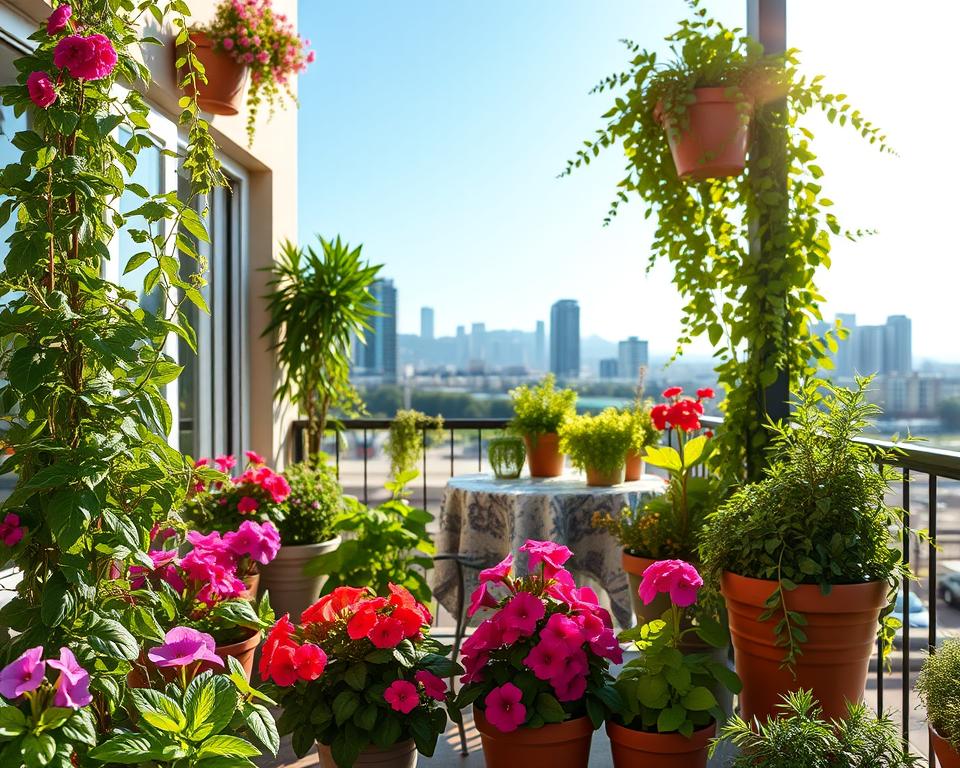
Many city dwellers have turned their balconies into green havens. One example is a small space filled with colorful flowers and herbs. It shows how even tiny areas can be transformed into beautiful gardens with the right plants and layout.
Creative Layout Ideas from Landscape Designers
Landscape designers offer unique layouts for balconies. They use vertical gardens to add depth and create zones for relaxation and fun. These ideas help you make the most of your space, blending beauty with function.
Photos and Ideas from Social Media
Social media is full of balcony garden inspiration. You’ll find stunning balcony designs, from simple to lush. These images inspire and help you plan your own balcony garden, making it a reflection of your style.