

ADVERTISEMENT
Did you know that nearly 80% of homeowners think a well-lit garden makes outdoor time better? The right garden lighting can turn simple areas into stunning spots at night. This article will show you how to use outdoor lighting to make your garden warm and inviting in the evening.
Good lighting not only makes your garden look great but also keeps it safe and easy to use. You’ll learn how to light up your garden in a way that makes it shine after dark. Get ready to see how smart lighting can make your garden even more special!
Key Takeaways
- Garden lighting enhances enjoyment and usability of outdoor spaces.
- Effective outdoor lighting design improves both safety and aesthetics.
- Strategic lighting layout can highlight key features of your garden.
- Evening ambience can be easily created with the right fixtures.
- Planning and maintenance play vital roles in effective garden lighting.
Understanding the Importance of Garden Lighting
Garden lighting does more than just light up your outdoor space. It’s key for safety, creating a welcoming feel, and keeping your garden lively at night. With the right lights, your garden can be both beautiful and functional, perfect for enjoying any time of day.
ADVERTISEMENT
Enhancing Safety and Visibility
Good lighting on paths and entrances makes it safer to move around. It helps prevent accidents and lets guests safely explore your garden. Choosing the right lights not only keeps your family safe but also makes outdoor gatherings more enjoyable.
Creating a Cozy Atmosphere
The right lights and warm colors make your garden a cozy spot for any occasion. Lanterns or string lights add a soft glow, perfect for relaxing or socializing. A well-lit garden is not just useful; it also makes your evenings more enjoyable.
Making Your Garden Usable After Dark
Effective lighting tips can make your garden a place to enjoy at night. With the right lighting, you can dine outside, entertain friends, or simply enjoy the stars. This turns your garden into an extra room, full of possibilities for fun.
Different Types of Garden Lights
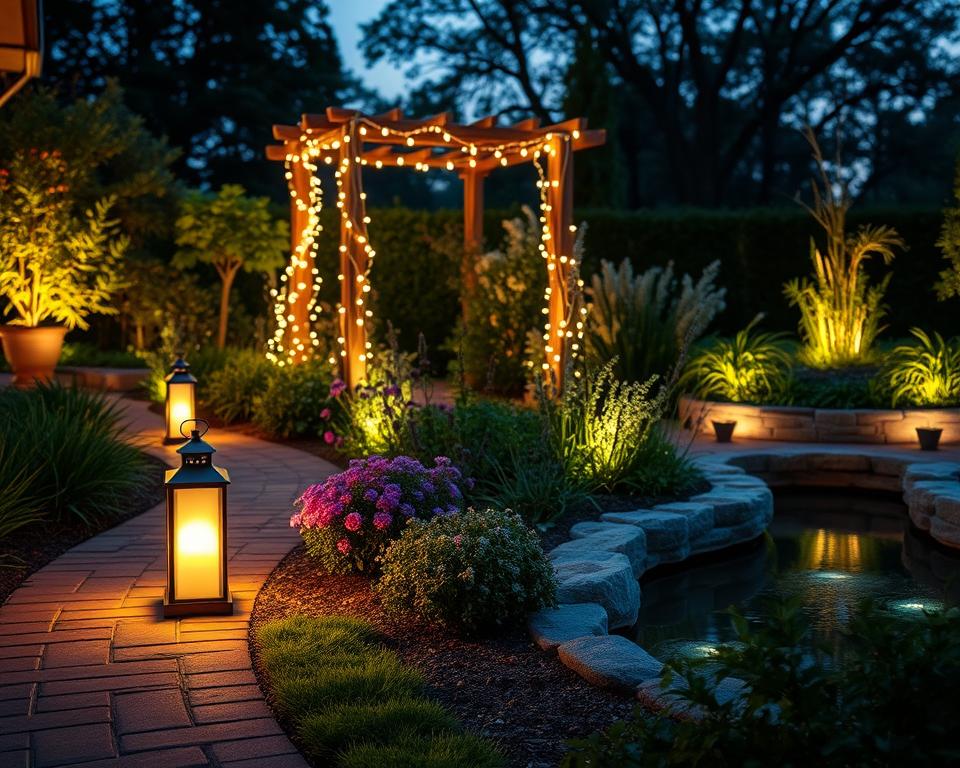
Exploring the various types of garden lights can make your garden look better and work better. Each light has its own purpose. Knowing how to use them can make your outdoor space better. Let’s look at some popular options, like pathway lighting, accent lights, and string lights.
Pathway Lighting
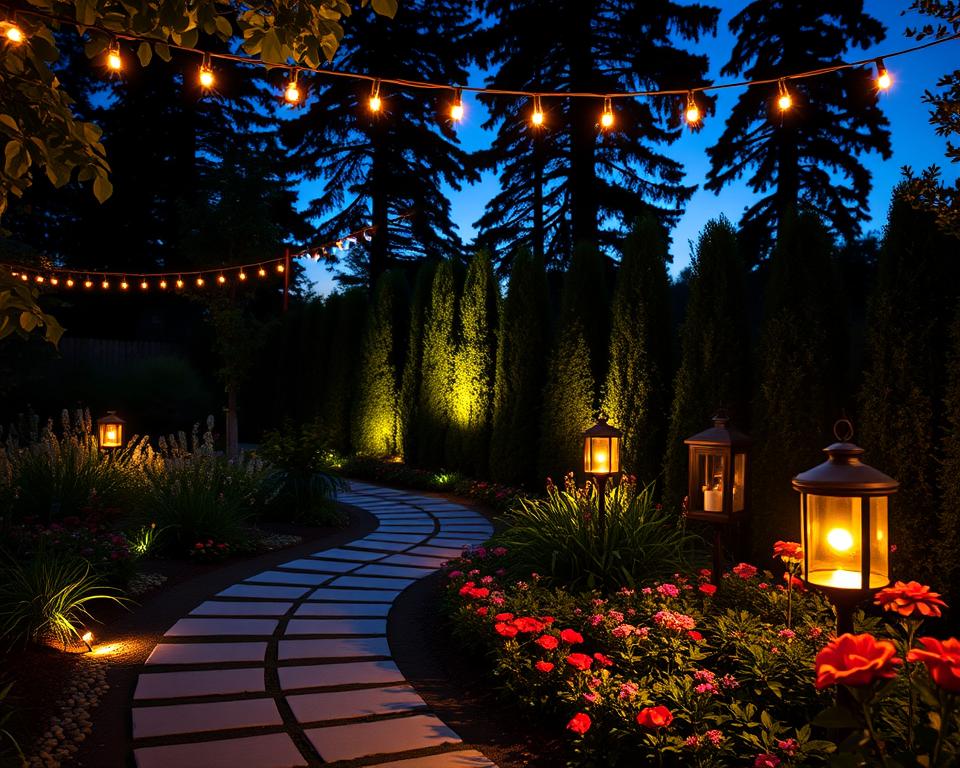
Pathway lighting is key for guiding guests safely. Solar-powered and low-voltage lights are practical and inviting. Creative pathway lighting ideas can add art to your walkways, making them safe and stylish.
Accent Lights
Accent lights make your garden stand out by highlighting its best parts. They can focus on a tree, a fountain, or special plants. These lights are great for showing off your garden’s beauty, fitting with the latest garden lighting design trends.
String Lights
String lights add a magical touch to any outdoor area. They’re perfect for parties, celebrations, or relaxing nights. With different lengths and styles, they can turn any space into a magical place. Adding string lights to your design will make nights outdoors unforgettable for everyone.
Key Considerations for Your Layout
Creating a good landscape lighting plan needs careful thought. The size and layout of your garden affect how light spreads. It’s also key to pick light fixtures that match your garden’s look and work well.
Knowing your local weather helps choose lights that last. This ensures your lights stay bright and work well, no matter the weather.
Garden Size and Shape
When planning your lighting, think about your garden’s size. Big gardens need more lights to light up paths and special spots. Smaller gardens might do well with a few accent lights to add depth.
Knowing your garden’s shape helps place lights right. This way, you can show off its best parts.
Light Fixtures and Style
The style of your light fixtures is very important. They can make your garden look better and work better. Different styles fit different garden themes, from old farmhouse to modern.
Matching your lights with your garden makes it feel welcoming. This ensures every part of your garden is inviting.
Local Climate and Weather
It’s vital to think about your local weather when choosing lights. Places with lots of rain or extreme heat need lights that can handle it. Picking weather-resistant lights keeps them working well for a long time.
Choosing the right materials makes your outdoor lights more effective. This helps your garden look great and feel welcoming.
Zones to Illuminate in Your Garden
Creating zones in your garden is key for the best lighting. By lighting up different areas, you boost safety and beauty. This makes your garden welcoming at night.
Highlighting Key Features
It’s important to show off your garden’s best parts. This includes beautiful trees, sculptures, or water features. Focused lights can make these stand out, adding mystery and beauty.
By lighting up these features, you create a magical feel. Your outdoor space becomes a stunning place to explore.
Designing Functional Spaces
Don’t forget about the practical parts of your garden. Paths, seating, and dining areas need light for safety and use at night. Good lighting makes these areas safe and inviting.
It also makes them more charming. This makes your garden a great place for gatherings and unwinding.
Focal Points and Visual Interest
Lighting up focal points in your garden does two things. It highlights certain areas and makes your garden more interesting. Whether it’s an archway, a special plant setup, or a cozy spot, these areas become the garden’s heart.
By focusing on these points, you make your garden lively and engaging. It becomes a place that draws you in and keeps you interested.
Choosing the Right Lighting Fixtures
Choosing the right lighting for your garden is key. It’s about looks and function. Solar vs. electric lights have their own perks, helping you pick what’s best for your garden.
Solar vs. Electric Options
Solar lights are great for saving energy and are easy to set up. They run on sunlight, so no need for wires. But, electric lights are brighter and offer more design choices, perfect for bigger spaces or special tasks.
Think about your garden’s layout. Do you need the flexibility of electric lights or the simplicity of solar ones?
LED Lights: Pros and Cons
LED lights are popular for their long life and energy saving. They come in many colors, letting you set the mood of your garden. While they cost more at first, their long life makes up for it.
Consider your garden’s size and needs. LED lights might be the best choice for you.
Color Temperature and Effect
Color temperature sets the mood of your outdoor area. Warm whites are cozy, while cool tones are modern. Pick lights that highlight your garden’s best features.
Planning Your Garden Lighting Layout
Creating a good garden lighting layout takes a few steps. It helps homeowners plan where to put lights for beauty and function. A well-planned layout makes your outdoor space better, safer, and more useful at night.
Mapping Out Your Garden
Start with a detailed garden map. This is key for good outdoor lighting design. It helps you see where lights will work best. Think about trees, sculptures, and seating areas when mapping your garden lighting.
Drafting a Lighting Plan
Next, make a detailed lighting plan. Think about the types of lights you need and how each area will be lit. Decide if you need ambient, task, or accent lighting. A good plan ensures all areas are lit right without harsh shadows.
Using Software Tools for Design
Today, many software tools can help with your design. They let you see how different lights and colors will look. This makes it easier to make changes before you start installing lights, making the process smoother.
Installing Your Garden Lights
Installing garden lights can make your outdoor time better. You can choose to do it yourself or get help from a pro. Each way has its own good points and things to think about.
DIY Installation vs. Hiring a Pro
If you like doing things yourself, DIY garden lights can be fun. It lets you save money and make your space your own. But, getting a pro can make sure your lights are set up right. They know how to place lights best and can spot problems you might miss.
Safety Tips During Installation
Keeping safe while installing is key. Here are some tips:
- Always turn off the power before working with electrical components.
- Wear appropriate safety gear, such as gloves and goggles.
- Make sure outdoor lights are made for outside to handle the weather.
By following these tips, you can stay safe and make your lights last longer. This helps avoid accidents or damage to your equipment.
Smart Lighting Options
Smart lighting can make your garden even better. These systems let you control your lights easily. You can set timers, use sensors, and control them with apps. Adding smart lighting options can also save energy. This means you can enjoy your outdoor space without worrying about costs.
Maintenance and Care for Garden Lights
Keeping garden lights working well is key. With the right maintenance tips for garden lighting, your outdoor spaces will stay bright and welcoming all year. Regular seasonal garden lighting care helps you avoid dim lights and costly repairs.
Cleaning Tips for Longevity
Cleaning your garden lights is vital for their brightness. Make it a habit to clean light fixtures regularly. This removes dirt and keeps them shining bright. Use a soft cloth and mild soap for cleaning. Stay away from harsh chemicals that can harm the lights.
Seasonal Maintenance Checklist
Each season has its own tasks for seasonal garden lighting care. Here’s a checklist to help:
| Season | Maintenance Tasks |
|---|---|
| Spring | Check connections, replace burnt-out bulbs, trim surrounding plants. |
| Summer | Inspect for damage from storms, clean fixtures, adjust light direction. |
| Fall | Clean leaves from fixtures, secure wiring, prepare for winter. |
| Winter | Ensure lights are clear of snow, check for freezing issues. |
Troubleshooting Common Issues
Flickering or dim lights can be annoying. But knowing how to troubleshoot garden lights can save you time and trouble. Often, flickering lights come from bad connections or old bulbs. If lights flicker, check the connections first. If they’re dim and clean, it’s time for new bulbs. This way, you can fix problems yourself and keep your garden looking great.
Real-Life Inspiration and Examples
Looking at successful garden lighting projects can spark your creativity. You’ll find inspiration in different styles, like modern lights with rustic touches or vintage lanterns. These examples show how lighting can make outdoor spaces better, whether it’s a big backyard or a small courtyard.
Successful Garden Lighting Projects
Many homeowners have made their gardens shine with creative lighting. For example, using low-voltage LED path lights can make a garden’s entrance welcoming. It also highlights the garden’s beauty, making it inviting at night.
Styles That Elevate Any Garden
There are many garden lighting styles, from simple to detailed. You could use string lights for a playful feel or wall-mounted sconces for elegance. Each style has its own benefits, helping homeowners find the perfect mix of function and theme.
Creative Ways to Use Light in Nature
Be bold with your garden lighting ideas. Try using spotlights to create shadows or dimmers for different light levels. These creative uses can turn a regular garden into a breathtaking nighttime scene.




