ADVERTISEMENT
Did you know minimalism can boost your mental health? Living in tidy, organized spaces can reduce anxiety and boost productivity. Minimalist interior flow design combines modern minimalism with calming aesthetics.
The goal is to create spaces that are both clean and spacious. By using clean lines decor and smart layouts, you can make your home peaceful and elegant. Explore minimalism and see how it can turn your home into a calm retreat.
Key Takeaways
- Minimalist design promotes a stress-free living environment.
- Clean lines decor creates a sense of organized flow.
- Focus on functionality without sacrificing style.
- Strategic color palettes enhance tranquility.
- A minimalist space can reflect your personal lifestyle.
Understanding Minimalist Interior Design
Minimalist interior design is all about simplicity and function. It’s about keeping things simple and letting beauty shine. This style makes spaces calm and open, welcoming everyone.
ADVERTISEMENT
What is Minimalism?
Minimalism is more than just design; it’s a way of life. It’s about removing the extra to find peace and clarity. By focusing on light and space, we can enjoy the beauty of minimalism in our homes.
Key Principles of Minimalist Design
Minimalist design has key principles that work well together. These include:
- Neutral Colors: A calm color scheme brings peace and lets light brighten the space.
- Functional Furniture: Each piece has a purpose, making the space both useful and stylish.
- Uncluttered Spaces: Keeping things simple makes the space look clean and organized.
- Clean Lines and Organic Shapes: These add beauty and keep the room balanced and flowing.
Brands like IKEA show these principles with their simple, stylish furniture. Each piece helps create a welcoming space that’s calm and clear.
The Importance of Flow in Interior Spaces
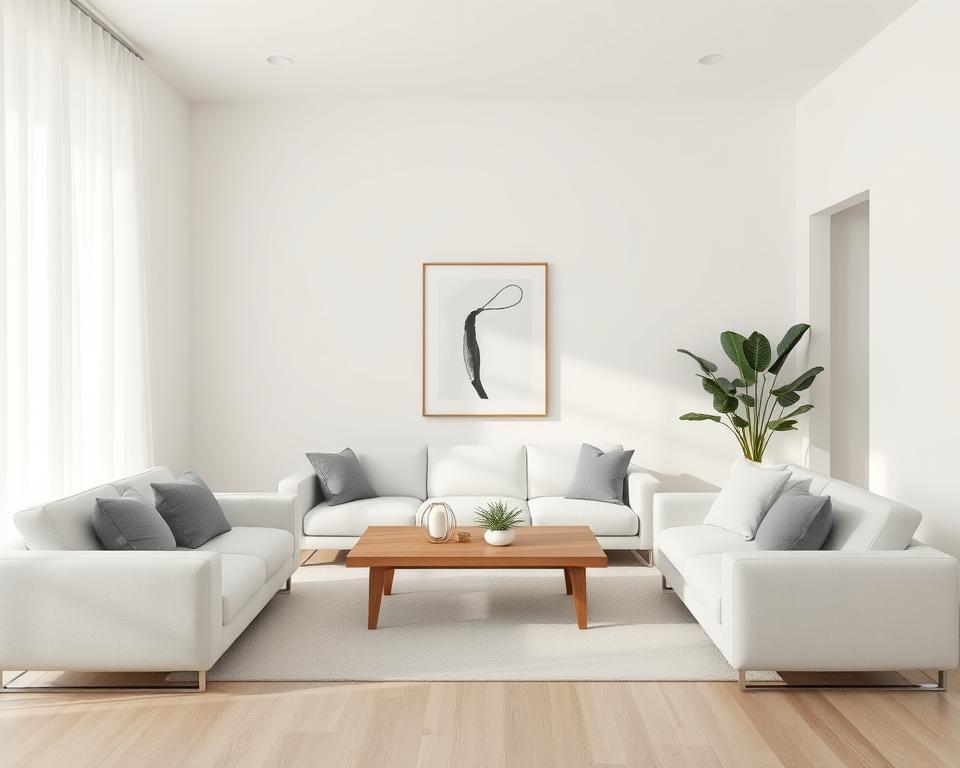
Creating a cohesive and well-flowing interior space turns a house into a harmonious home. Flow in interior design is about moving smoothly through the environment. It greatly affects our living experience. Space optimization is key to achieving this seamless transition, making the space both functional and beautiful.
How Flow Impacts Living Experience
Flow greatly influences how we interact with our space. An effective layout makes moving between rooms easy. This creates a space that is both practical and welcoming.
When flow is prioritized, daily activities like cooking and relaxing become more enjoyable. It makes the home feel larger and more open, fostering a serene environment.
Creating Harmony Through Design
Design choices greatly impact the flow of a space. Open layouts and minimal partitions create an airy feel, promoting tranquility. Thoughtful furniture placement is vital for a balanced room.
By focusing on space optimization, homeowners can create spaces that encourage relaxation and productivity. Each element must work together, creating an aesthetic that is both pleasing and functional.
Essential Elements of Minimalist Design
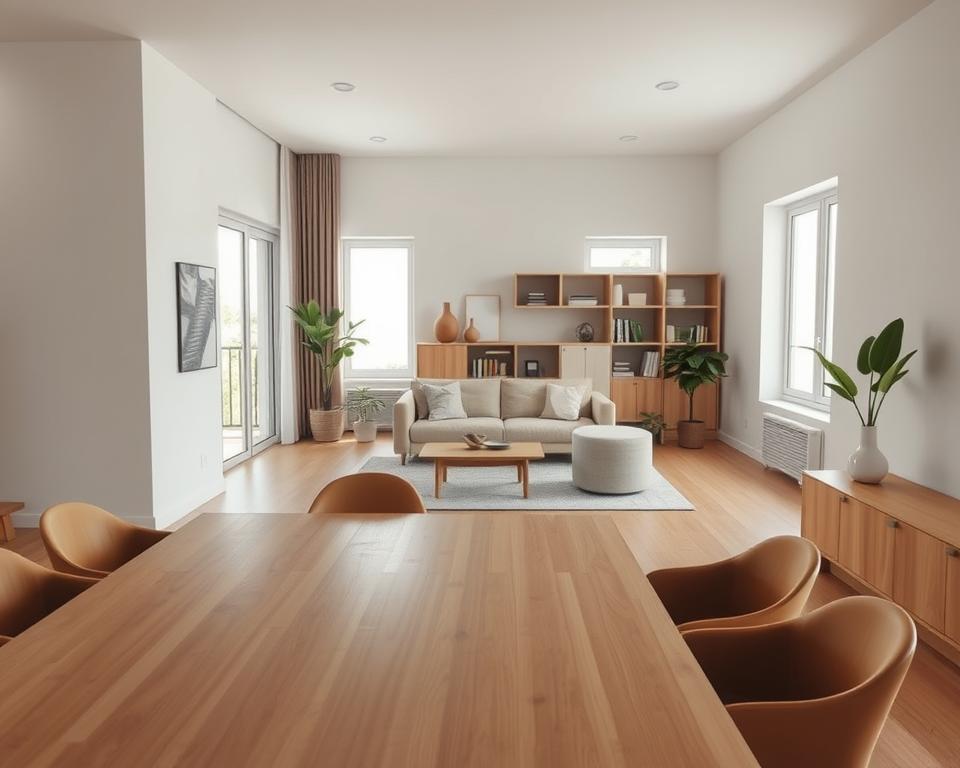
Minimalist style focuses on key elements for a cohesive, relaxing space. A simple color palette is central, with textures that flow between areas. Every detail, from furniture to lighting, is important for a sleek look that’s both beautiful and functional.
Color Palette and Textures
A minimalist color palette often includes soft warm neutrals for a calming atmosphere. Natural textures add to the unity of the space. Muted colors improve visual clarity and make spaces feel more inviting and airy.
Furniture Choices
Choosing furniture is key in design. Clean lines decor keeps the room uncluttered. Simple, functional pieces are best for minimalist spaces. Items with minimal ornamentation draw attention without overwhelming the senses.
Lighting Options
Lighting is vital for the right ambiance. Soft diffused sources or fixtures with paper shades create a warm glow. These options enhance the aesthetic and help maximize natural light, making spaces brighter and more open.
Room-by-Room Flow Considerations
Every room in a minimalist home is important for its design and flow. A well-planned layout makes spaces more enjoyable and useful. Here are tips for improving flow in various home areas.
Open Concept Living Areas
Open concept living areas are all about simplicity. They make socializing easy and spaces flow smoothly. Using lots of natural light and clear views highlights the design.
Furniture should be comfy and useful. It should encourage talking and keep the room balanced.
Bedroom Tranquility
Bedrooms need to be calm for good sleep. Soft colors help create a peaceful vibe. Fewer items mean less clutter, making it a cozy place to rest.
Functionality in Home Offices
Home offices need to be organized for better work. A good design helps you stay focused with smart storage. Choose furniture that’s useful and simple, keeping the room tidy and efficient.
Combining Functionality and Aesthetics
Minimalist interior design is all about mixing function and beauty. This balance changes how we see our homes. It makes living spaces better and more enjoyable.
By using furniture that does more than one thing, you save space. Smart storage helps keep things tidy and pretty. This way, your home looks good and works well.
Choosing Multi-Functional Furniture
Multi-functional furniture is key in minimalist homes. Think of ottomans that hold things or sofa beds for guests. These pieces save space and look good.
They fit right in with your minimalist style. Your home stays neat and stylish.
Smart Storage Solutions
Smart storage makes minimalist design even better. Wall shelves and hidden spots keep things organized. They save space and keep your home feeling open.
Think about built-in cabinets or storage under beds. These ideas help keep your home tidy and your things easy to find. It makes living there more enjoyable.
| Multi-Functional Furniture | Benefits |
|---|---|
| Ottomans with Storage | Space-saving and versatile for seating and storage |
| Sofa Beds | Dual purpose for living room seating and guest accommodation |
| Folding Desks | Compact solutions for workspaces that can be stored away |
| Expandable Dining Tables | Adjustable size for various gatherings without limited space |
The Role of Natural Light
Natural light is key in creating the feel of minimalist interiors. It makes spaces look more alive and inviting. This method also showcases the beauty of clean lines decor and fits well with modern home designs.
Benefits of Maximizing Natural Light
More natural light means a brighter space. It cuts down on the need for artificial lights, saving energy. A bright room can make small spaces feel bigger and more open.
Light from the sun also boosts mood. It makes your home feel more welcoming to everyone who visits.
Window Treatments for Minimal Spaces
For a minimalist look, simple window treatments are essential. Sheer curtains let in plenty of light without blocking the view. Wooden blinds add a modern touch and let you control the light.
Choosing the right treatments boosts natural light and fits your decor perfectly.
| Type of Window Treatment | Benefits | Style |
|---|---|---|
| Sheer Curtains | Allow maximum light while maintaining privacy | Soft and airy |
| Wooden Blinds | Adjustable light control | Sleek and modern |
| Roller Shades | Clean lines and versatile in opacity | Minimalist and functional |
Incorporating Nature into Design
Adding nature to minimalist interiors makes the space feel better. Using organic materials adds warmth and character. Plants and natural textures help create a calm, peaceful area.
Bringing the Outdoors In
Connecting indoor and outdoor spaces is key. Place windows wisely and use natural materials. Big glass panels let in sunlight.
Using stone and wood brings nature inside. It makes the home feel calm and connected to nature.
Indoor Plants That Enhance Minimalism
Indoor plants add life to minimalist spaces. Succulents, snake plants, and pothos are great choices. They’re easy to care for and improve air quality.
These plants add color and texture without cluttering the space. They make the area feel calm and inviting.
Textures and Materials in Minimalism
Textures are key in making elegant minimalistic interiors. They add depth without making spaces cluttered. The right materials help create a beautiful look. Mixing different textures brings balance to the design.
Choosing the Right Materials
Natural materials like wood, stone, and fabrics make minimalism feel real. Wood, like light oak or walnut, adds warmth. Stone, such as marble or granite, brings a modern touch.
For fabrics, choose soft ones like linen or cotton. They keep the space cozy without making it too busy.
Balancing Hard and Soft Textures
To make minimalist interiors interesting, mix hard and soft textures. For example, combine sleek furniture with soft cushions or a textured rug. This mix creates a smooth flow that catches the eye.
This approach follows the minimalist idea of ‘less is more.’ It keeps the space clean and engaging.
Personalization in a Minimalist Space
Adding a personal touch to a minimalist home can really make it feel special. Choosing meaningful decorations lets homeowners show their unique style without clutter. These items can bring back memories and make the space feel cozy and welcoming.
Selecting Meaningful Decor
Every piece in a minimalist home should mean something to you. Think about adding:
- Sentimental artwork that shows who you are
- Photographs in simple frames, of special moments
- Sculptural pieces that make you think and talk, without taking over the room
These items can make a room feel like home, while keeping it simple and stylish.
The Power of Minimal Art
Minimal art is key to making your space your own. It uses textures, shapes, and colors to stand out in a minimalist setting. Some examples include:
| Art Type | Description | Impact |
|---|---|---|
| Monochromatic Paintings | Subtle hues that blend with the decor | Creates a calm and centered feel |
| Geometric Sculptures | Unique shapes that catch the eye | Adds interest and depth without being too much |
| Simple Line Drawings | Minimalist lines that share deep ideas | Invites thought and connection |
Using these art forms keeps the space simple but powerful, showing off your taste and values.
Maintenance Tips for Minimalist Interiors
Keeping a minimalist interior looking great takes work. It’s about keeping your space clean and simple. Simple routines help keep your home clear and calm.
Keeping Your Space Clutter-Free
Decluttering regularly is key to a minimalist look. Set aside time each week or month to tidy up. Ask yourself if each item adds value to your space.
If it doesn’t, it’s okay to let it go. This helps keep your home peaceful and organized.
Cleaning Strategies for Different Surfaces
Each surface needs its own cleaning method. Use gentle cleaners on wood and microfiber cloths for glass. This way, cleaning fits easily into your routine.
Sticking to these cleaning methods keeps your home tidy and pleasant. It makes maintaining minimalism easy and enjoyable.
Conclusion: Achieving Your Ideal Minimalist Flow
Creating your perfect minimalist space means blending your lifestyle with your design. Take time to think about what you love. This way, your space will not only look good but also feel like you.
Minimalist spaces are all about calm and clarity. They focus on what’s important, letting your home grow with you. This makes living simply a lifestyle choice, not just a design trend.
Minimalism is more than looks; it’s about living simply and clearly. It helps you focus on what’s important, making your space better for everyday life. So, enjoy the simplicity and the beauty of your personal touch in your minimalist home.