

ADVERTISEMENT
Did you know that urban areas use nearly 40% of their water for landscaping? With climate change getting worse, it’s urgent to create gardens that use less water. Focusing on sustainable gardening, like xeriscaping, can cut water use a lot. This kind of garden saves water, cuts bills, and needs less care. It shows that green spaces can do well in dry areas.
Looking into water-saving landscaping opens up many helpful resources. They help you pick the right plants and design a great looking garden. Making a garden that needs less water is good for both nature and looks.
Key Takeaways
- Urban landscaping accounts for 40% of water usage.
- Drought tolerant gardens can significantly lower water bills.
- Sustainable gardening practices promote environmental health.
- Xeriscaping offers diverse plant selections for dry climates.
- Efficient garden design enhances visual appeal and ecological impact.
- Effective maintenance strategies are crucial for a thriving drought tolerant garden.
Understanding Drought Tolerance in Gardening
Drought tolerance is key in modern gardening. It means a plant can survive dry conditions with little water. This is especially vital in places with not much water or where xeriscaping is popular. By grasping this concept, gardeners can make gardens that save water and are easy to keep up.
ADVERTISEMENT
What Does Drought Tolerant Mean?
A plant that does well with less water is called drought-tolerant. These plants often have deep roots that reach underground water. Some have leaves that are thick or have a waxy cover to keep moisture in. Using these plants can make a garden look good even in dry climates. It keeps the garden healthy and blooming.
Benefits of Drought Tolerant Gardens
Choosing plants that need less water has many perks. It mainly cuts down on how much water you use, which is good for the planet. These gardens also cost less to care for and support more kinds of life. They’re tough against climate change, making them a smart option for the future.
Key Characteristics of Drought Tolerant Plants
Plants that handle drought share some special features. Common traits include:
- Thick or fleshy leaves that hold water
- Deep root systems reaching for underground water
- Waxy surfaces or fine hairs on leaves to keep water in
Such features help plants do well where water is scarce. Picking plants with these traits lets gardeners have gardens that stay green with little watering.
Selecting the Right Plants for Your Garden
Choosing the right plants is key for a thriving drought-tolerant garden. Using native plants makes a huge difference. They fit well with the local climate, need less water, and support local wildlife. This way, you help both biodiversity and water conservation.
Native Species vs. Non-Native Species
Native plants grow well in local soil and weather, saving more water. They are low-maintenance and need less watering than non-natives. Using native plants has several benefits:
- Less water usage: They do well with just rainfall.
- Improved local ecology: They help birds, butterflies, and more.
- Better pest resistance: Natives fight off local pests better.
Popular Drought Tolerant Plants
For a stunning drought-tolerant garden, choose popular water-wise plants. Some top picks include:
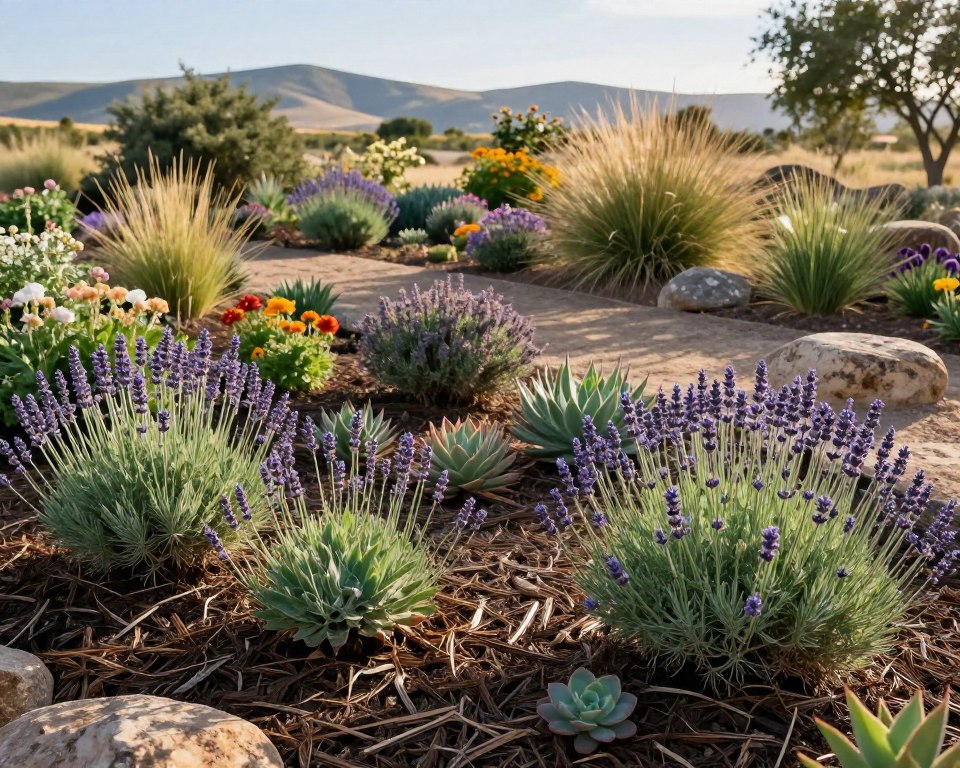
- Lavender: It smells great and looks beautiful.
- Echinacea: Attracts bees with its bright colors.
- Ornamental Grasses: They add texture without needing much water.
- Succulents: Perfect for dry gardens, they store their own water.
Plant Hardiness Zones Explained
Knowing about plant hardiness zones helps your garden. These zones show which plants do well in your climate. Matching plants to your zone boosts your garden’s health and cuts down on water use.
Designing Your Drought Tolerant Garden Layout
When planning a drought-tolerant garden, sunlight and shade are key. It’s vital to know how natural light affects your garden to place plants wisely. Put drought-resistant plants in sunny areas for more sunlight. And put shade-loving plants where it’s less bright. This makes sure all plants get what they need to grow well.
Considerations for Sun and Shade
Plants need different amounts of sunlight, so look at your garden’s light before you plant. This helps you use water wisely and take care of plants better. Knowing where the sun and shade are helps every plant do its best. It cuts down on competition and makes a happy garden environment.
Creating Attractive Plant Combinations
A pretty garden makes your outdoor area better and brings in good bugs and bees. Choose different drought-resistant plants for fun textures and colors. Planting them by their water needs makes watering easier and shows off xeriscaping’s charm. This mix makes your garden full of life and color.
Incorporating Hardscaping Elements
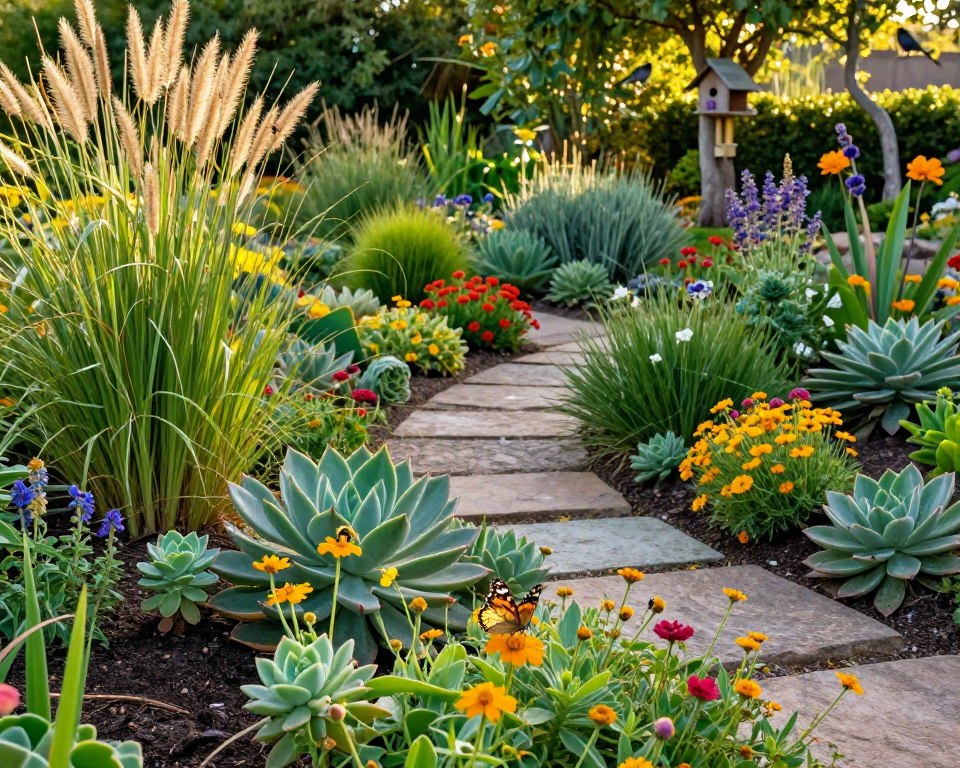
Hardscaping helps shape your garden and make it work better. Things like paths and stone decorations add beauty and cut down on watering needs. Use materials that let water through to help keep soil moist. Hardscape parts save water and make your drought-tolerant garden look great.
Soil Preparation for Drought Resistant Gardens
To make a drought-tolerant garden work, you need to start with good soil. Good soil helps plants grow strong, even with less water. It keeps water in, supports roots, and makes a home for good microbes. All of this is key for plants to survive with little rain.
Importance of Soil Health
Healthy soil has many benefits for drought-resistant gardens. It can hold onto water and nutrients better when it has more organic stuff in it. This means plants need less watering and can handle dry times better. Adding things like compost improves the soil, making water and air move better. This creates a great environment for a variety of plants.
Amending Soil for Better Retention
Gardeners should add organic matter to improve their soil. Using compost or old manure can help soil hold more water. This makes the soil stronger and helps drought-tolerant plants need less water. Keeping the soil healthy with regular care means it will stay good for plants for a long time.
Testing Soil Drainage and pH
It’s important to test your soil before planting. Checking the drainage and pH level helps you know what your plants will need. This testing can show if your soil is too sour or sweet for certain plants. Getting the right drainage and pH balance helps save water and makes your garden do well.
| Soil Characteristics | Impact on Plants | Recommended Practices |
|---|---|---|
| Moisture Retention | Supports drought-resistant plants by minimizing water needs | Add organic matter like compost |
| Soil pH | Affects nutrient availability and plant health | Conduct soil testing to adjust pH |
| Drainage | Prevents root rot and supports healthy growth | Improve structure with sand or clay amendments |
Watering Techniques for Drought Tolerant Gardens
To have a successful drought tolerant garden, good watering methods are key. Proper watering saves water and helps plants grow well. Let’s look at some best practices for watering your drought-friendly yard.
Efficient Watering Methods
Using drip irrigation, soaker hoses, and focused watering cuts down on wasted water. These methods get water right to the plant roots, encouraging them to grow deep. This kind of water-saving landscaping keeps your garden looking good without using too much water.
Timing and Frequency of Watering
Knowing when to water is vital for a drought tolerant garden. Watering in the early morning or late evening is best. This helps reduce water loss from evaporation. Watering deeply but not too often makes plants grow strong roots. This way, they can reach moisture underground when it’s dry. It’s also important to check the soil before watering to avoid too much water, which can hurt plants.
Utilizing Rain Barrels and Greywater
Adding rain barrels and greywater systems can make your garden more eco-friendly. Rain barrels catch water from your roof for you to use later. Greywater systems reuse water from washing dishes or clothes for the garden. Both methods help your drought tolerant garden stay green and are good for the planet.
Mulching for Moisture Retention
Mulching is key for a drought-tolerant garden that does well even when dry. It involves picking the right mulch to keep moisture in, which helps drought-resistant plants stay healthy. There are many kinds of mulch, each with its benefits and look. Let’s look at the types of mulch, their good points, and how to use them well.
Types of Mulch to Use
Picking the right mulch is big for keeping your garden moist. Organic mulches like bark, straw, or wood chips get mixed into the soil over time. They help keep it moist. Inorganic mulches, such as gravel or stone, block weeds and don’t break down, so they last longer. Think about what your garden needs to choose the best mulch for its look and function.
How Mulch Helps Your Plants
Mulch is great for protecting plants from getting too hot. It keeps soil temperatures steady, slows down water loss, and stops soil from washing away. This means more water stays near plant roots. Less water loss means drought-resistant plants do better during dry times. Plus, mulching keeps weeds away, so plants aren’t fighting for what they need.
Tips for Applying Mulch Effectively
To keep your garden moist, put down a 2-4 inch layer of mulch. This thickness is best for stopping weeds and keeping soil wet. But, keep mulch away from plant stems to avoid rot and make sure plants grow well. Add more mulch as it breaks down to keep it working right. A well-mulched garden looks great and helps save water in the soil.
Seasonal Maintenance Tips
Keeping a garden that saves water means you have to be careful about how you take care of it all year. Each season has its own challenges and ways you can help your garden. By looking after it well in the fall, spring, and summer, your garden can show off its benefits better.
Fall Preparation for Winter Rests
When it gets colder, getting your garden ready for fall is key. Start by trimming back old flowers. This stops disease and makes room for new growth in spring. Putting mulch down is also a must, as it keeps moisture in and protects roots when it’s cold. Don’t forget to check the soil and improve it if needed, so your plants are strong for the winter.
Spring Wake-Up: What to Do
Spring cleaning is not just for your house but for your garden too. Remove any leftover winter mess to give your plants a clean slate. Trim any dead parts to help your plants grow well. Check last year’s mulch and add new organic mulch to help your garden come back to life. Remember to water the right way, especially as it gets warmer, to make sure your plants are getting what they need.
Summer Care for Plant Health
In summer, keeping an eye on your garden’s health is crucial. Check if the soil is dry often during hot spells. Change how you water to make sure your plants get just enough, aiming for deep soaking less frequently. Keep weeding and look out for bugs, as taking care of your garden in the heat is important for a garden that doesn’t need much water.
Creating Wildlife-Friendly Drought Tolerant Gardens
Creating gardens that welcome wildlife does more than make your space look beautiful. It helps keep our ecosystem healthy. By adding things that draw in pollinators and helpful bugs, your garden will teem with life. Picking the right features and plants helps support local wildlife.
Attracting Pollinators and Beneficial Insects
Using native plants is key to feeding bees, butterflies, and other pollinators. These plants offer the nectar these vital insects need to live. A garden full of diverse flowers will buzz with activity. This makes the garden better overall. It thrives because these pollinators have enough food and places to live.
Birdbaths and Other Water Features
Adding birdbaths or small water areas draws birds to your garden. These features are important for keeping wildlife hydrated. They also help different species thrive together. Keeping these water spots clean keeps them inviting and working well. The sound of water makes your garden a peaceful place. It also helps local ecosystems stay healthy.
Native Plants That Support Local Fauna
Native plants are vital for a garden that doesn’t need much water yet supports local animals. They’re used to the local climate, so they survive on less water. Picking plants that bloom at different times brings in many pollinators. It also offers homes for birds and helpful insects. With native plants, your garden needs less work but still thrives.
Incorporating Hardscape for Visual Interest
In drought-tolerant landscaping, hardscape is key to both beauty and function. Adding things like patios, paths, and borders helps define areas and cuts down on water use for plants. It makes upkeep easier and keeps your yard looking good without needing much water.
Patios, Pathways, and Borders
Patios are perfect for hanging out and having fun, using materials that look nice with your plants. Pathways lead the way through your garden, keeping the ground healthy by avoiding too much stepping on it. They make your garden work well without needing lots of water. Borders mark off different sections and add color and texture.
Using Stones, Gravel, and Decorative Features
Adding stones and gravel to your yard is pretty and practical. They help with water flow, stop erosion, and add interesting textures that go well with your plants. Putting in decorative items like sculptures or garden stakes makes your space more personal. They help make your drought-friendly garden more attractive.
Balancing Hardscape with Greenery
It’s important to find the right mix of hardscape and plants for a nice harmony in landscaping. Mixing different plants with hard materials makes your yard lively and inviting. This way, your garden feels welcoming and connects well with the hardscape, even in dry conditions.
| Hardscape Element | Benefits | Considerations |
|---|---|---|
| Patios | Define social spaces; low maintenance | Choose permeable materials for drainage |
| Pathways | Guide movement; minimize soil compaction | Blend with plantings to enhance aesthetics |
| Borders | Frame garden beds; visual interest | Use contrasting colors and textures |
| Stones & Gravel | Control erosion; promote drainage | Ensure compatibility with existing flora |
| Decorative Features | Personalize space; enhance visuals | Choose styles that reflect personal taste |
Real-Life Examples of Drought Tolerant Gardens
Looking at real-life drought-tolerant gardens can inspire both homeowners and gardeners. These gardens use less water but still look amazing. They feature plants that don’t need much water, turning any yard into a beautiful oasis.
Iconic Drought Tolerant Landscapes
The gardens designed by Xeriscape are famous for needing little water. They combine unique designs and plants that handle dry conditions well. These gardens show how you can make a lovely space, even in places with little rain.
Homeowner Success Stories
Many homeowners have cut their water bills by choosing drought-resistant plants. They share how using native plants made their gardens easier to take care of. These stories prove that a garden can be both gorgeous and easy to maintain.
Lessons Learned from Experienced Gardeners
If you’re thinking about starting a drought-tolerant garden, learn from those who’ve done it. Seasoned gardeners offer tips on choosing plants and saving water. Their advice can help new gardeners succeed, making their efforts good for the planet, too.




