ADVERTISEMENT
Did you know gravel gardens can cut down your gardening work by half? They’re becoming a top choice for those wanting beautiful yards without much trouble. This piece explores the finest gravel garden designs. You’ll see how to make a gravel garden that looks amazing and is easy to take care of. We’ll cover everything from picking the perfect gravel to mapping out your garden layout. Get set to make your outdoor space stunning and simple to maintain with these gravel landscaping tips.
Key Takeaways
- Gravel gardens significantly reduce maintenance efforts.
- Proper gravel selection enhances the overall aesthetic of the garden.
- Creative garden designs can integrate various types of plants.
- Pathways can improve accessibility and design flow in gravel gardens.
- Incorporating decorative elements can add character to your gravel garden.
- Effective weed control strategies are essential for maintaining a tidy appearance.
Understanding Gravel Gardens
Gravel gardens bring a unique charm to landscaping, combining simplicity and beauty. They use gravel as the main cover, creating a blend of looks and practicality. These areas are ideal for plants that thrive in dry conditions, offering a natural balance.
What is a Gravel Garden?
A gravel garden mainly uses gravel to support drought-resistant plants. It’s a minimalist design where every part is carefully chosen to match gravel and plants. Such gardens allow for creative layouts that are easy to take care of.
ADVERTISEMENT
Benefits of Gravel Gardens
Gravel gardens are great for saving water, which is crucial today. They also mean less weeding, freeing up time to enjoy your garden. With these gardens, you can have a beautiful, low-upkeep yard that suits many climates.
Choosing the Right Gravel
Choosing the correct gravel is key for a beautiful and functional gravel garden. There are many gravel types, each with unique benefits for your garden’s look and needs.
Types of Gravel for Gardens
Exploring different gravel types helps choose the best for your gravel garden ideas. Popular choices are:
- Pea Gravel: Small, rounded stones that ensure good drainage.
- Crushed Stone: Provides a rugged look and withstands foot traffic well.
- Deco Granite: A chic option that looks good and drains well.
Color and Texture Options
Color and texture are crucial for your garden’s look. They can create beautiful contrasts in your design. Think about these:
- Black Basalt: Gives a modern, sleek, dark look.
- Limestone: Adds a warm, natural feel with a light, textured surface.
- Decorative Chippings: These come in many colors to accent specific spots or plants.
Planning Your Gravel Garden Layout
To start a DIY gravel garden, plan well. First, look at your garden space carefully. Consider how sunlight, water drainage, and plants you already have will affect your layout. By thinking ahead, you can create a gravel garden that is both pretty and useful.
Assessing Your Space
Think about these things in your garden:
- Sunlight: Find spots that get full sun or shade. Some plants need lots of light, others not so much.
- Drainage: Watch how water moves in your garden. You don’t want water to collect and harm plants.
- Existing Flora: Decide which plants you want to keep. Where they are will help plan your gravel garden.
Designing Plant Beds
After checking your space, design your plant beds. Make them look good with different heights and textures. Here are tips:
- Accessibility: Plant beds should be easy to reach for upkeep and watering.
- Integration: Include gravel paths that tie your garden areas together well.
- Variety: Pick plants that vary in color and size. They should look good with the gravel, too.
Popular Gravel Garden Designs
Gravel gardens are a great way to show off different styles. You can choose from modern to rustic looks. The best designs include many elements that let you be creative and eco-friendly. You’ll see how varied these gardens can be when looking for layout ideas.
Modern Minimalist Gravel Gardens
Modern minimalist gravel gardens are all about simplicity. They have clean lines and geometric shapes, perhaps with boulders or sleek water features. This style is open, making spaces feel peaceful and clear. It’s perfect for a modern look.
Rustic Cottage-Inspired Layouts
Rustic gravel gardens have a cozy charm. They mix gravel and natural materials for an organic feel. By adding native flowers and herbs, they become even more welcoming. This design is great for a cozy, personal space.
Contemporary Zen Gardens
Contemporary Zen gardens are for meditation. They use raked gravel and stones for beauty, and water features for balance. This style is peaceful, helping you to find calm outside. Look at traditional Japanese gardens for ideas on making a modern space.
| Design Style | Key Features | Ideal For |
|---|---|---|
| Modern Minimalist | Clean lines, geometric shapes, open space | Contemporary settings |
| Rustic Cottage-Inspired | Mixed gravel textures, native planting | Warm, inviting spaces |
| Contemporary Zen | Raked patterns, stones, water features | Meditative environments |
Incorporating Pathways
Pathways are key in a gravel garden’s design. They make getting around easy and boost the garden’s look. Picking the best pathway type brings the garden together and keeps it useful. You will see the best pathways types for gravel gardens below.
Types of Pathways in Gravel Gardens
- Curved Paths: These paths have a natural, winding route, leading visitors through the garden.
- Linear Walkways: Perfect for longer distances, these straight paths show a clear way to go.
- Stepping Stones: Flat stones along the path not only look good but allow for creativity too.
Designing Functional Walkways
A walkway’s design should focus on being useful and managing water. A slight slope can move water away from where people walk. Also, using materials that match the garden’s gravel makes everything look united.
Selecting Plants for Gravel Gardens
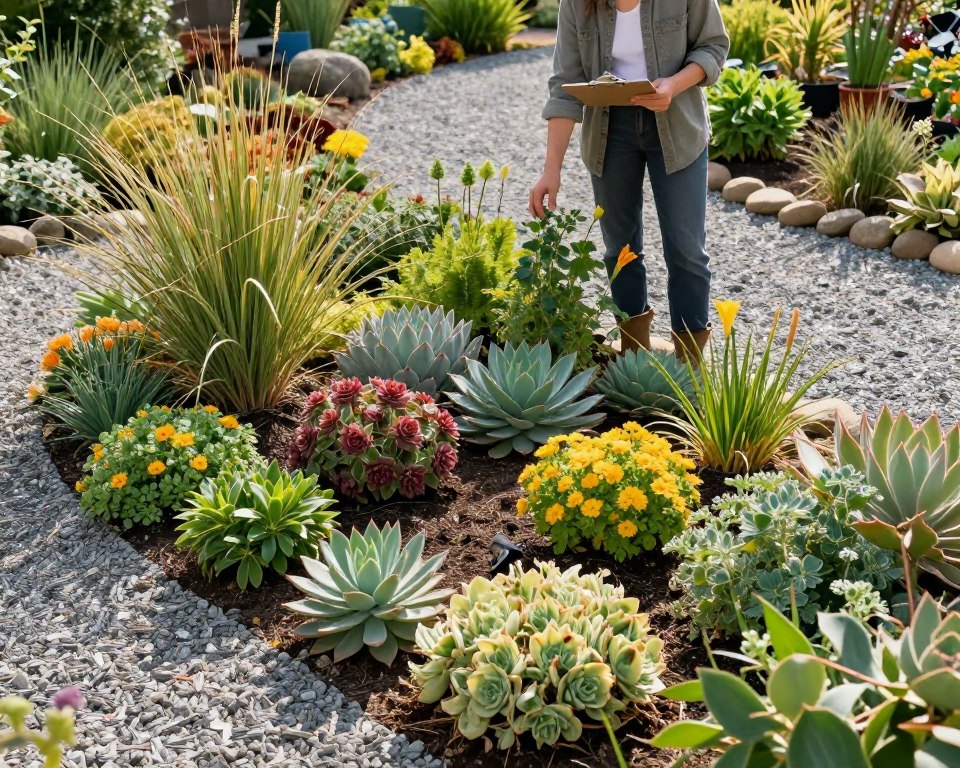
Choosing the right plants is key for a thriving gravel garden. Look for species that can handle drought and don’t need much care. These plants do well in gravel’s quick-draining conditions, keeping your garden lively all year.
Best Plants for Drought Resistance
Drought-resistant plants are perfect for gravel gardens because they thrive in dry spots. Great choices include:
- Lavender – Known for its fragrant flowers and gray-green foliage.
- Yarrow – Offers beautiful clusters of blooms and attracts pollinators.
- Ornamental Grasses – Types like blue fescue or feather reed grass add texture and movement.
Low-Maintenance Plant Options
Adding plants that are easy to take care of will make gardening simpler. Here are some plants to consider:
- Sedum – Succulent varieties thrive in gravel and need little water.
- Echinacea – This coneflower is strong and blooms all summer.
- Russian Sage – Known for its silvery leaves and poor soil tolerance.
Adding Decorative Elements
Adding decorative stuff like natural stones and sculptures to gravel gardens makes them look better. These things add personality and charm. This way, your garden is more than just plants.
Using Rocks and Boulders
Rocks and boulders are key in gravel gardens. They help define areas, add interest, and can be homes for wildlife. By mixing different sizes and shapes, you give the garden an organic feel. It also creates a nice contrast with the gravel.
These big elements make your garden stand out. They draw attention and make people want to explore more.
Garden Statues and Focal Points
Garden statues and focal points can really change how your gravel garden looks. They start conversations and show your style. You can choose from classic sculptures to modern art.
These statues can decorate pathways or be the main feature among plants. They let you express your creativity. Your garden becomes a special place that tells a story.
Mulching and Weed Control
Making a beautiful gravel garden is more than choosing stones and plants. Mulching is key for a healthy, pretty garden. It has many benefits.
Benefits of Mulching in Gravel Gardens
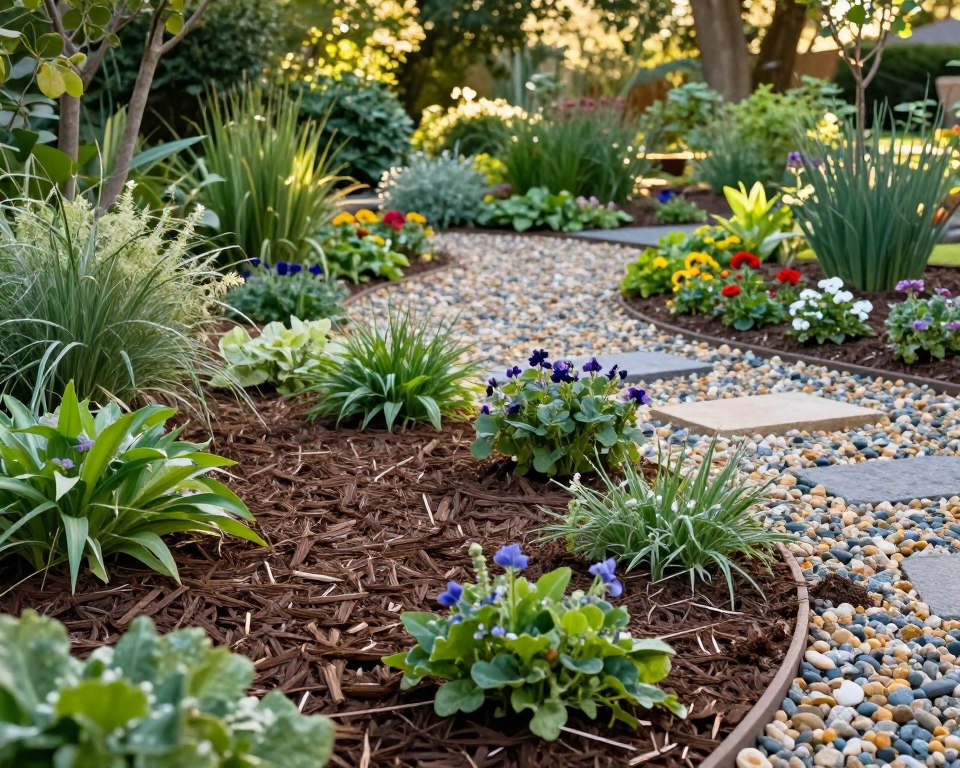
Mulching in gravel gardens has big benefits. It keeps moisture in, important for dry areas. Also, organic mulch makes the soil better as it breaks down.
Using things like wood chips or straw not only looks good. It also feeds the soil over time.
Effective Weed Control Strategies
To keep your gravel garden looking good, control weeds well. Begin by putting landscape fabric under the gravel. It stops weeds while letting water and air through.
Always look for and quickly get rid of any weeds. Doing this keeps them from coming back often. This makes your garden easy to take care of and nice to look at.
Maintenance Tips for Gravel Gardens
Keeping a gravel garden looking good takes regular work. It’s important to stay on top of things each season. That way, your garden stays beautiful and works well, no matter what the weather brings.
Seasonal Upkeep Tips
There are important tasks to do all year round. Here’s what to focus on:
- In spring, refresh the gravel layer to restore the garden’s aesthetic.
- Check drainage patterns after heavy rain to confirm water flows correctly away from plant roots.
- During summer, monitor plant vitality and adjust your watering schedule according to drought conditions.
- In fall, remove fallen leaves to prevent mold and maintain cleanliness.
- Winter requires ensuring that any erosion from heavy winter storms is addressed promptly.
Troubleshooting Common Issues
Even with care, you might run into some problems. But they can be fixed:
- For settling gravel, redistribute the stones evenly and compact them to maintain an even surface.
- Deal with plant overgrowth by trimming back foliage to allow air circulation and sunlight infiltration.
- Use landscape fabric to minimize weed growth, which can disrupt the gravel’s neat appearance.
- Monitor for signs of erosion—adding more gravel or reinforcing borders can help combat this issue.
Inspiration from Famous Gravel Gardens
Looking into famous gravel gardens around the world offers great ideas for those wanting to design their yards. Places like the Royal Botanic Gardens in Kew, England, and Domaine de Chaumont-sur-Loire in France, show off gravel in beautiful ways. These gardens not only reveal gravel’s beauty but also how to mix plants in an elegant and practical style.
Notable Gravel Gardens Around the World
Famous gravel gardens each have their own special touch to learn from. For instance, Japanese Zen gardens use simplicity and peace, showing the power of a minimalistic style. On the other hand, the gravel landscapes at the Getty Center in Los Angeles mix textures and colors, marrying art with nature gracefully.
Learning from Landscape Designers
Diving into gravel gardening, it’s smart to take cues from top landscape designers. Experts like Piet Oudolf and Dan Pearson talk about picking the right plants and arranging them well. They believe a successful gravel garden mixes good looks with being eco-friendly. By following their advice, you can make your garden stand out and meet your life goals, boosting happiness and health.