ADVERTISEMENT
Did you know about 80% of American homeowners now choose low maintenance gardens? This trend shows people want beautiful yards without the hard work. These gardens blend beauty and relaxation, perfect for those always on the go.
Such gardens focus on being easy to look after and good for the planet. This article will show you how to create your simple-to-maintain garden. It will cover choosing plants, landscaping, and upkeep tips to make your outdoor area a peaceful escape.
Key Takeaways
- Low maintenance gardens are increasingly popular among homeowners.
- Creating a garden with minimal upkeep requires strategic planning.
- Integrating eco-friendly practices enhances the sustainability of your garden.
- Effortless outdoor living can be achieved through the right plant choices.
- Designing an inviting outdoor space should prioritize ease of maintenance.
- Utilizing hardscaping elements can significantly reduce garden upkeep.
Understanding the Low Maintenance Garden Concept
The low maintenance garden idea is about creating a sustainable and easy-to-care-for space outside. It aims to design gardens that save on resources and look good with the area’s natural setting. By picking a low upkeep garden style, you can enjoy a peaceful spot outdoors without much work.
ADVERTISEMENT
Benefits of Low Maintenance Gardens
Choosing a garden that’s easy to maintain has several perks. The main benefits include:
- Using less water, which helps the environment.
- Cutting down on pesticides, which is better for living things around.
- Saving time, so you can relax more in your outdoor area.
Popular Features of Low Maintenance Gardens
To make a garden easier to look after, think about adding certain features. The most liked ones are:
- Plants native to the area and those that don’t need much water.
- Small or no lawns, with more focus on areas that don’t need watering or much care.
- Perennials, which grow back every year without much help.
Choosing the Right Plants for Your Space
Choosing the right plants is key for a low upkeep garden. The perfect picks will make caring for your garden easy. They’ll also keep it looking good. Knowing the different plant types lets you choose wisely for your area and climate.
Perennials vs. Annuals
Perennials are great for those wanting less work. They come back each year, so you don’t have to replant. This makes garden care easier and lets your garden stay colorful without extra work.
Drought-Tolerant Plants
If you live in a dry area, drought-tolerant plants are smart picks. They need little water, helping save on water use. Plants like succulents, lavender, and ornamental grasses do well under these conditions. They also add beauty and variety to your garden.
Native Plants: A Smart Choice
Choosing native plants is wise for easy care gardening. They fit well with the local weather, soil, and animals. Since they’re adapted to the area, they need less water and care. This makes your garden thrive with little effort. Adding these tough plants creates a lovely, low-maintenance outdoor area.
Hardscaping: The Key to Low Maintenance
Adding hardscaping elements to your yard makes it a low-upkeep retreat. Features like patios and paths cut down on maintenance time. These hard surfaces improve your garden’s look and tackle upkeep issues.
Patios and Walkways
Patios are great for relaxing, eating, or hosting guests. Choosing stone, pavers, or tiles means less lawn work. Walkways designed with your garden’s style in mind reduce weeding and watering needs. Well-planned paths make for an inviting, easy-care garden.
Fencing and Retaining Walls
Fences add security and style. Using vinyl or composite materials means less upkeep. Retaining walls prevent soil erosion and handle slopes. They beautify your space while cutting down on garden maintenance, giving you more leisure time.
Soil and Mulching for Reduced Upkeep
A beautiful garden starts with great soil. This soil is the base for your outdoor area. It helps plants grow and reduces how much you need to work. Adding the right soil mix makes your outdoor space easier to look after. It creates a pretty landscape that doesn’t need much upkeep.
Importance of Good Soil
Good soil that’s full of nutrients holds water well. This means your plants grow strong without much help. It cuts down on the need for water and food for the plants. Spending time on getting your soil right leads to lots of flowers and healthy plants. It makes taking care of your garden easy, no matter your gardening skills.
Choosing the Right Mulch
Mulch really helps keep your garden in top shape. A layer of mulch, about 2 to 4 inches thick, keeps moisture in and weeds out. It makes watering less needed and makes your garden look neat. Choosing the right mulch helps your soil and your garden’s look for a long time.
Watering Solutions for a Hassle-Free Garden
Effective water management is key for an easy-care garden. Using smart watering solutions makes yard work simpler and improves your outdoor living. Two standout options are drip irrigation systems and rain barrels for their usefulness.
Drip Irrigation Systems
Drip irrigation focuses on watering right where plants need it. It sends water straight to the roots, cutting down on waste and evaporation. With an automated system, you don’t have to water by hand all the time. Your garden stays well-watered with little work from you.
Rain Barrels
Rain barrels offer a green watering method. They catch rainwater that you can use for your garden. This way, you use less tap water and save money. Rain barrels make garden care easy while helping the planet. They let you enjoy your yard without worrying about water use.
The Role of Edging in Low Maintenance Gardens
Creating a low-upkeep garden is easier with the right edging. Proper edging boosts your garden’s look and helps with maintenance. It stops grass and weeds from invading garden areas.
With defined beds and paths, edging cuts down on maintenance needs. This lets gardeners enjoy their gardens more and work less.

Different Edging Materials
Choosing garden edging means looking at many materials. Each has its own benefits for looks and function. Here are popular choices:
| Material | Durability | Aesthetic Appeal | Cost |
|---|---|---|---|
| Stone | High | Natural look | Medium to High |
| Wood | Medium | Warm, rustic | Low to Medium |
| Plastic | Low to Medium | Modern, clean | Low |
| Metal | High | Contemporary | Medium to High |
How Edging Helps Maintain Your Garden
Edging makes garden care much simpler. It keeps soil and mulch in place, reducing the need for top-ups. It also blocks weeds, cutting down on weeding work.
With edging, mowing and trimming get easier and faster. These tips not only lower maintenance work but also make your space look neat and welcoming.
Attracting Wildlife with Minimal Effort
You don’t need to work hard to make your garden lively and natural. Adding elements that welcome wildlife can make your garden better without much effort. Pick plants that need little care but attract pollinators, helping local wildlife and making your garden beautiful.
Pollinator-Friendly Plants
When picking plants, go for native wildflowers. They grow well in local climates and soils, which means they need less work. For example, consider:
- Black-eyed Susans
- Butterfly weed
- Bee balm
These plants don’t just need less water and care. They also bring bees, butterflies, and other helpful insects. They make your garden look beautiful with little effort.
Birdhouses and Feeders
Putting up birdhouses and feeders makes your garden more inviting. They give birds a place to stay and eat. This helps control pests naturally, reducing the need for chemicals.
Here are some tips for easy maintenance:
- Pick birdhouses made from materials that can handle the weather.
- Use seeds that local birds like in your feeders.
- Keep feeders and houses clean to stop the spread of diseases.
By adding these, your garden doesn’t just look better. It also becomes a place where you can enjoy nature. Such additions create a balanced ecosystem with little effort needed from you.
Seasonal Maintenance Tips
It’s key to keep up with seasonal maintenance to have a beautiful garden with less work. Just a few easy gardening tips can keep your garden looking great. You won’t have to put in a lot of effort.
Best Times for Pruning
Pruning is vital for healthy plants. Early spring or late winter is the best time for most shrubs. It helps with new growth when plants wake up.
Know when each plant in your garden needs to be pruned. Different plants need different care. Regular pruning makes your garden look good and keeps plants healthy.
Managing Weeds and Pests
Keeping weeds and pests under control is a constant job. Weeds pop up fast, especially after it rains. A steady weeding schedule helps a lot.
Using mulch stops weeds and keeps the soil moist. Natural pest control keeps your garden safe. Changing your routine with the seasons makes these jobs easier and helps your garden.
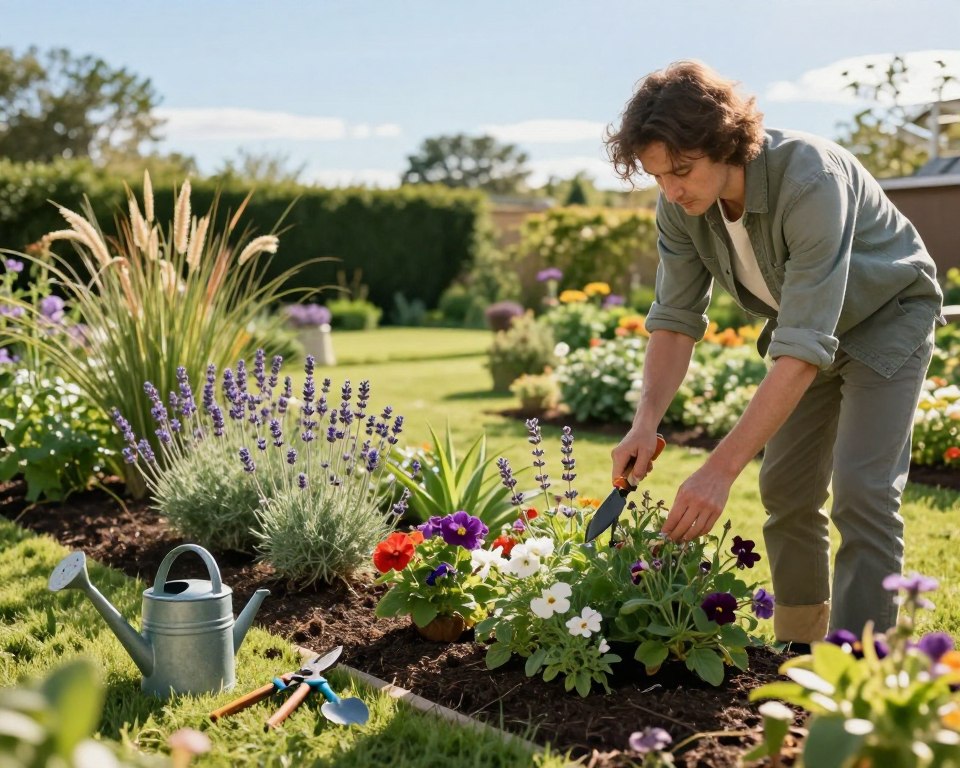
Designing a Low Maintenance Layout
A smart layout can make your garden easy to care for and turn it into a peaceful retreat. Plan for lots of open space and put plants with similar water needs together. This way, your garden will look great without too much work.
Creating Open Spaces
Open spaces cut down on how much work you need to do. Keeping borders simple and letting air flow freely means less pruning and weeding. These spots not only look good but also make your garden feel peaceful and connected to nature. Open areas make your garden easier to enjoy.
Grouping Plants by Water Needs
Putting plants with the same watering needs together is key for a low-maintenance garden. It makes watering easier and means you don’t have to check on your plants all the time. This smart move leads to a garden that does well with little effort, offering a fun gardening experience.
Resources for Further Inspiration
If you’re ready to dive deeper into low maintenance gardening, plenty of resources can help. There are books and magazines filled with tips for an easy outdoor space. They offer ideas on new techniques and designs for a thriving garden with little work.
Books and Magazines on Gardening
Publications like Garden Design and Fine Gardening have many articles on easy garden care. They provide top advice for keeping a beautiful yard with little effort. Books like The Low Maintenance Garden by Pat Welsh are perfect for all gardeners. They show how to enjoy your garden without too much work.
Online Forums and Communities
Online forums and gardening communities are also great for advice and sharing tips. Sites like Reddit gardening forums or Facebook groups help gardeners share their experiences. Joining these groups can grow your gardening skills and inspire new ideas for your garden.