ADVERTISEMENT
About 70% of homeowners in the U.S. like to decorate with custom-made furniture. This fact shows many people enjoy DIY projects, especially making coffee tables that show their style. When you build a coffee table yourself, you get to be creative. You also save money and make sure the furniture is good quality. Our guide will show you different coffee table ideas, the tools you’ll need, and step-by-step plans. This way, you can make a beautiful piece for your home.
Key Takeaways
- Custom furniture projects are on the rise, with many homeowners choosing DIY options.
- Creating a coffee table can be a rewarding and cost-effective endeavor.
- Various styles and materials are available for unique homemade coffee table ideas.
- Planning your design is crucial for a successful DIY coffee table build.
- Using the right tools can simplify the process and improve the quality of your work.
- Inspiration for your projects can be found online and in dedicated woodworking resources.
Introduction to Coffee Table DIY Projects
Making your own coffee table is both fun and rewarding. It allows you to save money while designing a piece that fits your style. You can pick materials that match your home, making your table one of a kind.
Benefits of Building Your Own Coffee Table
Building a coffee table yourself means you can make it just how you want it. Here are some key benefits:
ADVERTISEMENT
- Unique Décor: Your table will be unique and show your personality.
- Satisfaction: Finishing a DIY project feels great.
- Material Choices: Choose materials that are eco-friendly or just perfect for you.
- Cost-Effectiveness: Building it yourself is cheaper than buying it.
Popular Styles to Consider
Choosing a style for your coffee table can change your room’s vibe. Here are popular styles for DIY projects:
| Style | Description | Ideal Material |
|---|---|---|
| Rustic | Focuses on natural, earthy materials. | Reclaimed wood or live edge timber |
| Modern | Features clean lines and bold colors. | Metal or glass |
| Multifunctional | Has storage or can change for different uses. | Wood or composite materials |
Essential Tools for Your Coffee Table DIY
Starting a coffee table DIY is exciting and rewarding. But, the right tools are key to success. For beginners or those wanting to boost their skills, knowing the basic and advanced tools is essential. You’ll need basic woodworking tools to start, and optional advanced tools can make your project stand out.
Basic Tools You Can’t Live Without
For a great coffee table, beginning with basic tools is crucial. Here’s what you’ll need:
- Measuring Tape: Accurate measurements are key to a well-built table.
- Saw: A circular saw or miter saw can cut wood to the required dimensions.
- Drill: Essential for making holes for screws and other components.
- Screwdriver: Needed for assembling parts and securing screws.
- Sandpaper: Ensures your surfaces are smooth and ready for finishing.
Optional Tools for Advanced Projects
If you’re aiming higher with your coffee table DIY, these tools might interest you:
- Router: Perfect for adding decorative edges or creating joints.
- Pocket Hole Jig: Allows for hidden screws, for a neat finish.
- Table Saw: For precise cuts in bigger wood sheets.
- Clamps: Keep pieces together while the glue dries.
- Level: Makes sure your table is balanced and stable.
Choosing the Right Materials for Your Table
When looking to create your DIY coffee table, picking the right material is key. It shapes how the table looks, lasts, and functions. We will discuss wood options and other materials. This will help you choose wisely to match your design ideas.
Types of Wood: Pros and Cons
Wood is a favorite for coffee tables because it’s warm and adaptable. Let’s look at some common woods used and what makes them good or not so good:
| Type of Wood | Pros | Cons |
|---|---|---|
| Pine | Affordable and lightweight, easy to work with | Softwood, prone to scratches and dents |
| Oak | Durable and resistant to wear, classic look | Can be heavy, more expensive than softwoods |
| Birch | Smooth finish, good for painting or staining | Less durable compared to oak |
| Maple | Highly durable, offers a clean, modern appearance | More costly, can be difficult to stain evenly |
Alternative Materials: Metal, Glass, and More
If wood isn’t your thing, there are other materials for DIY tables. Each has a special look:
- Metal: Brings an industrial vibe and lasts long.
- Glass: Looks modern and light, but needs frequent cleaning.
- Plywood: It’s budget-friendly, with many finishes, for creative projects.
- Reclaimed Materials: Adds rustic beauty and is eco-friendly, but might be hard to find.
Design Inspirations for Your Coffee Table
Picking the right coffee table design can really make your living area look and feel better. There’s a huge variety of designs to fit what you like and need. Choosing well can show off your personal style and make sure the table does what you need it to do. Here, you’ll find ideas that mix modern and rustic looks with clever designs that do more than hold your coffee.
Modern vs. Rustic Styles
Modern coffee table styles are all about simplicity, clean shapes, and a sleek look. They often use materials like metal, glass, and polished wood to get a contemporary feel. Rustic designs, however, celebrate the natural world with finishes that show off the wood’s real patterns and textures. They add a warm, homey vibe to any space, making it feel welcoming and cozy.
Multi-Functional Coffee Tables
Today’s coffee tables do a lot more than just support your coffee cup. They come with features like drawers, lift-tops, and shelves to help keep everything tidy and use space wisely. These smart designs blend form and function beautifully, which is especially great for tight or busy rooms. Innovative designs can turn a simple coffee table into the centerpiece of your living space.
| Design Style | Materials | Key Features |
|---|---|---|
| Modern | Glass, Metal, Stained Wood | Sleek lines, Minimalist |
| Rustic | Reclaimed Wood, Distressed Finishes | Warmth, Character |
| Multi-Functional | Various (Wood, Metal, Combinations) | Storage, Versatility |
Step-by-Step Guide to Building Your Coffee Table
Building a coffee table requires planning and careful work. Follow these easy steps to make your own furniture piece. Start with a solid plan and keep your personal style in mind. Deciding things early makes building smoother and more fun.
Planning Your Design
Choose a design that fits well in your living area. Draw the size and shape of your table, thinking about height, width, and depth. Think about how the table will be used. Is it for decoration or for storage? List all materials you need, like wood types and other items. It’s important to measure accurately to prevent errors later.
Cutting and Assembling the Pieces
Now, with your plan ready, start cutting accurately. Use the right tools to cut the wood as per your design. Wearing safety gear is a must during this step. Once you have all pieces, start putting them together with screws or dowels. This makes sure your table is strong. It’s important to align everything right. A table that’s not straight may look bad and could break down later.
Final Touches: Sanding and Staining
After assembling, it’s time to sand the table for a smooth surface. Start with coarse sandpaper and move to finer ones for a polished look. Choose a stain that brings out the beauty of the wood and protects it. Apply it evenly and let it dry well. A nice finish makes your coffee table look good and last longer. This wraps up your coffee table building project.
Customizing Your Coffee Table
Customizing your coffee table lets you show off your unique style and personality. You can make even a basic coffee table stand out in your living room with many options. Whether it’s picking colors or adding handy features, you have endless possibilities for DIY coffee table customization.
Paint and Finish Options
Choosing the right paint and finish is key to your coffee table’s final appearance. A new coat of paint can turn a plain table into a striking piece in your room. Here are some choices to think about:
- Acrylic paint: It’s easy for beginners and dries quickly.
- Chalk paint: Gives a matte, vintage look, great for rustic decor.
- Stains: Show off the wood’s natural beauty and grain.
- Varnish: Protects from scratches and spills, helping the table last longer.
Adding Unique Features: Drawers, Shelves, and More
Adding special features can turn a simple coffee table into something amazing. Consider drawers or shelves to improve functionality and keep things organized. Here are a few ideas:
- Drawers: Perfect for storing things like magazines, remotes, or coasters, to keep your table neat.
- Shelves: They’re great for showing off decor or storing coffee table books.
- Wheels: Make your table easy to move around for more convenience.
- Integrated lighting: LED strips can add a modern flair and create a cozy atmosphere for get-togethers.

Common Mistakes in Coffee Table DIY
Trying your hand at making a coffee table can be rewarding. But, some common mistakes can trip you up. Inaccurate measurements and skipping final touches are big errors. Being precise from the start and focusing on the final steps can really pay off.
Overlooking Measurements
Getting measurements right is key in DIY projects. Many people don’t realize how crucial this step is. This often leads to parts not fitting together or furniture that doesn’t fit the space. Always double-check your measurements. Using a measuring tape and square can help you be more accurate.
Skipping the Finishing Touch
The way your coffee table looks at the end can change everything. Many people forget about sanding and applying stains or sealants. These steps make your table look better and last longer. Spending time on these finishing touches helps avoid mistakes. It makes sure your project turns out great.
Maintenance Tips for Your DIY Coffee Table
To keep your DIY coffee table looking great, regular care is needed. Using the right maintenance strategies will keep it beautiful and make it last longer. By cleaning it properly and fixing issues early, you can avoid bigger problems later.
Cleaning and Care Strategies
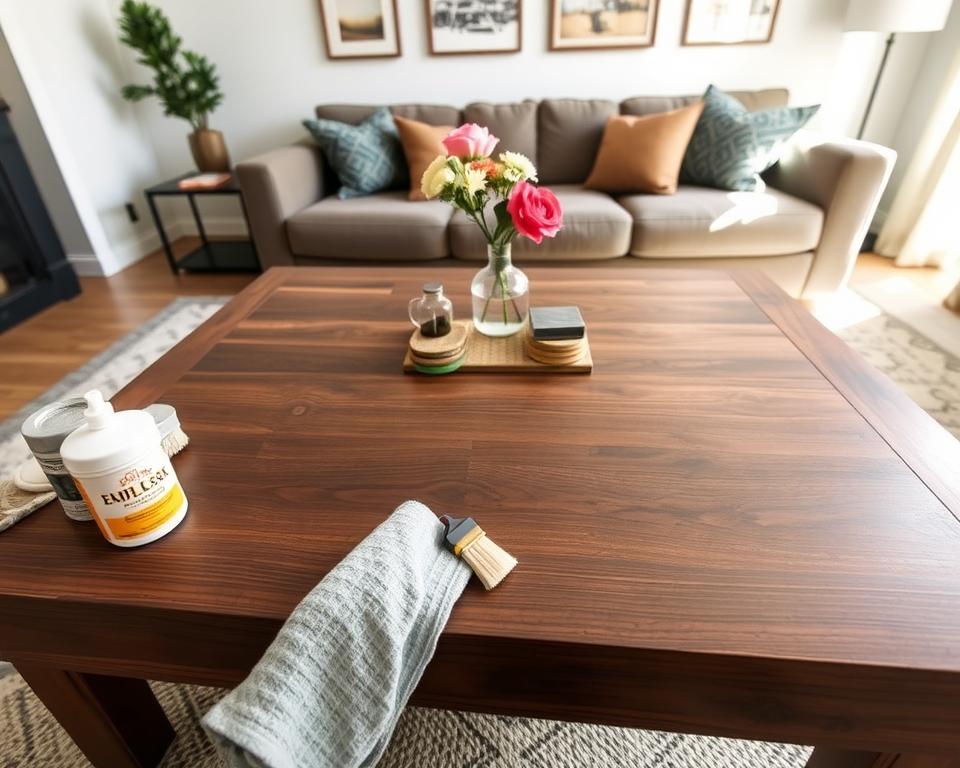
To keep your coffee table sparkling, use the right cleaners. For wood tables, choose a mild cleaner or mix vinegar with water. Stay away from strong chemicals that could damage the table’s finish. Dust often with a soft cloth to stop dirt from building up. For glass tables, use a glass cleaner that doesn’t streak and clean with a microfiber cloth to avoid scratches.
Repairing Common Wear and Tear
Over time, your table might show some wear. Small scratches can be hidden with wood polish or special markers. For bigger marks, sanding and refinishing can make it look new again. If there are water rings, using furniture wax can help. Taking care of your table this way keeps it looking good for many years.
| Maintenance Task | Frequency | Recommended Products |
|---|---|---|
| Dusting | Weekly | Soft microfiber cloth |
| Deep Cleaning | Monthly | Gentle wood cleaner / Glass cleaner |
| Sanding and Refinishing | As Needed | Wood polish / Refinishing products |
| Repairing Scratches | As Needed | Furniture markers / Wax |
Where to Find Inspiration for Your DIY Projects
Looking for inspiration can lead you to amazing DIY project ideas. Whether you’re new or experienced, exploring different sources can help. You’ll find unique designs and methods for your coffee table projects. There are plenty of resources available, making it easy to start.
Online Resources and Blogs
The internet is full of ideas for DIY projects. Websites and blogs focus on furniture making and home decor. Pinterest shares visual ideas, and YouTube has video tutorials. Instructables and Ana White provide detailed plans. Forums like Reddit offer support as you start your project.
Books and Magazines on Furniture Making
Books and magazines are also great for inspiration. Titles such as “The Complete Manual of Woodworking” and “DIY Furniture” have lots of knowledge. They give instructions and design ideas. Magazines like Fine Woodworking and Popular Woodworking have beautiful designs and expert tips. They’re great for any DIY fan’s collection.
Budgeting for Your Coffee Table DIY
Starting a DIY coffee table project is thrilling but managing money is key. It’s important to budget wisely to keep costs in check without compromising on quality. Planning your expenses carefully and looking for savings can help make your project affordable.
Estimating Costs Accurately
First, list all the things you’ll need for your coffee table. Include materials, tools, and any extra costs. Here’s what you might spend on different items:
| Item | Estimated Cost |
|---|---|
| Wood (various types) | $100 – $300 |
| Tools (saw, drill, etc.) | $50 – $150 |
| Finishes (paint, stain) | $20 – $50 |
| Extras (hardware, legs) | $30 – $100 |
Ways to Save Money on Materials
To lower costs on DIY coffee table materials, try these tips:
- Use reclaimed wood: Old furniture or pallets can reduce expenses.
- Shop local sales: Look for deals at hardware stores during big sales.
- Join DIY communities: Online groups may offer material swaps and discounts.
- Purchase secondhand tools: Garage sales and thrift stores have affordable tools.
Conclusion and Final Thoughts on Coffee Table DIY
Making your own coffee table is more than a project. It lets you show off your style and craft skills. Looking at what you’ve made, you feel proud of the time and work you put in. It’s special because it shows who you are. The final thoughts about this DIY focus on the happiness of learning new skills. And how cool it is to display your work in your home.
After finishing the table, think about what to make next. Maybe try making bookshelves or side tables. They would look great with your new table. Start planning your next DIY projects. These projects can test your creativity and make your home look even better.
The joy of making things by hand doesn’t stop at just one item. Each project you finish opens the door to more exciting DIY projects. Keep up the energy and jump into your next projects. Do it with excitement and believe in yourself!