

ADVERTISEMENT
Did you know the average professional in the United States will switch industries at least five times during their working life? Changing fields feels daunting, but past experience is your greatest asset. A well-crafted cover letter for career change acts as a bridge between past accomplishments and your future employer’s needs.
Instead of listing old job titles, translate your history into your new industry’s language. Focus on what you can contribute today rather than where you have been. Highlight transferable strengths and use measurable examples to show hiring managers you are ready to contribute quickly.
This guide offers a practical way to shape your story. We will explore how to research roles and frame your skills with confidence. Then, we will polish your cover letter for career change to help it stand out in a crowded inbox.
ADVERTISEMENT
Key Takeaways
- Treat your document as a bridge between past roles and future goals.
- Translate your previous accomplishments into the language of your new industry.
- Focus on the specific value you can provide to the employer right now.
- Use quantified examples to prove your skills are transferable.
- Research the company to align your motivation with their current needs.
Why career changers need a different cover letter
Your past experience is valuable, but you must explain it to a new audience. A standard cover letter often follows a straight career path, which may confuse hiring managers after a sudden pivot. You need to bridge the gap between your past work and your next role.
The key is finding your transferable skills. These abilities stay useful across industries and job titles. Highlighting these strengths gives your new career direction a clear foundation.

Consider a teacher moving into a corporate role. Rather than listing lesson plans, they can describe curriculum development as a strong match for content strategy. Similarly, someone with legal compliance experience can show how attention to detail helps a startup scale operations safely and quickly.
“The best way to predict the future is to create it by showing how your past achievements solve the specific problems of your future employer.”
Employers often worry about the learning curve linked to a career change. Your letter must ease this concern by showing that your transferable skills are ready to use now. Use the table below to see how different backgrounds can support effective career changes.
| Previous Role | Core Skill | New Career Application |
|---|---|---|
| Teacher | Curriculum Design | Content Strategy |
| Compliance Officer | Risk Mitigation | Operations Scaling |
| Sales Manager | Relationship Building | Customer Success |
| Event Planner | Logistics Management | Project Coordination |
By focusing on these outcomes, you stop being a “risky” candidate and become a strategic hire. Your goal is to make the career change feel like a natural evolution, not a random jump. When you connect your history to the employer’s needs, you gain confidence asking for the interview.
Gather the job details your letter should reflect
Starting a new career takes careful research. Before writing, learn exactly what the hiring manager wants in a candidate. This step helps you create a professional summary that makes a strong first impression.
Read the job description several times and note repeated themes. Identify required skills, software knowledge, and industry keywords. Using this language shows employers you understand their work and daily challenges.
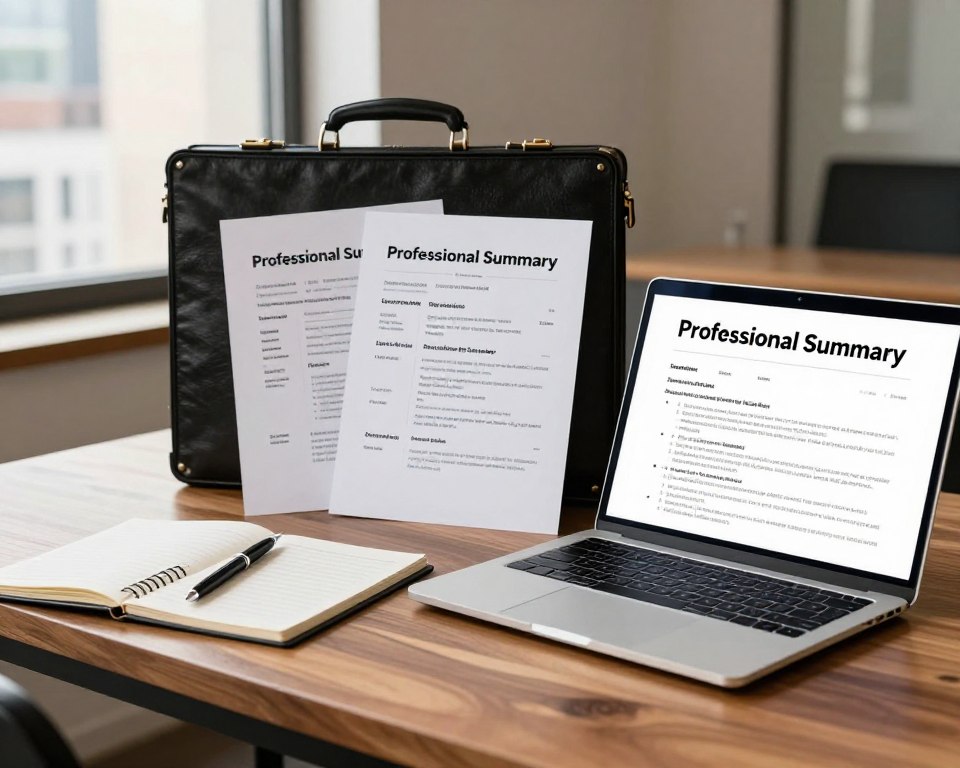
Also, review the company’s mission and recent business growth. Connecting your personal values to their corporate goals makes your interest feel genuine, not generic. This effort turns your professional summary into a focused pitch that shows you fit their team.
Use this table to organize your findings before writing your letter.
| Research Category | What to Look For | Why It Matters |
|---|---|---|
| Core Skills | Top 3 required abilities | Shows you can do the job |
| Company Mission | Values and goals | Proves cultural alignment |
| Industry Keywords | Repeated terminology | Helps pass screening tools |
| Team Priorities | Current business challenges | Demonstrates problem-solving |
Use a simple four-part cover letter structure
A clear, four-part structure is a secret weapon for professionals changing careers. You do not need to copy a functional resume format into paragraph form to impress recruiters. This framework keeps your message concise and gives each paragraph a clear purpose.
Opening and career-change direction
Name the specific role you want and state your career direction. This helps the hiring manager understand your goal at once. Keep this section brief and professional to set the letter’s tone.
Transferable skills and relevant achievements
Connect your past strengths to the new role. Use concrete evidence instead of listing duties alone. Relevant achievements show that your skills can transfer across industries.
Motivation for the employer and role
Explain why you want to work for this specific company. Employers want proof that you researched the company and care about its mission. This paragraph links your past experience to your future goals.
Closing and call to action
End your letter by requesting a conversation or interview, and explain how your background fits their needs. A confident, direct closing leaves a lasting impression and encourages the reader to take the next step.
| Structure Component | Primary Goal | Key Benefit |
|---|---|---|
| Opening | State the target role | Provides immediate clarity |
| Middle | Highlight transferable skills | Proves value beyond a functional resume format |
| Motivation | Explain company fit | Shows genuine interest |
| Closing | Request an interview | Drives the hiring process forward |
Start with the role and your reason for changing careers
Connect your past professional identity to your future role with a clear, intentional narrative. Name the specific position you want right away. This helps the hiring manager and shows a clear sense of direction.
Do not only state that you want to switch fields; explain the reason for your move. Show how your background gives the new team a useful perspective. Highlight one or two industry-specific accomplishments that show you are ready.
Many candidates only list software tools or technical skills. Instead, describe a product decision you made or a measurable business improvement you led. This shows you can drive results, not just complete tasks.
This table shows how to change passive, generic language into an impact-driven narrative that highlights your value.
| Focus Area | Generic Opening | Impact-Driven Opening |
|---|---|---|
| Career Pivot | I am looking to change careers into marketing. | I am applying for the Marketing Manager role to leverage my background in data analysis. |
| Value Proposition | I have used many different software tools. | I used industry-specific accomplishments to increase team efficiency by 20%. |
| Business Impact | I am a hard worker who learns fast. | I led a product decision that improved customer retention rates significantly. |
These examples show that your transition is intentional and relevant. Employers value candidates who connect past success with future company growth. Keep your opening concise, confident, and focused on the value you bring.
Translate past experience into relevant strengths
To change careers, connect your past work to your new employer’s needs. You do not need to start over; reframe your existing accomplishments instead. Review past projects and find lasting skills, such as problem-solving, leadership, or technical proficiency.
If you have a corporate background, show how you handle complex systems and deliver results. Freelancers should stress their self-motivation and client management skills, while people from education or sales can show their communication and persuasion abilities. Use words from your target job description to connect your past with your future.
Many candidates worry about explaining time away from work. A professional employment gap explanation should be brief, factual, and show your current readiness. Do not sound defensive; present this time as personal growth or planned preparation for your next chapter.
Whether you managed a household, studied, or took a sabbatical, focus on your enthusiasm for returning to the workforce. Employers value honesty and clarity over long, complicated excuses. Stay positive to show you are ready to hit the ground running in your new role.
Back up transferable skills with specific results
When you enter a new industry, past achievements can connect your experience to future success. Hiring managers may hesitate about candidates from different fields, so replace vague claims with concrete evidence. Instead of saying you are a “hard worker,” describe when you solved a complex problem.
Use the action-context-result formula to make your experience stand out. Start with the action, explain the context, and finish with a measurable result. This approach helps an applicant tracking system identify your value by matching specific accomplishments to requirements in the job description.
Focus on outcomes that matter to your target employer. If moving into operations, highlight improved process efficiency or reduced waste. For customer success, show how you boosted client retention or satisfaction scores; metrics help recruiters judge potential despite unrelated titles.
Use relevant keywords in achievement stories to improve your chances with an applicant tracking system. Match the job posting’s terms to show you understand the industry’s language. Clear, data-driven stories reduce guesswork and show your skills are truly transferable.
| Weak Claim | Strong Achievement Story | Key Metric |
|---|---|---|
| Managed a team well. | Led a team of 10 to streamline project workflows. | 20% increase in output. |
| Good at customer service. | Resolved complex client issues to improve loyalty. | 15% higher retention rate. |
| Experienced in sales. | Implemented a new CRM to track lead conversion. | 30% growth in new revenue. |
Address missing industry experience without apologizing
Your lack of specific industry experience is not a weakness. It can shape a unique career transition narrative. Use the transferable value you bring because employers often seek fresh perspectives that seasoned veterans might overlook.
Avoid apologetic phrases when writing your cover letter. Do not write, “Although I lack experience in this field…” or “I know I am new to this industry, but…” These phrases frame you as a risk, not an asset.
Pair missing requirements with concrete evidence of your readiness. Mention recent certifications, relevant side projects, or collaborative efforts where you solved similar problems. This proactive approach builds a strong career transition narrative and shows you are ready to contribute quickly.
If you are a regulated professional, present your knowledge of compliance and risk as a foundation for innovation. Technical professionals should highlight their strategic product thinking to show they understand the bigger picture. This makes your background a strategic advantage, not a gap.
| Approach | Focus Area | Impact on Employer |
|---|---|---|
| Apologetic | What you lack | Creates doubt and risk |
| Confident | What you offer | Shows growth and potential |
| Strategic | Career transition narrative | Demonstrates clear vision |
Your goal is to communicate confidence and preparation. Present your background as a deliberate choice to show how your transition benefits their team. Keep your tone steady, professional, and focused on the future.
Explain why this employer fits your next step
Hiring managers often worry career changers lack a real connection to their organization. If your reason seems vague or unrelated to its mission, it may create hiring manager concerns about long-term commitment. Show that you understand the company’s goals and how they match your plans.
Research the company’s current projects, customer base, and recent growth milestones. Clearly articulate why its approach to the industry matches your professional values. Link your passion to its business model, whether it values sustainability or unique product design.
If you move from a large corporation to a startup, address hiring manager concerns about your adaptability. Do not rely on the prestige of your past employers. Instead, highlight your comfort with agile iteration and your ability to thrive with limited resources. Show that you can roll up your sleeves and contribute at once in a fast-paced environment.
Use the following table to tailor your “fit” argument to the organization you are targeting:
| Company Type | Key Focus Area | What to Emphasize |
|---|---|---|
| Early-Stage Startup | Agility and Speed | Resourcefulness and grit |
| Established Corporation | Scale and Process | Strategic thinking and stability |
| Non-Profit Organization | Mission and Impact | Alignment with core values |
| Tech Growth Firm | Innovation and Data | Analytical skills and growth |
By clearly stating why this organization suits your next step, you remove guesswork for the reader. Confidence in your choice shows you want the right job, not just any job. This intentional approach sets you apart from candidates who send generic applications.
Choose a confident, conversational tone
Your writing style tells a story about your career change confidence before the recruiter meets you. Aiming for a professional cover letter tone means sounding like a real person, not a stiff, outdated template. You want to sound approachable while focusing on your value to the company.
Avoid vague language or overly familiar slang that may weaken your credibility. Instead, use active verbs and direct statements to describe your past work. Clear speech about what you have done shows you are ready for new challenges.
Remove defensive phrases that make your transition seem like a weakness. Do not apologize for lacking industry experience or use self-deprecating language. Focus entirely on the strengths you bring to the table, as this builds the career change confidence hiring managers seek in top candidates.
Once you have drafted your content, polish the final version. Check for grammar and spelling errors, since small mistakes can distract from your message. Ensure your document has consistent spacing, clean margins, and readable formatting so a busy recruiter can scan it easily.
Close by asking for an interview
You have built a strong case, so now seal the deal with a clear call to action. Many candidates end with a passive statement that leaves the choice entirely with the employer. Use your interview request to show initiative and real excitement about the opportunity.
A polished cover letter closing should be concise and professional. Thank the reader for their time, then point briefly to your attached resume for more details. Do not repeat your life story; focus on discussing how your skills can help their team succeed.
Make your final sentence confident and courteous. You are not begging for a job; you are suggesting a conversation that benefits both sides. A direct interview request shows respect for their time and readiness to move forward with the hiring process.
To make your cover letter closing effective, compare these common approaches and choose the style that fits your situation.
| Closing Style | Impact on Recruiter | Recommended Use |
|---|---|---|
| Passive | Seems uncertain or uninterested | Avoid entirely |
| Demanding | Appears arrogant or pushy | Avoid entirely |
| Confident | Shows professional enthusiasm | Best for most roles |
| Collaborative | Highlights mutual value | Best for senior positions |
Career-change cover letter template to adapt
A flexible template gives you a strong starting point for a career transition. Do not copy a generic form. Use its clear structure to organize your ideas and show your unique value proposition.
Use this career change cover letter template to build your draft. Customize it for each role to improve your chances of success.
- Opening: State the role you want and express your genuine excitement for the company.
- The Pivot: Briefly explain your reason for changing careers, focusing on the future rather than the past.
- Transferable Strengths: Connect your previous experience to the requirements listed in the job description.
- Quantified Achievement: Provide a specific example of a result you delivered that proves your capability.
- Motivation: Explain why this specific employer is the right fit for your next professional chapter.
- Closing: Request an interview and thank the hiring manager for their time.
Treat this as a tailored cover letter example, then add your own story. Replace each bracketed section with details from your work history and the job advertisement.
Personalization is the key to standing out in a competitive market. A template helps you draft, but it cannot replace research into company culture and current business goals.
Proofread your final version so your tone stays confident and professional. Combine this structure with your authentic voice to connect your past with your future.
Check that every paragraph supports your new career direction
Before you send your final draft, review it carefully. Keep the specific job description open as you read. Each sentence should show the value you bring to this new role.
Remove references to your old industry that do not support your current goal. If a paragraph lists past duties, revise it to show your transferable strengths. Recruiters at companies like Google or Salesforce want to know how your unique background solves current problems.
Clear evidence makes your transition credible. Show achievements that prove you can handle this new position’s challenges. Explain your potential impact clearly to stand out from other applicants.
Review your tone: it should sound confident and ready for a fresh start. A polished letter shows you take this pivot seriously. Send your application knowing you built a strong case for future success.




