ADVERTISEMENT
A 2023 Federal Reserve survey found that 37% of U.S. adults lacked cash or its equivalent for a $400 emergency. A savings cushion can help you handle a car repair, medical bill, or lost income without credit cards or loans.
Your emergency fund savings goal depends on essential costs, income stability, and past surprises. Even a modest start can build a financial safety net. Your emergency savings do not need to reach a perfect number overnight.
ADVERTISEMENT
Key Takeaways
- An emergency fund is cash set aside for unplanned expenses.
- A reserve can help you avoid interest and fees from borrowing.
- Your target should reflect your costs and income stability.
- Even a small amount can offer a useful buffer.
- Build your savings at a pace that fits your budget.
Calculate your essential monthly expenses first
Begin with the bills you must pay each month. This total supports your emergency fund savings goal.

Count housing, utilities, food, transportation, and insurance
List rent or mortgage payments, utilities, groceries, transportation, and insurance premiums. Check recent bills or bank records for costs that change each month.
Separate needs from flexible spending
Separate fixed costs, such as rent, from variable costs, such as groceries. Exclude dining out, entertainment subscriptions, and clothing purchases because they are not essential living expenses.
Include minimum debt payments and required bills
Add minimum payments for credit cards and loans, plus required bills. An expense worksheet can total these monthly expenses and show what to cover first.
Pick a starter goal if you have no savings
Saving thousands may feel out of reach. Start with a starter emergency fund of $1,000. It can help cover a car repair, a small appliance, or unexpected medical bills.
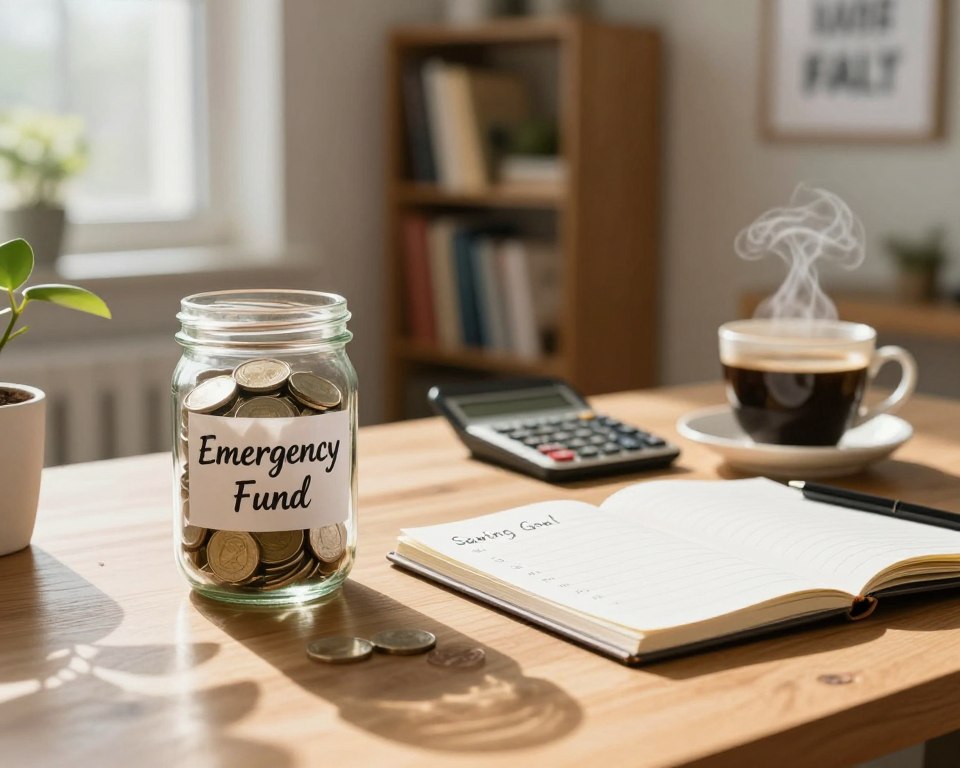
With focused saving, you may reach this first milestone in two to four months. Your timeline depends on how much you can set aside each month. A reported research finding suggests $2,000 in emergency savings can support financial well-being as much as $1 million in assets.
Cash is ready when a need arises.
Once you reach your first emergency fund savings goal, raise it in steps that fit your budget.
| Milestone | How it can help |
|---|---|
| $500 | Cover a small urgent repair or bill |
| $1,000 | Build a starter cushion for common surprises |
| $2,000 | Keep more cash available for larger urgent costs |
Use months of expenses to set your main target
Build your target from essential living expenses, not your full monthly budget. Multiply that amount by the months you want your savings to cover. The right range depends on income stability and how long a setback could last.
When one to three months may be enough
One to three months may work if you have a stable job, steady pay, and few people relying on your income. Three months can provide a useful cushion while you look for work or manage a short-term bill. A smaller fund may cover a sudden repair, yet it offers less income replacement during a longer job loss.
When three to six months makes more sense
Three to six months is a common target for income shocks. Consider the higher end if your job is less secure, income varies, or your household needs time after job loss. These figures are starting points; choose a range that fits the risks you need to cover.
For example, with $3,500 in essential living expenses each month, three months equals $10,500. Six months equals $21,000. Use your monthly costs to set a monthly savings target that feels achievable.
| Expense coverage | Example target | May fit when |
|---|---|---|
| One month | $3,500 | You need an initial cushion for a short-term setback. |
| Three months | $10,500 | Your job and income are fairly stable. |
| Six months | $21,000 | Your income or job prospects carry more risk. |
Adjust the goal for your household
Your savings target should match who depends on your income and the bills you pay each month. A growing family may need a larger financial safety net as household costs and duties increase.
Account for dependents and shared income
Consider how a job loss or lower income would affect your household. If one income supports several people, a longer disruption could put more pressure on your savings. With two incomes, consider whether both earners could face a setback at the same time.
Plan for childcare, medical needs, and other responsibilities
Include essential living expenses such as childcare, insurance premiums, and required household bills in your monthly estimate. Check your health plan’s deductible and out-of-pocket maximum to gauge what unexpected medical bills could cost.
Raise the target when your income is less predictable
A steady paycheck makes bill planning easier. When earnings rise and fall, a larger cash cushion can cover essentials during slow periods or a job search. Aim for at least six months of essential expenses if your work or household income is uncertain.
Self-employed and freelance income
Self-employed workers and freelancers may want to save six to twelve months of essential costs. Income can arrive unevenly, and you may need to pay for health insurance yourself. Because unemployment benefits may not apply during a work gap, include income replacement in your emergency fund savings goal.
Commission-based or seasonal work
Commission-based pay and seasonal jobs can leave long stretches between strong paychecks. Set aside more during busy months to cover rent, food, insurance, and other core bills when work slows. This approach can make variable income savings more manageable.
Recent job changes or a single-income household
Revisit your target after a job change or when your household starts relying on one income. A local job market with fewer employers may mean a longer search if you lose work. Keep enough savings to cover essentials while you look for a new role.
| Income situation | Suggested reserve | Why it may help |
|---|---|---|
| Self-employed or freelance | Six to twelve months of essential expenses | Income gaps, health insurance costs, and limited access to unemployment benefits can strain cash flow. |
| Commission-based or seasonal work | Six months or more | Slow seasons or weak sales can reduce pay for weeks or months. |
| Recent job change or one-income household | At least six months, adjusted for local job conditions | A longer job search or loss of the household’s main paycheck can raise the risk of missed bills. |
Account for risks your insurance will not fully cover
Insurance can limit what you pay, but it may not cover every cost. Review health, homeowners, or renters policies and note your insurance deductibles and out-of-pocket limits. Cash on hand can help cover unexpected medical bills or repairs before a claim is paid.
Auto coverage, rental car benefits, and roadside assistance can change your vehicle costs. Disability insurance can replace some income during a long illness or injury. Without it, a larger reserve may help bridge the gap.
Review your coverage when a policy, job, or household need changes. A well-sized financial safety net can help cover costs your insurance leaves behind.
Keep predictable expenses outside the emergency fund
Use emergency money for sudden costs needing quick action. Examples include a broken HVAC system, major home repair, or unexpected medical bill. These costs can disrupt your budget and may affect your health, safety, or ability to earn income.
Annual car registration, holiday gifts, vacations, and routine car care are easier to plan for. Set aside money in separate budget categories or a sinking fund. This protects your emergency fund savings goal during a true financial shock.
Before you withdraw, ask if the cost is urgent and essential. Could a budget change cover it? Borrowing may add interest and fees to the bill, making debt repayment harder.
Turn your target into a monthly savings plan
Make the amount you still need part of a clear plan. Subtract your emergency savings from your full target. The result is what remains to save.
Calculate the dollar amount you need
Divide the amount left by the number of months you have to save. For example, if you have $2,400 left and want to reach your goal in 12 months, save $200 each month. This creates a practical monthly savings target.
Choose a contribution that fits your budget
Choose an amount you can maintain. Set weekly or payday automatic transfers from checking to savings, or ask your employer to split your direct deposit. Check your balance and transfer dates to prevent overdraft fees. Change the amount if your income shifts.
If you have high-interest debt, consider building a $1,000 starter fund before focusing more on debt repayment. Keep enough retirement contributions to receive your full employer match, if offered.
Set a timeline without crowding out essential bills
Review your cash flow before choosing a date. When possible, change bill due dates, or save part of a tax refund or cash gift. Track your progress and choose a new goal after each milestone.
Keep the money accessible and review the goal regularly
Keep accessible emergency savings in a safe account separate from daily spending. A high-yield savings account can offer easy access while earning interest. A bank or credit union may let you open a separate account for this purpose.
Money market accounts may offer higher rates than standard savings accounts. Check for fees and minimum balance rules. Investments, CDs, and cash at home may be harder to access or carry risks that savings accounts do not.
Review your emergency fund savings goal at least once a year. Revisit it after a job change, marriage, divorce, home purchase, income shift, or rise in living costs.
Set your emergency fund target and start with the next deposit
Set an emergency fund savings goal using essential expenses, income stability, household needs, insurance, and personal risks. Begin with a reachable target, then build from there.
Choose a regular deposit that fits your budget. Automatic transfers help you save steadily and grow your financial safety net without monthly reminders.
If you use the fund, resume regular contributions as soon as you can. You may pause some flexible spending or other savings goals temporarily to refill it.
Review your target when your costs or life circumstances change. A savings account may earn interest over time, but investments can lose value and do not guarantee a return.