

ADVERTISEMENT
Did you know a well-designed garden can boost your property value by up to 20%? This shows how vital it is to create a welcoming space. A garden flow design strategy turns ordinary outdoor areas into lively spots where moving around feels natural.
By focusing on seamless garden design, you can improve your landscape planning. This leads to a sanctuary that looks amazing and feels inviting. In this article, we’ll show you how to make every part of your garden a place to explore.
Key Takeaways
- Understand the principles of garden flow design for a better outdoor experience.
- Discover the importance of natural movement in garden design.
- Learn how to optimize outdoor spaces with effective landscape planning.
- Explore the key components of a well-designed garden.
- Recognize how plant selection and pathways impact garden flow.
Understanding Garden Flow Design
The idea of garden flow design is about making spaces that invite you to explore and interact. A well-designed garden lets visitors connect with nature in a special way. It turns an ordinary outdoor area into a place where you can fully immerse yourself.
ADVERTISEMENT
What is Garden Flow?
Garden flow is about how different parts of a landscape work together. It includes paths, how plants are arranged, and focal points that catch your eye. A good garden flow design makes visiting feel smooth and enjoyable, blending rest and discovery.
Importance of Natural Movement
Creating spaces that encourage natural movement helps us feel closer to nature. Paths and elements that follow our natural paths make our experience more real. Plants with scents, bright colors, and different textures make us want to touch and smell them, deepening our connection to the outdoors.
Key Principles of Effective Flow
Effective flow principles are key to a great garden design. Here are some important strategies:
- Curves: Use winding paths to spark curiosity and encourage exploration.
- Focal Points: Add things like sculptures or special plant setups to draw attention.
- Layering: Use different plant heights and densities to add depth and interest.
These strategies make the garden look better and feel more welcoming. They ensure visitors feel comfortable and at ease.
Components of a Well-Designed Garden
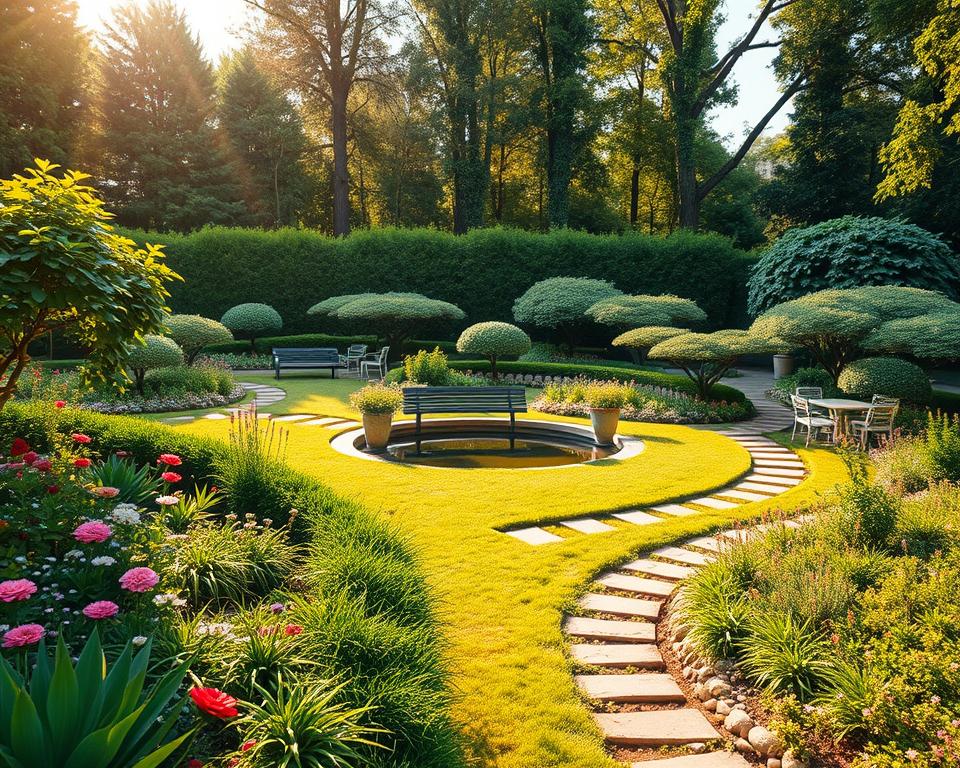
Creating a beautiful garden starts with knowing its key parts. Choosing the right plants and where to put them makes the garden look good and feel right. Paths are important for moving around and enjoying the garden. Adding water features brings a special touch, making the garden feel more welcoming.
Plant Selection and Placement
Plants are the heart of a garden, making it look good and feel right. Mixing different heights, colors, and textures makes a garden lively. Place plants in a way that creates depth and draws the eye. Choose native plants for less work and to help local wildlife.
Pathways and Accessibility
Good paths make it easy to move around, making the garden more accessible. Paths can be made from gravel, flagstone, or bricks, setting the garden’s mood. Curved paths invite you to explore and soften the garden’s look. Paths should be wide enough for everyone to walk comfortably, making the garden friendly for all.
Water Features and Their Impact
Water features add peace and beauty to a garden. Ponds, fountains, or birdbaths attract birds and create calming sounds. Think about how these features work with plants and paths for a unified look. Adding water makes your garden a peaceful place to relax.
Assessing Your Outdoor Space
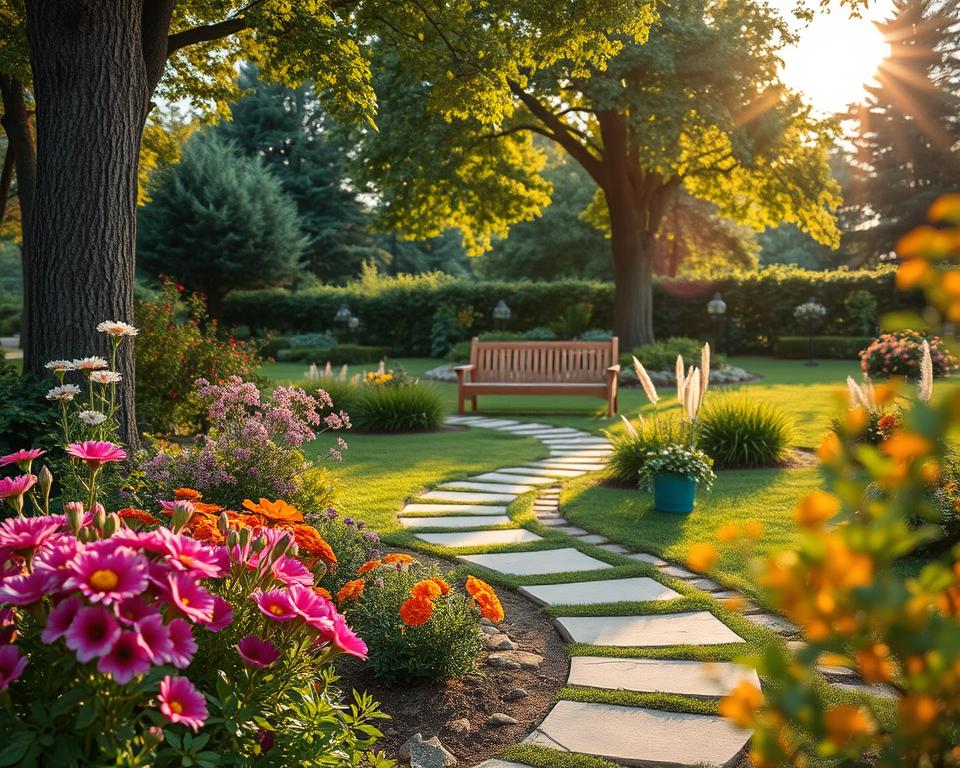
Before you start designing your garden, take time to evaluate your outdoor space. Look at all the elements you have. This helps you make the most of your space. You can then create a beautiful and useful garden.
Evaluating Your Garden’s Layout
Start by examining your garden’s layout. Walk around and think about how people move through it. Look for any obstacles that might get in the way. Make a note of the size and areas that need work.
Measuring Light and Shade
Light is key in your garden. Watch how the sun moves and where it’s shady. Knowing this helps you pick the right plants and where to put them.
Considering Existing Structures
Think about the structures you already have, like fences or trees. How do they affect sunlight and movement? Use them in your design to make your garden look and work better.
| Aspect | Considerations |
|---|---|
| Layout | Assess the flow and accessibility of pathways. |
| Light | Track sunlight exposure and shade patterns. |
| Structures | Evaluate the impact of existing features in the garden. |
Creating Zones within Your Garden
Setting up different zones in your garden makes it more useful and pretty. A good garden plan helps create areas for different activities. This makes your garden flow well.
Functional Areas: Relaxation vs. Activity
Designing zones for relaxing and for fun makes your garden versatile. For relaxing, think about cozy spots with cushions and shade. For fun, add lively gardens or play areas for kids.
Placing these areas thoughtfully lets people move easily between them. This way, everyone can enjoy the garden fully.
Thematic Zones for Visual Interest
Themed gardens add beauty and interest. You could have zones based on colors, plants, or seasonal flowers. For example, a scent zone might have herbs and flowers that smell great.
A butterfly zone could have plants that attract butterflies. These zones help tell a story in your garden.
Transition Spaces to Connect Areas
Transition spaces link different garden zones smoothly. Paths with plants, stones, or benches guide visitors. They also offer a chance to explore.
These areas help separate zones visually. They also make your garden feel welcoming.
The Role of Pathways in Garden Flow
Pathways are key in garden design, affecting how we move and find our way. The right materials and designs make paths better and easier to use. This makes the garden flow better. We’ll look at what makes good pathways in your garden.
Types of Pathways: Material & Design
When picking materials for your paths, think about how long they last and how they look. Here are some popular options:
- Gravel – Looks natural and drains well.
- Stone pavers – Give a classic, elegant look.
- Wooden decking – Perfect for a rustic feel and comfy walking.
Choosing the right material makes your paths look good and helps people move around easily. This makes the garden more inviting to explore.
Designing for Curves vs. Straight Lines
Curves in pathways make the experience more exciting. They guide the eye and encourage people to wander. Mixing curves and straight lines adds interest and makes the garden feel bigger.
Incorporating Natural Elements in Pathways
Adding natural elements to paths creates a peaceful atmosphere. Consider these:
- Native plants – Add color and life, making it feel more natural.
- Rocks and boulders – Add texture and create spots to sit along the path.
- Lighting – Lights placed right can light up paths, making them safer and more welcoming at night.
By mixing these elements, paths become more than just a way to get around. They become a key part of the garden, making it more accessible and enjoyable.
Enhancing Movement with Plant Choices
Choosing the right plants is key to making your garden move. You need to think about height, scale, color, and texture. These elements help create layers that guide the eye and invite exploration.
Selecting Plants for Height and Scale
Using strategic planting techniques helps create vertical layers in your garden. Tall plants can be focal points, drawing the eye and framing the view. Different scales among plants add depth and make visitors move through the garden, improving their experience.
Using Color and Texture for Guidance
Color and texture greatly affect how we move through a garden. Bright, warm colors draw the eye, while cool tones calm it. Mixing textures adds intrigue, guiding visitors from one spot to another. This approach not only guides movement but also boosts the garden’s beauty, making it more interesting all year.
Seasonal Plants to Maintain Interest
Adding seasonal plants keeps your garden interesting all year. Each season brings new colors and textures, keeping the garden lively. By picking plants that bloom at different times, your garden stays fresh and exciting with every visit.
The Impact of Hardscaping on Garden Flow
Adding hardscaping to your outdoor space is key to better garden flow. The right materials make your garden look good and work well. By picking the right hardscaping features, you can make your garden welcoming and fun to explore.
Choosing Hardscape Materials Wisely
Choosing the right hardscaping materials is important. You need to think about how long they last, how easy they are to care for, and how they look. Natural stone, pavers, and concrete are good choices. Each one adds its own special touch to your garden.
Integrating Patios, Decks, and Walkways
Patios and decks are great for hanging out in your garden. They help connect different areas of your garden smoothly. Walkways made from the right materials guide visitors and keep the flow of your garden smooth.
Creating Focal Points with Hardscape
Hardscape elements can be the main attraction in your garden. Things like fire pits, ornamental walls, or sculptures catch the eye and lead visitors on a path. Placing these elements well makes your garden more interesting and fun to explore.
Designing for Accessibility and Comfort
Making your garden accessible is key so everyone can enjoy it. A good garden design meets the needs of all visitors, including those with mobility issues. With careful planning, any garden can become a welcoming place where beauty and use go hand in hand.
Making Your Garden User-Friendly
For a garden that’s easy to use, think about its layout and paths. Wide, smooth paths are great for wheelchairs and strollers. Adding textured surfaces helps prevent slipping for everyone. Using ramps and gentle slopes instead of stairs makes the garden more accessible without losing its charm.
Considerations for Mobility Impairments
When designing for mobility issues, focus on seating and plant placement. Place seating in spots that offer great views of the garden. Choose plants that are easy to care for and won’t block paths. This thoughtful design welcomes people of all mobility levels and makes the garden inviting.
Seating Areas and Rest Spaces
Adding seating and rest areas lets visitors enjoy the garden more. Comfortable spots, like benches or lounge chairs, help people relax and chat. Rest areas along paths give a chance to pause and take in the garden’s beauty without getting tired. Making these areas comfortable makes the outdoor experience better for everyone.
| Feature | Importance for Accessibility | Design Considerations |
|---|---|---|
| Pathways | Facilitates navigation for all users | Wide and smooth surfaces, minimal obstacles |
| Seating Areas | Encourages relaxation and enjoyment | Accessible locations with comfortable options |
| Plant Placement | Maintains clear sightlines and ease of access | Low plants alongside paths, no overhanging branches |
Sustainability in Garden Flow Design
Making gardens sustainable is good for the planet and makes them look great. It’s about creating spaces that work well with nature and help local animals. Using native plants is key to achieving this balance.
Native Plants for Easy Maintenance
Native plants make gardening easier. They fit well with local weather and soil, so they need less water and care. They grow strong on their own, helping to bring more life to your garden. This way, you get a lively garden that needs little help from you.
Eco-friendly Practices to Enhance Flow
Using eco-friendly methods in gardening is smart. Mulching, composting, and organic fertilizers keep soil and plants healthy. Also, using paths that let water through helps the garden stay balanced and beautiful.
Rain Gardens and Water Management
Rain gardens are great for handling water and are good for the planet. They catch and clean rainwater, stopping erosion and feeding plants. Adding native plants makes them even better at managing water. This keeps water in the garden and makes it a better place.
The Importance of Visual Aesthetics
Visual aesthetics in gardens is key to a great experience. The right colors and materials guide visitors and create a flow. This makes the garden feel welcoming and full of natural beauty.
Using Color and Contrast to Guide Movement
Color is a strong tool in garden design. It draws attention and shapes how we see space. Bright colors like red or yellow grab the eye, while cool colors like blue or green calm us.
Using color contrast makes us move through the garden. It highlights certain areas, encouraging us to explore. By choosing colors wisely, gardeners can create paths that make the garden more enjoyable.
Creating a Cohesive Color Palette
A cohesive color palette brings together different parts of the garden. Picking a few colors that work well together makes the garden look stunning. Whether it’s bright flowers or subtle stones, staying consistent in color makes a big difference.
This careful choice of color creates balance. It turns a simple space into a beautiful one. Every plant and stone feels placed with purpose.
Balancing Hardscape and Softscape
Combining hardscape and softscape is vital for a beautiful garden. Hardscape gives structure, while softscape adds life and texture. Finding the right balance between them makes the garden look great.
When done right, this mix creates stunning outdoor spaces. These spaces feel welcoming and complete.
Maintaining Your Garden Flow
Keeping your garden beautiful and functional is key. With the right tips, you can make your outdoor space more inviting. Seasonal care is important as your garden changes, needing your attention to stay in order.
Seasonal Adjustments for Optimal Flow
Every season brings its own garden challenges and opportunities. In spring, pruning and planting new flowers can make your garden look great. Summer calls for regular watering and deadheading to keep plants looking their best.
When autumn comes, it’s time to clear leaves and mulch to protect plants from cold. This helps your garden stay beautiful all year.
Dealing with Overgrowth and Maintenance
Overgrowth can mess up your garden’s harmony. Regular trimming and weeding are essential for a neat space. It’s also important to remove invasive plants that take over.
Make a schedule for garden care to keep your space looking good all year. This helps your garden stay organized and attractive.
Understanding Plant Growth Patterns
Knowing how plants grow is vital for garden care. Some plants spread fast, while others grow slowly. Learning about these growth patterns helps you plan better.
Group plants in a way that looks good and lets each plant grow well. This ensures your garden flows smoothly.
| Season | Tasks | Tips |
|---|---|---|
| Spring | Pruning, Planting | Focus on rejuvenation |
| Summer | Watering, Deadheading | Keep plants vibrant |
| Autumn | Clearing leaves, Mulching | Prepare for winter |
| Winter | Planning, Protecting | Consider plant placement |
Final Thoughts on a Successful Garden Flow
As we finish our journey through successful garden design, let’s think about the main strategies. These include placing pathways well, choosing plants wisely, and adding hardscape elements smartly. These steps make moving around your garden easy and beautiful.
By using nature as inspiration, your garden design can change. Look at parks and wild places to see how their flow can guide your garden. Using organic shapes, local plants, and natural colors creates a peaceful space. It shows off nature’s beauty and your personal taste.
A great garden is a place for fun and discovery. Invite friends and family to explore and find new spots. As you work on your garden, focus on building connections with nature and those who visit. Make your garden a place for creativity, relaxation, and fun, where everyone can enjoy nature’s beauty.




