ADVERTISEMENT
Did you know the thickness of a concrete slab can change its load-bearing capacity by up to 50%? If you’re working on a home renovation or building a commercial space, knowing about concrete slab thickness is key. It ensures safety and makes the building last longer. The best thickness for a concrete slab changes based on its use, where it is, and how you want to use it. It’s a big deal in construction that needs careful thinking. In this guide, we’ll talk about how thick concrete slabs should be for different uses, what affects thickness, and tips for measuring and putting in concrete slabs the right way.
Key Takeaways
- Concrete slab thickness significantly affects structural integrity.
- Optimal thickness varies based on usage and environmental factors.
- Adequate thickness combines safety, durability, and cost-effectiveness.
- Measuring the thickness accurately is critical for successful installation.
- Different types of slabs require specific thickness settings for optimal performance.
- Preparing the site properly enhances the effectiveness of the slab thickness.
What is Concrete Slab Thickness?
Concrete slab thickness is key for a structure’s stability and durability. It shows the gap between the top and bottom of the slab. Knowing this thickness is vital because it impacts how the slab manages loads and stress. The right thickness ensures the slab works well for years.
Understanding the Basics
The thickness of a concrete slab is crucial for both its beauty and strength. A good thickness stops problems like cracks and settling, which could harm the structure. Builders use this info to pick the best thickness for each project.
ADVERTISEMENT
Importance in Construction
Choosing the right slab thickness is necessary for safety and following rules. If a structure’s slabs are too thin, it could break safety laws. Building codes tell us the best thickness for various uses, showing why it’s important to follow them.
Common Thicknesses for Residential Slabs
Choosing the right thickness for concrete slabs in homes is key. You’ll usually see thicknesses ranging from 4 to 6 inches. These sizes help make sure the slab is strong and works well.
Typical Measurements
The best thickness depends on how you plan to use the slab. Here’s what’s usually recommended:
- 4 inches for driveways
- 5 inches for patios
- 6 inches for foundations and garage areas
These guidelines help meet the needs of different areas in a house. They ensure the slab can hold the expected weight and last longer.
Factors Influencing Thickness
Certain things determine how thick a slab should be. These include:
- Load-Bearing Requirements: More weight means needing a thicker slab
- Soil Conditions: Weak soil might need a thicker slab for better support
- Climate: In places with freezing and thawing, a thicker slab can prevent cracks
By looking at these factors, people can choose the right slab thickness. This ensures their slab is both durable and functional.
How to Measure Concrete Slab Thickness
Measuring the thickness of a concrete slab is crucial for your building project’s success. It’s important to use proper tools and a straightforward method. By doing so, you’ll ensure the structure’s stability. Here’s a guide on essential tools and a simple measurement process.
Tools You’ll Need
Before starting, make sure to have these tools ready for measuring your slab’s thickness:
- Tape measure
- Concrete saw
- Level
- Marker or chalk for marking locations
Step-by-Step Measurement Guide
Pick a spot to measure the thickness. Ensure the area is clean for best results. Then, do the following:
- Find the slab’s edges or specific measurement points.
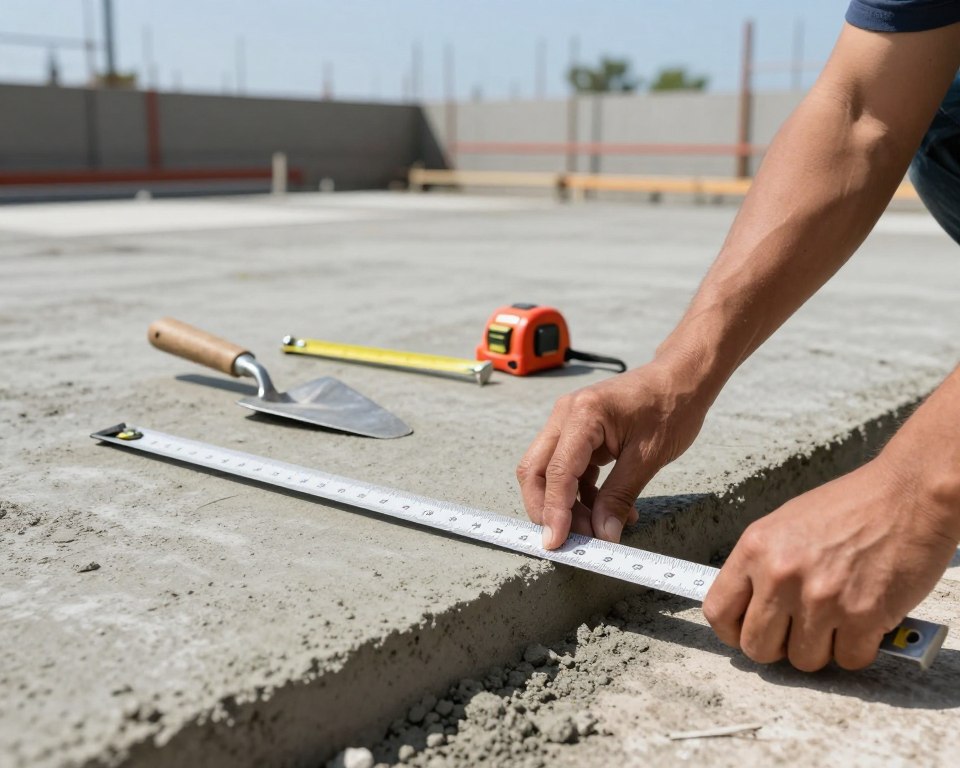
- Stretch the tape measure from top to bottom edge of the slab.
- Take various measurements to check for differences.
- If needed, cut a small notch with the concrete saw for better accuracy.
- Clearly mark your measurements to remember them later.
Regular checks on concrete slab thickness guard the building’s strength. They also avoid expensive errors during setup. With correct tools and methods, making accurate measurements is easy.
Factors Affecting Concrete Slab Thickness
Concrete slab thickness is affected by many important factors. These elements are vital for anyone in construction. Different conditions demand different thickness specifications. There are two main things to look at: the load-bearing needs for concrete and the soil conditions.
Load-Bearing Requirements
The need to bear weight greatly influences slab thickness. For example, industrial warehouses need thicker slabs, up to 12 inches. But homes might only need slabs that are 4 to 6 inches thick. Assessing the expected loads is key to picking the right thickness.
Soil Conditions
Soil types and drainage also play a big role in deciding slab thickness. Clay soils or areas with bad drainage often need thicker slabs. This helps avoid cracking and settling. A soil expert can give advice on local soil specifics, which helps in planning slab thickness.
Types of Concrete Slabs and Their Thickness
Different concrete slabs are key to good construction decisions. Each type is unique with its own recommended thickness. This is important for different uses. Two popular types are conventional slabs and post-tensioned slabs, each with its own benefits.
Conventional Slabs
Conventional slabs have been the go-to for homes and small businesses. They are about 6 inches thick, which is perfect for lighter buildings. This thickness helps spread out the weight and withstands environmental changes well.
They can also have steel bars added. This makes them even stronger and more reliable for building projects.
Post-Tensioned Slabs
Post-tensioned slabs use a modern method. They have steel tendons that are tightened after the concrete dries. This means they can be 4 to 5 inches thick but still strong.
They perform better and have less risk of cracking. This makes them great for heavy loads or on shifting soil.
| Type of Concrete Slab | Recommended Thickness | Key Features |
|---|---|---|
| Conventional Slab | 6 inches | Good load distribution, supports light structures, can be reinforced |
| Post-Tensioned Slab | 4 to 5 inches | Reduced thickness, enhanced structural integrity, minimizes cracking |
Recommended Thickness for Different Uses
Picking the correct concrete slab thickness is key for its lasting ability and function. Different scenarios call for certain thickness levels to handle the pressure and weather conditions.
Driveways
Driveways need a concrete slab that’s 4 to 6 inches thick. For spots with lots of action, like where heavy cars go, 5 inches is best. This thickness can support regular cars and helps avoid cracks as time goes on.
Patios
Patios work well with a 4-inch thick concrete slab for light walking. But, if you’re adding heavy stuff like outdoor kitchens, go for 6 to 8 inches. This makes sure your patio stays strong, even when the weather hits hard.
| Use | Recommended Thickness |
|---|---|
| Driveways | 4 to 6 inches (5 inches preferred) |
| Patios | 4 inches (6 to 8 inches for heavy installations) |
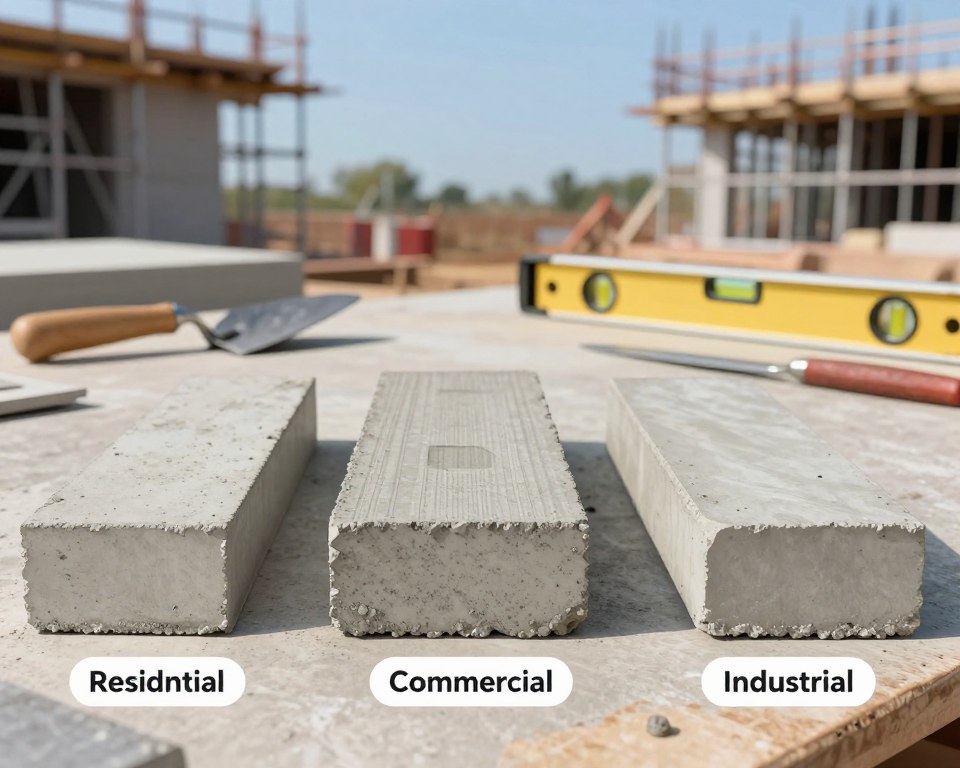
Calculating Concrete Volume by Thickness
Knowing how to figure out concrete volume is vital for any building work. It ensures you get just the right amount of concrete. This helps with planning your budget too. The steps include different volume formulas for concrete slab calculations. One important formula is:
Volume (cubic yards) = Area (square feet) × Thickness (inches) ÷ 324
This formula makes figuring out concrete volume by thickness easier. It factors in both the area and how thick the slab is for accurate measurements.
Volume Formulas
Here’s how to effectively use these volume formulas:
- Determine the area: Measure the slab’s length and width. Then, multiply these numbers to find the square footage.
- Select the thickness: Decide how thick you want the concrete slab, in inches.
- Apply the formula: Use the area and thickness in the formula to figure out the volume in cubic yards.
Example Calculations
Imagine you have a driveway that’s 20 feet by 40 feet and needs a slab 4 inches thick:
First, find the area:
Area = 20 ft × 40 ft = 800 square feet
Then, use the volume formula:
Volume = 800 × 4 ÷ 324 ≈ 9.88 cubic yards
This shows why calculating concrete volume by thickness matters. Right calculations mean you have just what you need for the work, saving time and money.
Installation Tips for Ideal Thickness
Getting the concrete slab thickness right takes careful planning. Using the correct methods is key for its strength and durability. Following the top tips for concrete slab thickness will ensure your project’s success.
Preparing the Site
Clear the site of any debris, rocks, or plants first. A solid, compact base is crucial for a sturdy foundation. Check the soil and moisture before beginning since they affect stability. Don’t forget to plan for water drainage to avoid future problems.
Pouring the Concrete
Keep the concrete thickness in mind when pouring to get the strength you want. Spread the concrete evenly over the area. Smooth out the surface to the right thickness. Adding rebar or wire mesh will help support the weight and lengthen the slab’s life. Watch the curing process carefully to get the best results.
Troubleshooting Thickness Problems
Concrete slabs can have various issues related to their thickness. It’s essential to know the common issues with slab thickness and effective solutions for concrete thickness issues. This knowledge helps homeowners and builders fix complications confidently.
Common Issues
- Cracking due to improper curing or environmental factors.
- Uneven settling, which could result from inadequate site preparation.
- Overloading the slab beyond its designed capacity.
Solutions and Fixes
When addressing concrete slab thickness problems, many solutions can help:
- Reinforce existing slabs with steel or composite materials to enhance strength.
- Add new layers of concrete to achieve the desired thickness.
- Perform targeted repairs for cracks, ensuring a more durable surface.
Innovative Trends in Concrete Slab Thickness
The world of concrete construction is changing fast, focusing on being green and innovative. The need for green practices is rising. The industry is working with sustainable concrete choices. These choices aim to make concrete slab thickness better and more efficient. By using new materials and ways of building, builders can make strong slabs without harming nature.
Now, using recycled parts and green extras in concrete slabs is getting popular. These green choices don’t just cut down on waste. They also make slabs stronger and last longer, even if they’re thinner. Thanks to advancements, modern concrete mixes are strong even with less thickness. This means building projects can save money on materials and still be top-quality.
Also, new concrete technologies have brought better mixing and pouring ways. These improvements help make thinner slabs better, lasting longer and working better. By following these new trends, construction companies show they care about the planet. They also find cheaper and tougher ways to build for the future.