ADVERTISEMENT
Over 77% of American households love gardening. A custom garden potting bench DIY can make this hobby even more fun. It not only boosts your garden’s look but also its usefulness. This guide will show you how to make a DIY garden bench. It’s designed just for you, to fit your gardening style and needs.
Key Takeaways
- Creating a custom potting bench can significantly improve your gardening experience.
- Personalized designs allow for maximum functionality and style.
- A DIY garden potting bench can be a cost-effective solution compared to store-bought options.
- Proper planning and materials selection are crucial for durability.
- Maintenance routines will help in prolonging the life of your bench.
Why Build Your Own Garden Potting Bench?
Making your own outdoor workspace is really rewarding for anyone who loves gardening. By creating your own garden potting bench, you can make it perfect for your gardening style. This includes choosing the best size, style, and features that make gardening more efficient and fun.
Benefits of a Custom Design
One great benefit of a custom design is that you can make the potting bench fit your needs perfectly. If you need extra shelves for tools or more space for potting, building your bench means it will meet your exact needs. This personal touch makes gardening more fun and easier.
ADVERTISEMENT
Cost-Effectiveness Compared to Store-Bought Options
When you look at your choices, making your own potting bench can save you money. Store-bought benches can be expensive, often over $200. Making your own can cost way less, maybe around $60. This big price difference means you can use better materials without spending too much.
Essential Tools and Materials Needed
Before you start your potting bench project, it’s key to have the right tools and materials ready. Having essential tools for a DIY garden bench makes the building process go smoothly. Picking the best materials ensures your bench lasts long and is useful.
Basic Tools Required for the Project
To begin, make sure you have these tools:
- Circular saw for precise cuts
- Drill with bits for assembling parts
- Measuring tape to ensure accuracy
- Screwdriver for securing screws
- Sandpaper for smooth finishes
- Safety goggles to protect your eyes
Recommended Materials for Durability
Choosing durable materials for your potting bench helps it last longer. Below are some good choices:
| Material Type | Properties | Usage |
|---|---|---|
| 2×4 Pressure-Treated Wood | Resistant to moisture and pests | Benches and framework |
| Cedar Wood | Natural resistance to decay | Surfaces and shelves |
| Vinyl Coatings | Additional weather protection | Outdoor finishes |
| Wood Stains | Enhances aesthetics while providing a seal | Final finish for wood |
Choosing the Right Location for Your Bench
Finding the right spot for your garden potting bench is key to a good gardening experience. You’ll want a place that’s close to your plants and tools but also comfy for your potting work. Choosing wisely can make your gardening smoother and more fun.
Factors to Consider in Your Garden Layout
Think about these things when deciding where to put your potting bench:
- Proximity to Plants: Place the bench near your garden beds to cut down on walking.
- Access to Water: A nearby water source makes it easier to water plants and clean tools.
- Sunlight Exposure: A spot with plenty of sunlight helps dry pots and soil quickly.
- Space for Storage: Choose a location that gives you room to store pots, soil, and tools easily.
Importance of Accessibility and Sunlight
Being able to easily reach your potting bench is super important. It saves you from making long walks in your garden. Sunlight is key for healthy plant growth and drying soil well. By choosing the right spot, gardening becomes more enjoyable and less of a chore.
Step-by-Step Guide: Building Your Potting Bench
Making your own potting bench is a fun project that improves your gardening. A clear plan makes building it step by step easy and fun. Begin by deciding how big it should be and what style fits your garden.
Designing Your Bench: Size and Style Considerations
Start by looking at how much room you have in your garden. Think about what looks good and works well when picking a size. Choose the look you like best, such as rustic or modern, and pick materials that match your garden. Look at DIY plans for garden benches to get ideas and make one that suits you.
Constructing the Frame and Top
Once you have a design, it’s time to build. Cut the wood according to your plan. Begin with the frame, making sure it’s strong and even. Then, attach the top part. This is where you’ll mix soil, and keep pots and tools.
Adding Storage Solutions
Add storage to make your bench more useful. Build boxes for the shelves to organize your gardening items. Add hooks for tools and extra shelves for more stuff. Organizing well will make gardening smoother.
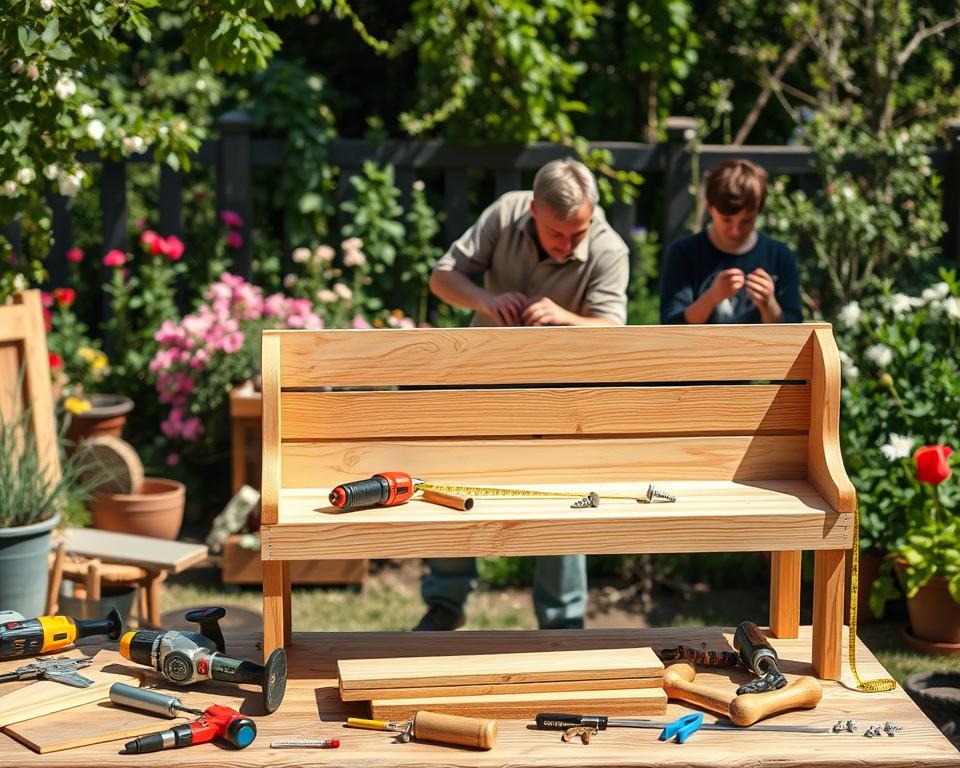
| Features | Details |
|---|---|
| Dimensions | 48″ width x 24″ depth x 36″ height |
| Materials | 2x4s, fence boards, screws, wood adhesive |
| Design Style | Rustic |
| Shelf Sections | Upper shelf (for pots), Lower shelf (for tools) |
| Hooks | For tool organization |
Finishing Touches: Paint and Stain Options
When you’re finishing your potting bench, choosing the right finish is key. It matters a lot for both how it looks and how long it lasts. Look for outdoor paint and stains made to stand up to rain and sun. These finishes not only keep your bench safe but also make it look great.
Best Paints and Stains for Outdoor Use
Pick from these options for your potting bench to look good and stay protected:
| Product Type | Best For | Durability | Finish Options |
|---|---|---|---|
| Oil-Based Stains | Rich color and deep penetration | Long-lasting (5-7 years) | Gloss, Satin, Matte |
| Water-Based Stains | Easy cleanup and quick drying | Moderate durability (3-5 years) | Gloss, Satin |
| Exterior Paint | Full coverage and vibrant colors | Very durable (5+ years) | Gloss, Semi-Gloss, Flat |
| Sealants | Extra protection for stained surfaces | Long-lasting (3-7 years, varies by type) | Clear, Satin |
Tips for Applying Finish Effectively
For a beautiful finish, prepare well and apply carefully. Here are some key tips:
- Sand the surface lightly before applying the finish for better adhesion.
- Apply the finish before assembling the bench to make it easier to reach all areas.
- Consider using a paint sprayer or brush for even application.
- Allow each coat to dry completely before applying additional layers, checking manufacturer recommendations.
Organizing Your Potting Bench for Maximum Efficiency
Keeping your potting bench organized can make gardening much more enjoyable. A tidy workspace helps you work faster and more smoothly. It’s important to have a spot for your tools where you can easily grab them.
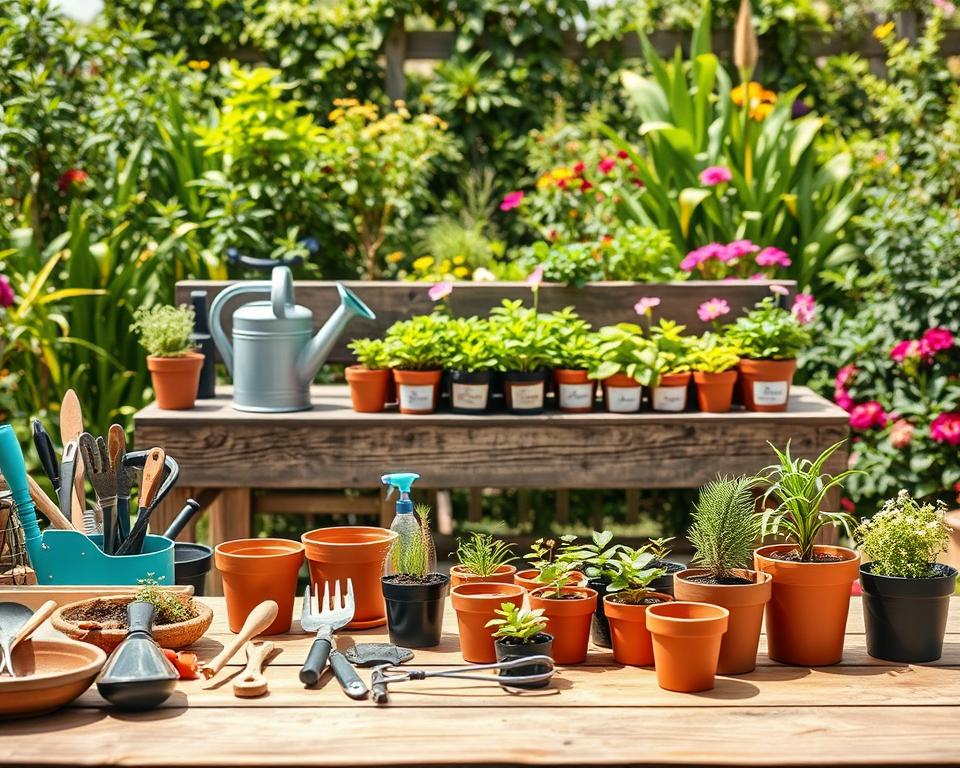
Essential Tools to Keep Handy
Your gardening area should have some key tools ready to go. You’ll need:
- Hand trowels for planting and digging
- Pruners to keep plants healthy
- Garden forks for loosening soil
- Watering cans for hydration needs
- Labels and markers for organization
Utilizing Storage Bins and Shelves
Adding bins and shelves can make your bench even neater. Clear bins let you see what’s inside without opening them. Shelves labeled for pots, soil, and fertilizers keep things sorted. Add hooks for twine or tools to keep every item in its place.
DIY Bench Ideas: Inspiration for Your Project
Exploring DIY projects can get your creativity flowing and lead to beautiful garden potting benches. Using unique potting bench designs makes it easy to add personal touches. They can also fit perfectly in any garden space.
Examples of Unique Designs
Think about benches that are not only for work but also show off creative flair. You can find benches with built-in storage or ones with places for plants to climb. Here are some standout ideas:
- A rustic wooden bench with a hinged top for tool storage.
- Modern designs with metal frames and wooden accents for a sleek look.
- Mobile benches equipped with wheels for easy relocation in your garden.
- Multi-level benches that offer different planting surfaces and organization options.
Combining Functionality and Aesthetics
Finding the right mix between good looks and usefulness is key with functional and aesthetic garden bench ideas. You can add things like:
- Integrated sinks for watering plants right from the bench.
- Built-in hooks for hanging tools and accessories.
- Planter boxes that not only make the bench prettier but also let you grow fresh herbs and flowers.
Adding these features makes the bench not only more attractive but also a lot more useful. With careful design, you create a workspace that meets all your gardening needs.
| Design Feature | Description | Benefits |
|---|---|---|
| Hinged Top Storage | A work surface that opens for tool storage. | Increases organization and minimizes clutter. |
| Mobile Design | A bench with wheels for easy mobility. | Allows flexibility to change garden layout as needed. |
| Integrated Trellis | A vertical structure for climbing plants. | Combines gardening space with decorative elements. |
| Built-in Sinks | Direct access to water for plant care. | Enhances watering efficiency without extra tools. |
Common Mistakes to Avoid When Building
Building your own potting bench is rewarding. However, it’s easy to make mistakes. To succeed, sidestep errors in building your potting bench. Mistakes lead to lost time and resources. Many DIYers skip the planning. This can cause costly mistakes and efficiency losses.
Planning Errors That Can Be Costly
Improper measurements are a big problem. They often result in unfit benches for your garden. Here are some planning tips:
- Always measure your available space carefully.
- Account for the appropriate height, ensuring it’s comfortable for use.
- Think about additional features like shelves or hooks and their required dimensions.
Safety Precautions Every DIYer Should Take
Don’t forget safety when working on your project. Injuries can quickly happen with power tools and materials. Remember these safety tips:
- Wear protective gear, including gloves and safety glasses.
- Ensure your workspace is clean and well-lit to avoid accidents.
- Use tools according to manufacturer instructions to maintain safe operation.
Maintaining Your Garden Potting Bench
Keeping your garden potting bench maintained is key to its longevity. Paying attention to maintaining garden potting bench hygiene and keeping it structurally sound improves its look and use. Handling daily wear and getting ready for different seasons require simple yet effective steps.
Routine Care Tips for Longevity
Part of good maintenance is cleaning your potting bench to stop dirt and mold from gathering. Here’s what you can do:
- Wipe down surfaces with a damp cloth to remove soil and debris.
- Inspect fittings to tighten any loose screws and ensure stability.
- Apply a waterproof sealant annually to protect wooden surfaces from moisture.
These regular habits will help keep your spaces neat for gardening tasks.
Seasonal Maintenance Tasks
As seasons change, you should do certain seasonal care for DIY workbench tasks to keep your potting bench in top shape:
- In spring, give your bench a deep clean and touch up paint or stain as needed.
- During summer, look for decay or pests, especially in wooden parts.
- In fall, clean around the bench and get it ready for winter by covering or storing items not in use.
- In winter, check for any damage from the cold and make sure protective finishes are still good.
Handling these specific seasonal tasks will ensure your potting bench stays useful and beautiful all year.
Eco-Friendly DIY Approaches
Making a garden potting bench is not only fun but also good for the planet. Use sustainable materials and repurpose old furniture. This way, you make something unique for your garden and keep your environmental impact low.
Sustainable Materials for Your Potting Bench
Choose eco-friendly materials like reclaimed wood or lumber that’s been sourced responsibly. These options help reduce waste and support the environment. Try to find local shops that sell recycled stuff. Or check your area for second-hand materials that could work for your bench.
Repurposing Old Furniture into a Potting Bench
Turning old furniture into a potting bench is another great idea. Use old tables, dressers, or crates to make a cool and useful potting area. It’s cheaper and adds a special touch to your garden.
Get creative to make old furniture look new and make your garden welcoming.
Community Resources and Support for DIYers
Being part of the DIY community can really boost your projects, like making a garden potting bench. It’s great to connect with others who love the same things you do. They can give you both encouragement and useful tips for any problems you might run into.
Starting out, look into local workshops or classes that focus on woodworking or gardening. These sessions teach you a lot and help you meet people with the same interests.
Finding Local Workshops and Classes
Community centers, gardening shops, and woodworking stores often have workshops for all skill levels. Joining these local sessions can improve your abilities and let you work with other DIY fans. There are classes just about making garden furniture or potting benches where you get the help you need.
Online Forums and Social Media Groups for Inspiration
Online forums and social media groups are also fantastic for DIY enthusiasts. Sites like Facebook and Reddit have lots of groups for sharing advice, photos, and stories about projects. By getting involved, you can ask for help, get feedback, and show off what you’re working on. This encourages both you and others on their garden projects.
Using both local and online resources can really make your potting bench project shine. It also helps build a supportive DIY community around you.